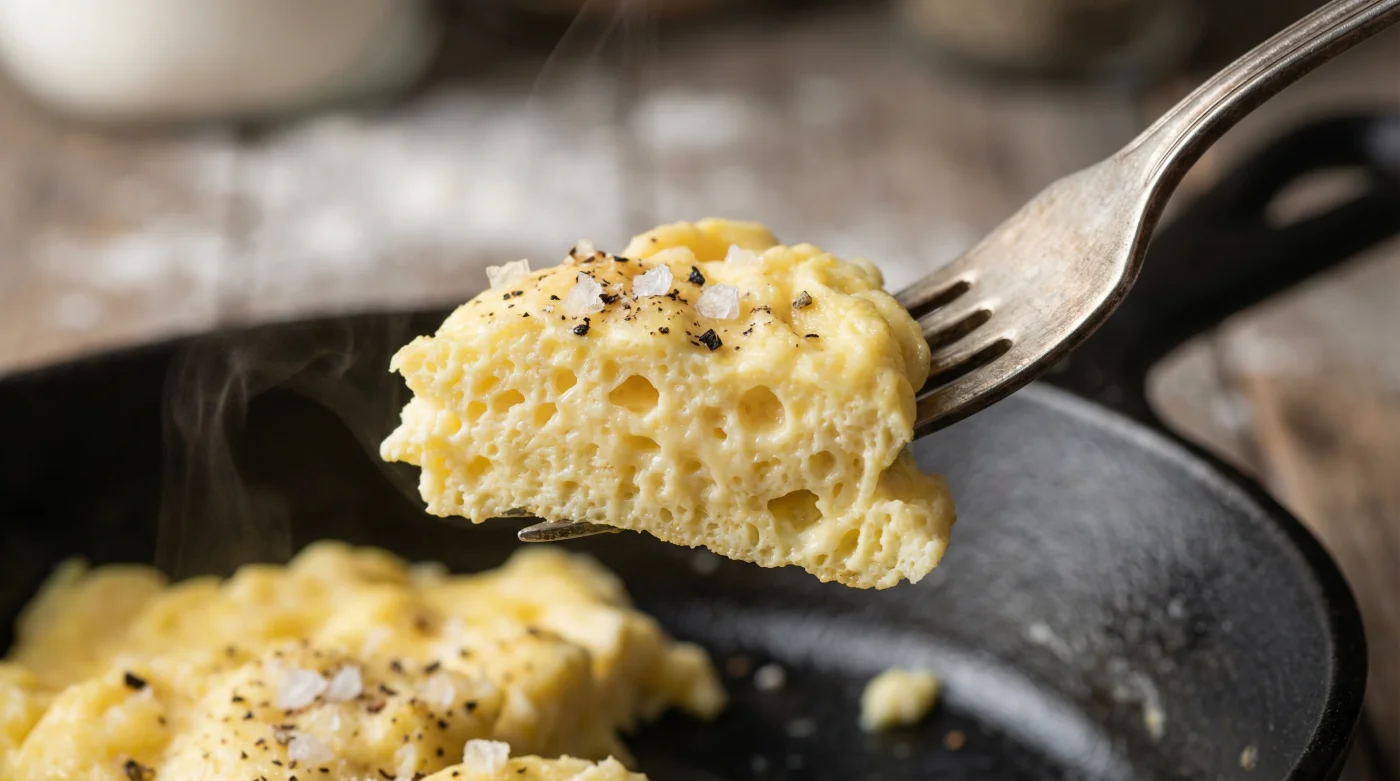
The Sunday morning kitchen has a specific rhythm. Rain spits against the cold glass, the kettle settles into a low hum, and a knob of butter begins to froth in a heavy pan. You crack three eggs into a bowl, whisk them furiously, and pour them into the heat. Yet, minutes later, you are staring at a plate of dense, rubbery yellow folds weeping a milky puddle onto your toast. It is a quiet, familiar culinary heartbreak.
The Myth of the Dairy Flood
For generations, we have been told that the secret to light, pillowy scrambled eggs lies in the dairy aisle. You pour in a generous glug of double cream or whole milk, hoping it will somehow inflate the mixture. But this is the gravity of the puddle. When you add liquid dairy to eggs, you are simply diluting the protein bonds. As the heat hits, the proteins squeeze together, forcefully expelling that extra water.
Instead of floating on air, your breakfast drowns in its own weight. The true solution rests not in the fridge, but neglected in the dark corner of your baking cupboard.
I learned this from an old breakfast chef working the early shift in a damp, salt-sprayed café in Cornwall. He watched me ruin a batch of eggs, nudged me aside, and reached for a small, familiar cardboard cylinder. ‘You do not want liquid,’ he muttered, dusting a fine white powder over his bowl. ‘You want structure.’ That powder was standard baking powder.
| The Cook | The Core Benefit |
|---|---|
| The Rushed Parent | Achieves café-quality volume in just four minutes, masking hurried technique. |
| The Fitness Devotee | Eliminates the need for high-calorie heavy creams while keeping eggs incredibly soft. |
| The Weekend Host | Prevents the dreaded ‘egg puddle’ on the plate, keeping sourdough toast perfectly crisp. |
The Mechanics of the Lift
It sounds strange to treat your morning eggs like a Victoria sponge, but the physical reaction is beautifully simple. Baking powder is a leavening agent. When it meets the natural moisture of the egg and the heat of your frying pan, it immediately begins to release microscopic bubbles of carbon dioxide.
These tiny air pockets expand the protein structure of the egg from the inside out. Instead of the proteins clumping into tight, tough knots, they wrap around these bubbles. The result is a massive, airy volume that holds its shape entirely.
You need very little to make this work. A mere eighth of a teaspoon for every three eggs is plenty. Any more, and you risk a metallic aftertaste. Whisk the powder into the eggs vigorously before they hit the heat, ensuring it dissolves completely.
Once poured into a moderately warm pan, treat the mixture gently. Push the edges inward with a silicone spatula, letting the raw egg flow into the empty spaces. You will physically see the eggs puffing up, breathing and expanding rather than shrinking.
| The Element | The Mechanical Reaction |
|---|---|
| Added Milk/Cream | Dilutes proteins; heat forces water out, causing structural collapse and ‘weeping’. |
| Baking Powder | Releases carbon dioxide upon heating; forces proteins to form around trapped gas pockets. |
| Gentle Folding | Preserves the newly formed air pockets rather than popping them through harsh stirring. |
Protecting the Puff
Timing remains your sharpest tool here. Because the eggs are inflated with air, they will cook slightly faster than a dense, wet curd. Remove the pan from the heat just before they look entirely finished. The residual warmth of the heavy metal will carry them over the finish line.
There is a distinct tactile pleasure in plating these eggs. They do not slide wetly from the pan; they tumble in soft, golden folds. When you drag your fork through them, you feel a delicate resistance, like tearing through a freshly baked croissant.
| What to Look For (Success) | What to Avoid (Failure) |
|---|---|
| A totally dry plate after resting for two minutes. | A yellowish water ring seeping into your toast. |
| Large, distinct curds that hold their height on the fork. | A grainy texture with a faint metallic tang (too much powder). |
| Using standard baking powder from a fresh tin. | Accidentally using bicarbonate of soda, which turns eggs an unappetising green. |
The Quiet Morning Victory
- Greggs sausage rolls face major recipe overhaul angering loyal bakery customers.
- Cheddar cheese prices surge dramatically following unexpected domestic dairy yield drops.
- Meringue peaks collapse immediately ignoring this invisible lemon juice bowl wipe.
- Red onions cause severe eye watering missing this simple chilling phase.
- Basmati rice turns perfectly fluffy using this simple tea towel trick.
It is not just about eating better food. It is about the satisfaction of knowing exactly how your ingredients behave. You stop fighting the frying pan and start collaborating with the heat. The result is a plate of food that feels like a quiet, personal triumph before you even step out of the front door.
‘Great cooking is rarely about adding more ingredients to the pan; it is about understanding exactly what the ingredients you already have are desperately trying to do.’
Frequently Asked Questions
Will this make my eggs taste like a cake?
Not at all. Provided you stick to a tiny pinch (around an eighth of a teaspoon for three eggs), the powder dissolves entirely and leaves zero residual flavour.
Can I use bicarbonate of soda instead?
Absolutely not. Bicarbonate of soda requires a strong acid to activate properly and will dramatically alter the pH of your eggs, turning them an unappetising greyish-green.
Do I need to whisk the eggs for longer?
Just long enough to break down the whites and ensure the powder is fully incorporated. A vigorous thirty seconds with a fork is all it takes.
What kind of pan is best for this method?
A heavy-bottomed non-stick or well-seasoned cast iron skillet works beautifully. You want even, predictable heat so the air pockets form steadily.
Can I still add cheese or herbs?
Yes. Fold in your grated Cheddar or chopped chives right at the end, off the heat, so their weight does not crush the delicate structure you have just built.