You stand beneath the hum of the fluorescent lights in the local supermarket, staring down at the cold glow of the meat counter. The chill of the refrigerated aisle seeps into your coat as you weigh up the reality of a midweek dinner against the increasingly heavy burden of the weekly shop.
You stare at the price tag on a modest sirloin and wince. A few inches to the left sits a rigid block of chuck steak, priced at barely a third of the cost. You instinctively ignore the chuck, resigning yourself to the familiar assumption that cheap beef means a jaw-aching dinner, unless you happen to have three spare hours to coax it into a gentle, bubbling stew.
But this is a quiet misunderstanding of what meat actually requires. You are looking at a tough cut of muscle and seeing a calendar of hours, assuming that lengthy submission in an oven is the only way to break down the resilience of the animal.
A stark kitchen reality exists just out of sight. A brief alkaline soak physically alters the tough muscle fibres, entirely bypassing the need for low, slow heat. Time is no longer required to force an unforgiving cut of beef into yielding gracefully on your plate.
This quiet revolution relies on a fine white powder currently sitting idle at the back of your baking cupboard, waiting to change the way you shop for groceries forever.
The Alkaline Illusion: Unwinding the Threads
For generations, home cooks have relied on aggressive acids like malt vinegar or lemon juice to soften tough joints, or heavy wooden mallets to bash the life out of the proteins. These methods violently attack dinner, leaving the exterior grey and mushy while the centre remains a stubborn, unchewable knot that exhausts the jaw.
Think of cheap beef as a tightly spun spool of coarse wool. When you apply direct, fierce heat from a frying pan, those fibres seize up in panic, tightening into a dense, impenetrable web. Acid acts like a clumsy pair of scissors, hacking away at the outer edges but utterly failing to penetrate the core of the problem.
Alkalinity, however, breathes through the meat fibres like a warm breeze through an open window. When you introduce bicarbonate of soda to the surface of the meat, it alters the pH level on a microscopic scale. The coarse wool gently unwinds, physically preventing the proteins from bonding tightly together when they hit the roaring heat of your cast-iron pan.
It is a profound shift in how you operate at the stove. You are no longer forcing the ingredient to bend to your will through sheer endurance; you are changing its physical nature before the heat is even applied.
The Secret of the Back Kitchen
This is not a modern laboratory trick, but a quiet, long-standing survival tactic of the British hospitality trade. The margins are notoriously brutal in a traditional rural pub, yet the customer demand for a tender, bleeding steak and chips remains a stubborn constant.
Enter Arthur Pendelton, a 62-year-old head chef running a low-ceilinged, timber-framed pub deep in the North Yorkshire moors. Arthur routinely served a Tuesday night ‘steak frites’ special that drew queues out the cobbled street. Diners swore they were eating thirty-pound prime fillets, marvelling at how the knife glided through the meat.
Over a pint of bitter after a frantic service, Arthur confessed his method: he was buying dirt-cheap featherblade and thick flank from the local butcher. “They think it’s magic,” he laughed, wiping down the scarred steel of his prep counter. “It’s just twenty minutes and a pinch of bicarb. It relaxes the whole structure, so it cooks like an absolute dream.”
Arthur’s pragmatism is exactly what separates a frustrated home cook from a quiet, efficient professional. He wasn’t waiting for a miracle; he was using basic kitchen chemistry to rewrite the rules of his weekly meat order.
Tailoring the Alkaline Soak
Not all budget cuts behave the same way, and throwing a fistful of soda blindly at a piece of meat will result in a soapy, metallic disaster. Precision dictates the final texture, meaning you must adapt the technique based on what sits on your chopping board.
For the Frugal Midweeker: If you are slicing flank or thick skirt into thin ribbons for a Tuesday night stir-fry, speed is your primary advantage. These cuts are deeply beefy but violently chewy if flashed raw in a hot wok.
Dusting the raw slices in a velvet coat of bicarbonate of soda and a splash of cold water creates a protective barrier. Ten minutes is entirely sufficient before you rinse the strips clean under the tap. The result is meat that trembles rather than snaps when you bite into it.
- Tomato paste delivers intense slow-cooked depth browning heavily in olive oil.
- Roast chicken develops glass-like crispy skin resting with standard baking powder.
- Basmati rice achieves individual separated grains soaking with fresh lemon juice.
- Wilted lettuce leaves regain extreme crispness submerged inside sweet iced water.
- Dried chickpeas cook flawlessly fast skipping traditional overnight cold water soaking.
Pierce the surface lightly with a table fork, creating microscopic channels for the alkaline solution to find its way inward. Dissolve the soda entirely in water before submerging the steaks. The soak requires up to half an hour, allowing the pH shift to reach the innermost fibres.
For the Open-Fire Purist: Barbecue season often brings the temptation to buy pre-marinated, highly expensive cuts to avoid serving shoe-leather to your guests. Instead, source a whole hanger or skirt steak.
Rub the meat generously with your soda mixture and leave it resting on a wire rack in the fridge. Rinse rigorously in cold water before drying it meticulously with paper towels. The dry surface will blister beautifully over hot coals, yielding a red centre that cuts like warm butter.
Mindful Application: The Velvet Routine
Executing this technique requires a steady hand and a clear head. It is entirely possible to overplay your hand, leaving your carefully sourced dinner tasting faintly of cleaning products.
Think of this process as a brief, restorative spa treatment for your ingredients. Follow these exact physical steps to guarantee a flawless transformation without compromising the beef’s natural, rich flavour profile.
- Weigh your raw beef accurately using digital scales. You need exactly half a teaspoon of bicarbonate of soda for every 250g of meat.
- Dissolve the soda in roughly three tablespoons of cold tap water in a mixing bowl.
- Toss the meat in the slurry, massaging it gently to ensure every exposed surface is coated.
- Leave the bowl on the kitchen counter. Do not cover it, and do not exceed 20 minutes for thin slices, or 45 minutes for thick, whole steaks.
- Rinse the beef under fast-running cold water for a full thirty seconds. This step is absolutely non-negotiable.
- Pat the meat bone-dry with heavy kitchen roll before allowing it to touch a hot frying pan. Moisture is the enemy of a good crust.
The rinsing phase is where the hurried amateur often falls short. Water washes away the alkalinity, leaving behind only the structural benefits. If you skip this, the meat will refuse to brown properly and carry a bitter, chemical shadow.
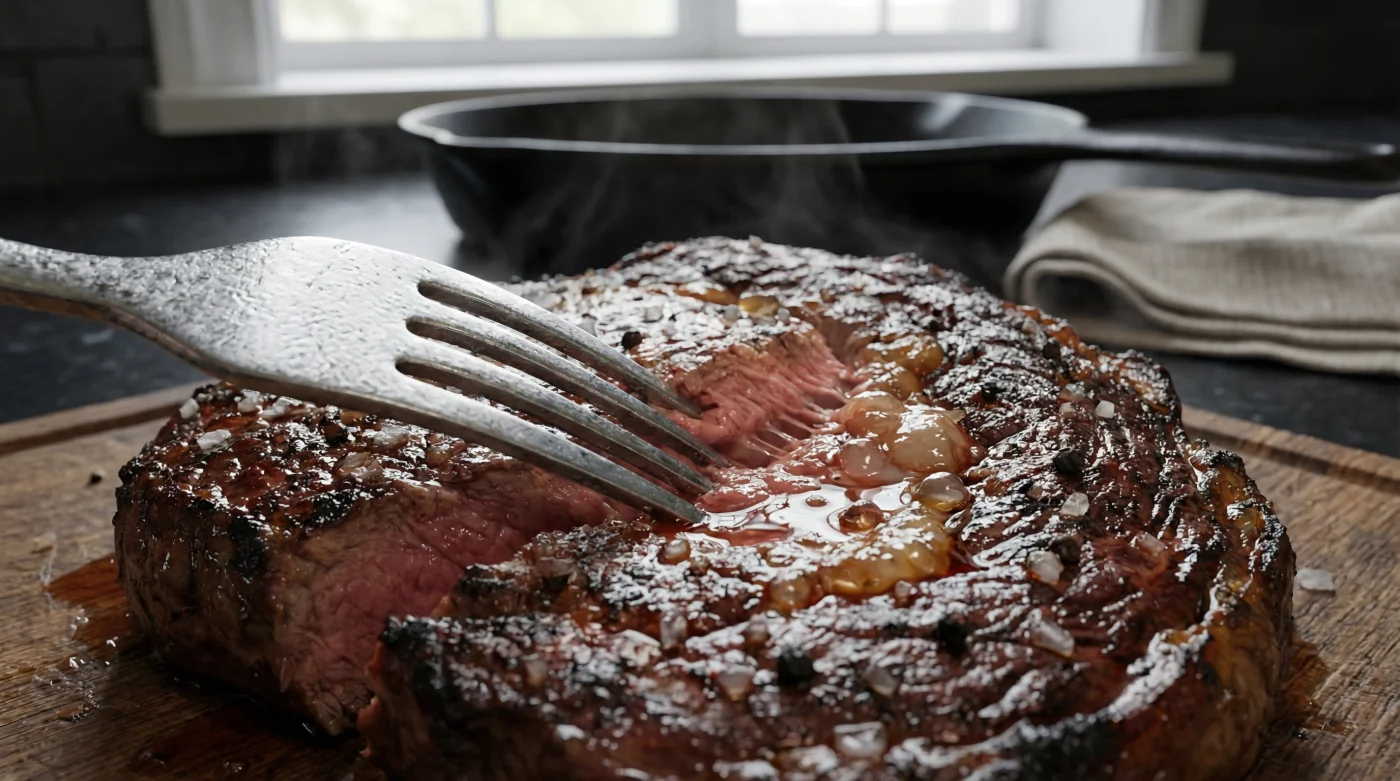
You will notice the difference the moment the meat hits the hot pan. Instead of releasing a pool of grey water and steaming itself dry, the beef retains its internal moisture. The fibres have relaxed enough to hold onto their natural juices, allowing the exterior to form a thick, dark crust while the interior gently warms through.
Reclaiming Your Kitchen Economics
Mastering this simple pantry secret does far more than improve a single meal. It fundamentally alters your relationship with the supermarket shelves. You are suddenly granted the freedom to walk straight past the premium cuts without a second thought.
There is a distinct, quiet satisfaction in turning a forgotten slab of cheap beef into a meal that feels wildly indulgent. It utterly reframes your budget, proving that you are no longer entirely at the mercy of inflated meat pricing or precarious butcher supply chains.
When you realise that a pinch of white powder from your baking supplies can physically alter tough muscle fibres, you stop seeing cheap ingredients as a frustrating compromise.
They become pure raw potential, waiting for the right pair of hands to treat them with respect.
You pour a glass of robust red wine, slice cleanly through a piece of chuck steak with an ordinary table knife, and watch the juices pool on the warm plate. It cost you pennies, it took twenty minutes, and it tastes like an absolute luxury.
“The true mark of a competent cook is not how they handle the finest fillet, but how they command the humblest offcut with quiet intelligence.”
| Key Point | Detail | Added Value for the Reader |
|---|---|---|
| The Alkaline Shift | Bicarbonate of soda changes the surface pH of the meat, preventing muscle fibres from contracting violently when cooked. | Allows you to pan-fry notoriously tough stewing cuts in minutes, entirely bypassing the need for long oven times. |
| The Crucial Rinse | The meat must be washed under cold running water for 30 seconds after the soaking period. | Removes all soapy, metallic residue, ensuring the beef tastes entirely natural and browns beautifully in the pan. |
| Economic Advantage | Chuck, flank, and featherblade cost a fraction of the price of sirloin or ribeye steaks. | Drastically reduces your weekly grocery bill while dramatically increasing the quality of your home-cooked dinners. |
Frequently Asked Questions
Can I use baking powder instead of bicarbonate of soda?
No. Baking powder contains added acids (like cream of tartar) meant for baking. You must use pure bicarbonate of soda to achieve the alkaline environment necessary to relax the meat fibres.Will the meat taste like chemicals?
Not if you follow the rinsing step diligently. The brief soak alters the physical structure, but washing the meat thoroughly under cold water removes the soda before it can taint the flavour of your dinner.Does this technique work on pork or chicken?
Yes, it is highly effective on tough cuts of pork and chicken breast. Often referred to as ‘velveting’ in Chinese cookery, it keeps leaner meats incredibly moist during high-heat stir-frying.Can I leave the meat soaking in the fridge overnight?
Absolutely not. Over-soaking the beef will break down the proteins too far, resulting in a distinctly unpleasant, mushy texture. Stick strictly to the 20 to 45-minute window depending on the thickness of the cut.Do I still need to rest the meat after cooking?
Yes. Even though the fibres have been relaxed by the alkaline soak, the intense heat of the pan still drives moisture to the centre. Resting the steak for five minutes allows those juices to redistribute evenly.