You stand over the hob on a damp Tuesday evening, a wooden spoon in hand, peering into a pan of simmering ragù. The onions are soft, the garlic fragrant, and the minced beef browned to perfection. You squeeze a dollop of bright crimson tomato paste straight from the tube into the bubbling stock, give it a quick stir, and wait for the rich comfort to develop. It is a familiar rhythm, a weekday ritual designed to get dinner on the table.
But when you finally take a spoonful, a sharp, metallic twang hits the back of your palate. It is a harsh, almost tinny acidity that refuses to blend in, sitting awkwardly on top of the savoury notes you worked so hard to build. This is the quiet frustration of a meal that almost made it.
The Alchemy of the Base
We routinely treat tomato paste like a liquid seasoning, a simple thickener to be dissolved lazily into water or wine. But this tight, concentrated paste is more like a dormant spice. It needs a specific, aggressive catalyst to wake up. Think of it as a tightly coiled spring of flavour; dropping it into a lukewarm liquid only rusts the spring.
It requires the intense, direct heat of fat to truly expand and release its potential. When you skip frying the paste, you are effectively serving raw, concentrated acidity. You are denying the sauce its foundational warmth.
Years ago, I sat at the stainless steel prep counter of a small, fiercely traditional Italian kitchen in Soho. The head chef, a pragmatic man named Leo, was preparing the evening base for a huge vat of bolognese. He did not lazily stir his paste into the broth. Instead, he pushed his softened sofrito to the edges of the pan, exposing the hot, glistening olive oil in the centre.
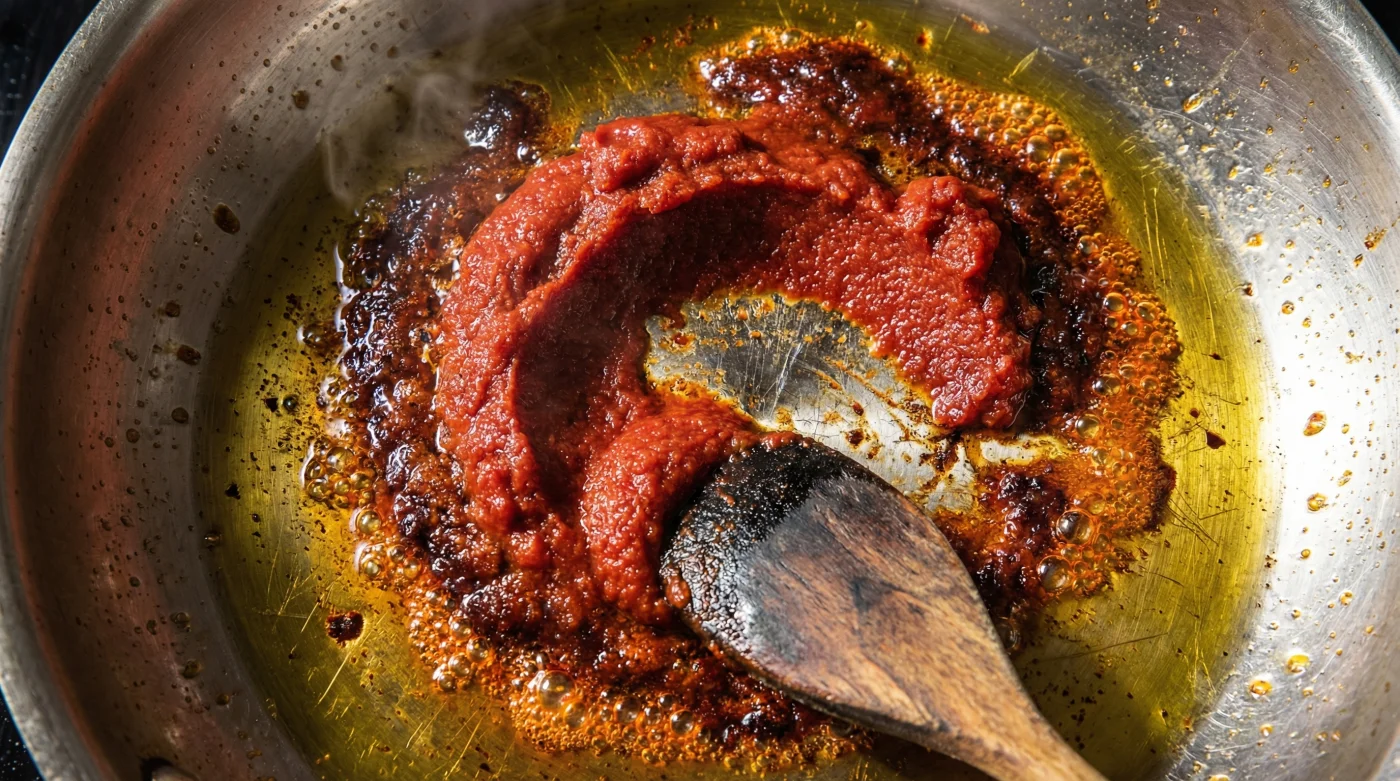
He spooned the paste directly onto the bare metal. It hissed immediately, aggressively spitting back at him. ‘You have to cook the tin out of it,’ he muttered, stirring the paste until it transformed from a vibrant, childish red to a deep, bruised rust. That simple, two-minute frying step was the defining line between amateur home cooking and a restaurant-quality finish.
| The Cook | The Daily Frustration | The Fry-Off Benefit |
|---|---|---|
| The Weeknight Parent | Sauces taste rushed, sharp, and disjointed. | Achieves slow-cooked, mellow depth in just two minutes. |
| The Batch Cooker | Reheated meals carry an unpleasant metallic aftertaste. | Neutralises the raw acidity, stabilising flavour for the freezer. |
| The Plant-Based Chef | Dishes lack the savoury weight usually provided by meat fats. | Caramelises the natural sugars to create a dense umami backbone. |
The Two-Minute Rust Rule
The method is remarkably simple but demands your full attention. Once your onions, carrots, and celery have softened, do not reach for the stock. Push your vegetables to the outer rim of the pan. Add a modest glug of good olive oil to the cleared centre and let it warm for a few seconds.
Add your tomato paste directly into the hot oil. It will immediately begin to sizzle and spit. Use a wooden spoon to smear it aggressively against the base of the pan, increasing the surface area. You are looking for a very specific transformation here.
- Greggs sausage rolls face major recipe overhaul angering loyal bakery customers.
- Cheddar cheese prices surge dramatically following unexpected domestic dairy yield drops.
- Meringue peaks collapse immediately ignoring this invisible lemon juice bowl wipe.
- Red onions cause severe eye watering missing this simple chilling phase.
- Basmati rice turns perfectly fluffy using this simple tea towel trick.
The smell will shift from sharp and acidic to sweet, roasted, and deeply savoury. Only then do you pour in your wine or stock. The liquid will violently deglaze the beautiful sticky bits left behind. This is where your true flavour profile is born.
| The Stage | Visual & Olfactory Cue | Chemical Reality |
|---|---|---|
| Raw Addition | Bright crimson, glossy, smells of sharp vinegar. | High citric acid content, raw lycopene, harsh metallic notes dominate. |
| One Minute Frying | Dulling red, sticking slightly to the metal. | Water is actively evaporating; the fat is absorbing the fat-soluble compounds. |
| Two Minutes (Done) | Deep brick rust, smells sweet and roasted. | Maillard reaction achieved; sugars are caramelised and acidity is neutralised. |
Of course, the success of this technique relies heavily on the quality of your raw materials. A poor quality paste will burn rather than caramelise. Here is what you should be looking for when browsing the supermarket shelves.
| Attribute | What to Look For | What to Avoid |
|---|---|---|
| Packaging | Aluminium tubes or small glass jars. | Dented metal tins which can heavily leach tinny flavours. |
| Ingredients | 100% tomatoes, perhaps a pinch of sea salt. | Added sugar, herbs, or citric acid preservatives. |
| Concentration | Double concentrated (Doppio Concentrato). | Watery, thin purées that lack structural integrity. |
The Rhythm of the Pan
Cooking is an ongoing conversation with your ingredients. When we rush the foundational steps, we end up shouting over the subtleties. Allowing your tomato paste those two minutes in the hot oil is a lesson in culinary patience. It forces you to slow down, to watch the pan, to smell the changing aromas.
These small, physical actions ground you after a chaotic day. You are no longer just throwing a meal together to survive the evening. You are practicing a craft. The resulting sauce, rich and deeply resonant, becomes a testament to that brief moment of mindfulness.
Next time you find yourself reaching for the tube of paste, respect the ritual. Let it fry. Let it darken. Your midweek pasta will transform from a desperate assembly of ingredients into a truly comforting, slow-tasting experience.
The secret to a sauce that tastes like it has simmered all day is taking the time to caramelise your base in the first five minutes.
Frequent Kitchen Queries
Can I use any oil to fry the paste? Olive oil is traditional and heavily complements the tomato, but a neutral oil like rapeseed works perfectly if you require a higher smoke point.
What if the paste starts to burn? Turn the heat down to medium immediately. You want a steady sizzle, not a smoking, blackened mess. Keep smearing it constantly with your spoon.
Does this rule apply to passata or tinned tomatoes? No. Passata and tinned tomatoes have a much higher water content, so they boil rather than fry. This technique is exclusively for concentrated paste.
How do I stop it sticking to my stainless steel pan? Let it stick slightly! That sticky brown layer is pure flavour. It will lift effortlessly once you pour in your deglazing liquid.
Is two minutes a strict rule? It is a highly reliable guideline, but trust your senses above all. When the colour shifts to rust and the aroma turns sweet, your base is ready.