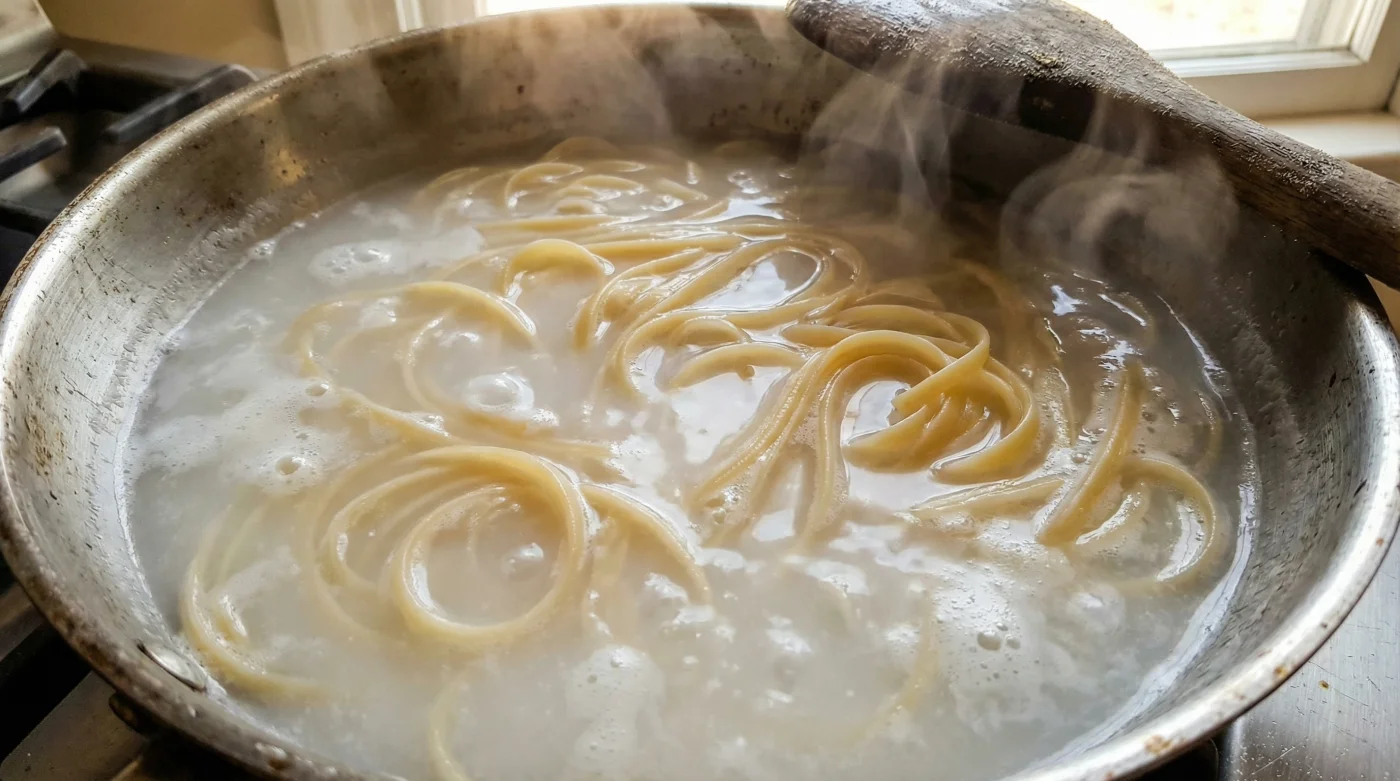
The kitchen windows are steamed tight, blurring the streetlights outside. On the hob sits the domestic monolith: a massive stainless-steel stockpot, taking the better part of twenty minutes just to work up a sweat. You stand there, wooden spoon in hand, waiting for the surface to break into a violent, rolling boil before you can even think about supper.
You have always been taught to drown your dried pasta. Give it room to swim, the old advice goes. Gallons of salted water roaring away, demanding patience and a heavy, precarious lift to the sink to drain it all down the plughole. But what if that excess is actually washing your dinner’s greatest asset away into the London sewers?
Picture, instead, a wide, shallow frying pan resting on the burner. A handful of dried spaghetti lays flat across the base, barely covered by a shallow pool of cold water. To the traditionalist, it feels wrong, almost negligent. Yet, within ten brief minutes, that sparse, bubbling liquid transforms into a cloudy, golden nectar.
This is the professional pivot hiding in plain sight. By stripping away the vast ocean of boiling water, you aren’t just saving time and gas on the hob. You are capturing the soul of the wheat, concentrating the starch entirely to build the silky, restaurant-quality emulsified sauces you previously thought were out of reach.
Rethinking the Ocean: The Puddle Method
The legendary massive pot is a myth built for fresh egg pasta, which requires sudden, fierce heat to set the proteins before the dough turns to mush. Dried durum wheat, however, plays by entirely different physical rules. It does not need to swim; it merely needs to hydrate.
Think of it like coaxing a proper risotto into life. You would never boil arborio rice in three litres of water and then drain it. You tease the starch out slowly, letting it mingle with the liquid to build a creamy suspension. Boiling dried pasta in a shallow pan mimics this exact friction. The starch is trapped, unable to dilute into the useless abyss of a giant stockpot.
This cloudy, viscous water—usually discarded as a mere byproduct—is the binding agent of the culinary world. It is the liquid gold that forces fat and water to marry, turning a split, greasy puddle of olive oil into a thick, glossy emulsion that clings tightly to every single strand on the plate.
Meet Marco, a forty-two-year-old chef running a brutal forty-cover service from a kitchen the size of a broom cupboard in Soho. He hasn’t boiled a giant stockpot of water in a decade. During a frantic Tuesday lunch rush, he showed me his line: four wide aluminium frying pans, each bubbling with a single portion of rigatoni barely submerged in water. “We simply lack the space and the time for gallons of water,” he muttered, tossing the pan so the starchy slurry coated the pasta like double cream. “The starch is the sauce. If you throw the water away, you throw the dish away.”
Tuning the Starch for Your Table
Not all dried pasta behaves identically when confined to a shallow bath. You have to read the wheat and understand the specific shape you are working with on the hob.
For the Long-Strand Purist
Lay your spaghetti or linguine flat in a cold frying pan. Add just enough cold water to cover the strands by roughly half an inch. Starting cold prevents the pasta from welding together immediately, giving you a quiet window to gently tease the strands apart with a pair of tongs as the water slowly comes to a simmer.
For the Short-Shape Pragmatist
Tubes like penne and rigatoni require slightly more agitation. They possess hollow centres that harbour dry, chalky spots. Use a sauté pan with slightly higher sides. Toss the shapes frequently as the shallow water reduces, ensuring the starch is knocked loose from the exterior ridges and the inner walls are properly hydrated.
For the One-Pot Minimalist
You can build your flavour base directly alongside the hydrating pasta. Sauté your garlic, chilli, and cherry tomatoes first, then add the dry pasta and the minimal water directly into the same pan. The starch bleeds right into the aromatics, creating a velvet-textured sauce right before your very eyes, merging the cooking and sauce-making into a singular, flowing action.
The Shallow Pan Protocol
Making this pivot requires a bit of trust and a mindful eye. You are no longer abandoning a pot to boil aimlessly; you are actively managing a careful reduction.
- Bacon rashers cook perfectly flat undergoing this cold water pan submersion.
- Risotto rice yields perfectly creamy textures enduring zero continuous pan stirring.
- Leftover white rice transforms into crispy pan noodles skipping standard flours.
- Fresh parsley leaves retain bright green colours surviving this brief blanching.
- Puff pastry achieves maximum towering rise baking straight from frozen solid.
Turn the hob to a medium-high heat. As the shallow water begins to bubble, use tongs to move the pasta around the pan. Notice the water changing, turning from completely clear to a milky, opaque white. This is the starch migrating out and thickening the remaining liquid into a glaze.
When the pasta is finally al dente, there should be almost no loose water left—just a thick, starchy puddle clinging to the bottom of the pan. This is your foundation. Remove it from the heat.
- The Pan: A twenty-eight centimetre wide aluminium or stainless-steel frying pan provides the perfect surface area for evaporation.
- The Liquid: Start with approximately one litre of cold water for every two hundred and fifty grams of dried pasta.
- The Heat: Maintain a medium-high temperature to keep an aggressive simmer going, rather than a violent, rolling boil.
- The Finish: Add your fat—butter, olive oil, or grated Pecorino—in the final minute off the heat, tossing vigorously to emulsify the starchy glaze.
A Quiet Revolution on the Hob
Adopting the shallow-pan method achieves much more than saving a few minutes of waiting for a behemoth pot to boil. It fundamentally reframes how you look at the basic staples resting in your cupboards.
You begin to view dried pasta not merely as a blank canvas to be cooked and subsequently smothered, but as an active participant in building the meal. By harnessing the mundane starch, you pull professional control into your domestic kitchen, relying on technique rather than expensive ingredients.
It brings a quiet, confident efficiency to your evening cooking routine. Less water drawn, less energy burned, and fewer heavy pots to scrub at the end of the night. Just a single, elegant pan, delivering plates of glossy, flawlessly coated pasta that feels like a quiet triumph over the everyday culinary rush.
“Stop treating pasta water like a waste product to be disposed of; it is the physical bridge between your raw ingredients and a sauce that truly sings.”
| Method | Starch Concentration | Final Result for the Cook |
|---|---|---|
| Traditional Stockpot | Highly diluted and washed away down the drain. | Sauces split or pool at the bottom of the bowl. |
| Shallow Frying Pan | Highly concentrated into a thick, milky glaze. | Silky, emulsified sauces that cling to every strand. |
| Cold Water Start | Extracted slowly, preventing immediate clumping. | Effortless handling of long pasta without sticking. |
Frequently Asked Questions
Does starting with cold water make the pasta mushy?
Not at all. Because dried pasta absorbs water slowly, the cold start merely hydrates it gently before the heat sets the structure, resulting in a perfect al dente bite.
Can I use this method for fresh egg pasta?
No. Fresh pasta lacks the robust dried structure and requires a rapid, rolling boil in plenty of water to cook the raw egg and flour quickly without turning into paste.
Will the pasta stick to the bottom of the frying pan?
If you agitate it gently with tongs during the first few minutes of heating, the starch releases into the water rather than acting as a glue against the metal.
Do I need to alter the amount of salt I use?
Yes. Because the water reduces completely into your sauce rather than being poured away, you must use significantly less salt than you would in a large pot to avoid an overly salty dish.
What if the water evaporates before the pasta is cooked?
Simply keep a mug of tap water nearby and add a small splash to the pan, much like feeding stock into a risotto, until the pasta reaches your preferred texture.