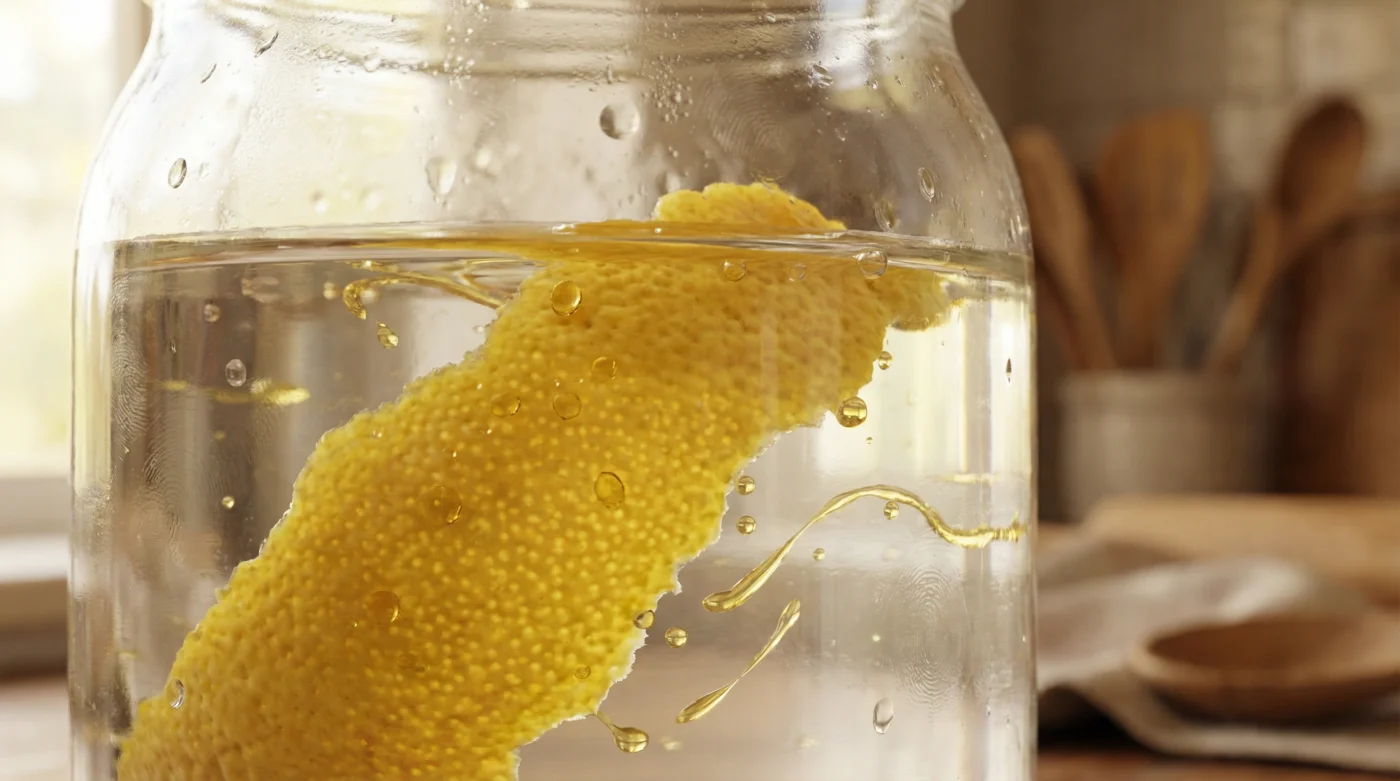
The sharp, almost aggressive sting of basic white vinegar usually catches the back of your throat the moment you unscrew the plastic cap. It is the cheap, reliable workhorse of the British pantry, typically reserved for descaling the kitchen kettle, scrubbing down the worktops, or splashing liberally over Friday night fish and chips. Next to it, on the chopping board, the damp thud of a squeezed lemon husk hitting the bin liner marks the abrupt end of its perceived usefulness. You have pressed the juice for a quick weekend gin and tonic or perhaps to sharpen up a pancake batter, leaving behind a mangled, exhausted yellow shell.
Yet, tossing that spent husk is like throwing away the finest part of the fruit. The real culinary value sleeps quietly in the dimpled skin, completely ignored by the average home cook. Discarded citrus peels usually end up straight in the bin, dismissed as bitter waste that has outlived its brief purpose. We are culturally conditioned to view the fleshy interior as the prize, completely neglecting the resilient outer layer.
Walk into the prep room of a respected independent restaurant, and you will notice an entirely different rhythm. Nothing of value ends up in the compost without a fight. The air smells heavily of bright, natural citrus, not because they are squeezing fresh lemons all day, but because the residual essential oils extract instantly into vinegar creating rich vinaigrettes out of the absolute cheapest ingredients available. The professional kitchen operates on a closed-loop system, where the by-product of one dish becomes the cornerstone of tomorrow’s menu.
The Oil Bank Beneath The Skin
You might assume the watery juice holds the entirety of the fruit’s character and nutritional worth. In reality, the juice merely provides the sharp acidity, while the fragrant, complex soul of the lemon resides deep within the zest. Think of the rind as a densely packed sponge of heavy, fragrant oils sitting like heavy dew inside microscopic balloons. When you violently squeeze the fruit, only a fraction of this oil escapes. The vast majority remains trapped in the rigid cellular structure of the skin.
By marrying a cheap bottle of harsh supermarket vinegar with the discarded husks of your Sunday roast lemons, you create a slow, natural infusion. It softens the harshness, smoothing out the aggressive acidic bite into something round, deeply fragrant, and decidedly expensive-tasting. Vinegar is not merely a sour liquid; scientifically, it is an incredibly effective solvent. It breaches the cell walls of the citrus peel, coaxing out the volatile compounds and absorbing them entirely. The vinegar draws the bright yellow hue and the deep aromatic notes directly into itself, mimicking the expensive, artisanal vinegars sold in boutique delicatessens for ten times the price.
Consider Clara Jenkins, a 34-year-old development chef at a busy zero-waste bistro in Bristol. Clara never lets a single lemon husk reach the local council food bin. At the end of every busy prep shift, she gathers the bruised, aggressively juiced halves from the bar and the kitchen stations. She packs them tightly into large glass kilner jars, flooding them to the absolute brim with basic distilled white vinegar. By Wednesday afternoon, that cheap, industrial-smelling liquid has transformed into a premium house dressing base. This quiet, repetitive habit saves the restaurant hundreds of pounds every month while creating a complex, bright salad profile her regular customers desperately try to replicate at home.
Tailoring Your Infusion Layers
Not every salad or dish demands the exact same bright notes. Depending on your weekly menu and the changing seasons, you can categorise your infused vinegars to suit completely different moods and whatever fresh produce happens to be languishing in the bottom drawer of your fridge.
For the subtle purist, stick strictly to the freshly squeezed lemon skins. You may wish to remove any large, thick chunks of white pith if you fear bitterness, though a short steeping time renders this mostly unnecessary. This clear, bright liquid pairs perfectly with delicate summer leaves, crisp cucumber ribbons, and fresh white fish baked in parchment paper. The pure lemon profile offers a clean, precise acidity that cuts through rich olive oils without muddying the plate.
For the rustic home cook, treat the glass jar as a savoury canvas for the garden. Bruise a sprig of woody rosemary by slapping it against the counter, crush a single clove of garlic with the heavy heel of your hand, and drop them both into the jar alongside the lemon rinds. This creates a robust, earthy profile that cuts beautifully through roasted winter root vegetables, heavily caramelised autumn squash, or a simple plate of braised lentils. The herbs lend a deep, forest-floor note that grounds the high-flying citrus.
- Sliced halloumi avoids squeaky rubbery textures enduring this preliminary hot soak.
- Chestnut mushrooms achieve deep meaty caramelisation undergoing this initial dry sear.
- Raw carrot ribbons form elegant dining garnishes enduring this freezing shock.
- Discarded celery leaves transform bland winter broths replacing expensive fresh herbs.
- Sourdough starter guarantees perfectly risen loaves passing this simple water test.
The Minimalist Extraction Process
Transforming literal waste into a premium pantry staple requires almost zero active effort on your part. It is an exercise in patience rather than a stressful test of culinary skill. You are simply setting up the correct physical conditions for the ingredients to do the heavy lifting themselves. It takes less than five minutes of your time.
Assemble your basic equipment with intention and focus. Cleanliness is strictly paramount here, as you are working with fresh fruit skins and preserving them at room temperature for an extended period. Any rogue bacteria will ruin the entire batch.
- Rinse your juiced lemon halves under the cold tap to remove any stray food particles or sticky fruit sugars.
- Slice the husks into thin, uniform strips so they easily pass through the narrow neck of your chosen bottle or glass jar.
- Pack the peels tightly into the sterilised container, pushing them down with the handle of a wooden spoon.
- Pour the white vinegar directly over the peels, ensuring they are completely submerged below the liquid line to prevent any unwanted mould formation.
- Seal the lid tightly and leave the jar resting in a cool, dark kitchen cupboard away from direct sunlight.
To ensure flawless execution every single time, keep these specific parameters in your tactical toolkit. The optimal steeping time is between four and seven days. Any longer, and the bitter notes from the white pith begin to overpower the delicate citrus oils. Store the jar at a standard room temperature, roughly 18 to 20 degrees Celsius. The ideal ratio is two juiced lemon halves per 500ml of cheap white vinegar. Once you strain the liquid, the finished product keeps indefinitely in the cupboard, though the vibrant flavour peaks beautifully around the one-month mark before gently mellowing out.
A Calmer Approach To Provisioning
Rethinking how you physically handle kitchen scraps completely changes the way you view your weekly supermarket shop. It shifts the mind from a state of constant, expensive consumption to one of quiet, satisfying resourcefulness. You stop seeing a juiced lemon as a messy task completed and start seeing it as the valuable beginning of something entirely new. It builds a sense of quiet resilience in your home cooking.
It removes the frantic dash to buy an expensive, artisan dressing when unexpected friends arrive for dinner. You already have a deeply flavourful, complex acid sitting quietly in the cupboard, ready to be aggressively emulsified with a generous glug of good olive oil, a dab of mustard, and a pinch of flaky sea salt. It makes the daily act of preparing food feel slightly more grounded, distinctly more rewarding, and infinitely more respectful of the ingredients you bring into your home.
‘A professional kitchen functions at its absolute best when the discarded end of one ingredient naturally becomes the flavourful foundation of the next.’
| Key Point | Detail | Added Value for the Reader |
|---|---|---|
| Zero-Waste Strategy | Repurposing spent lemon husks directly into household vinegar. | Saves money while drastically reducing food waste at home. |
| Instant Flavour Extraction | Vinegar acts as a natural solvent for citrus essential oils. | Transforms a harsh 40p ingredient into a premium, gourmet product. |
| Pantry Independence | Creating long-lasting, shelf-stable salad dressings from scratch. | Eliminates the need for expensive, store-bought vinaigrettes forever. |
Frequently Asked Questions
Will the vinegar go mouldy if left on the kitchen counter? As long as the lemon peels are completely submerged beneath the highly acidic vinegar, mould cannot form. The acid creates a hostile environment for bacteria.
Can I use malt or brown vinegar instead of white? White vinegar provides a clean, neutral canvas for the bright lemon oils. Malt vinegar has a heavy, roasted profile that will completely overpower the delicate citrus notes.
Do I need to wash the lemons before juicing them? Yes, always give the fruit a thorough scrub under warm water to remove any protective commercial waxes applied by the supermarket.
How long does the infused vinegar actually last? Once strained of the physical peels, the pure infused liquid will safely sit in a dark cupboard for over a year without spoiling.
Can I use oranges or grapefruits instead? Absolutely. Grapefruit offers a wonderful, slightly bitter botanical edge, while orange peel lends a softer, sweeter profile perfect for winter salads.