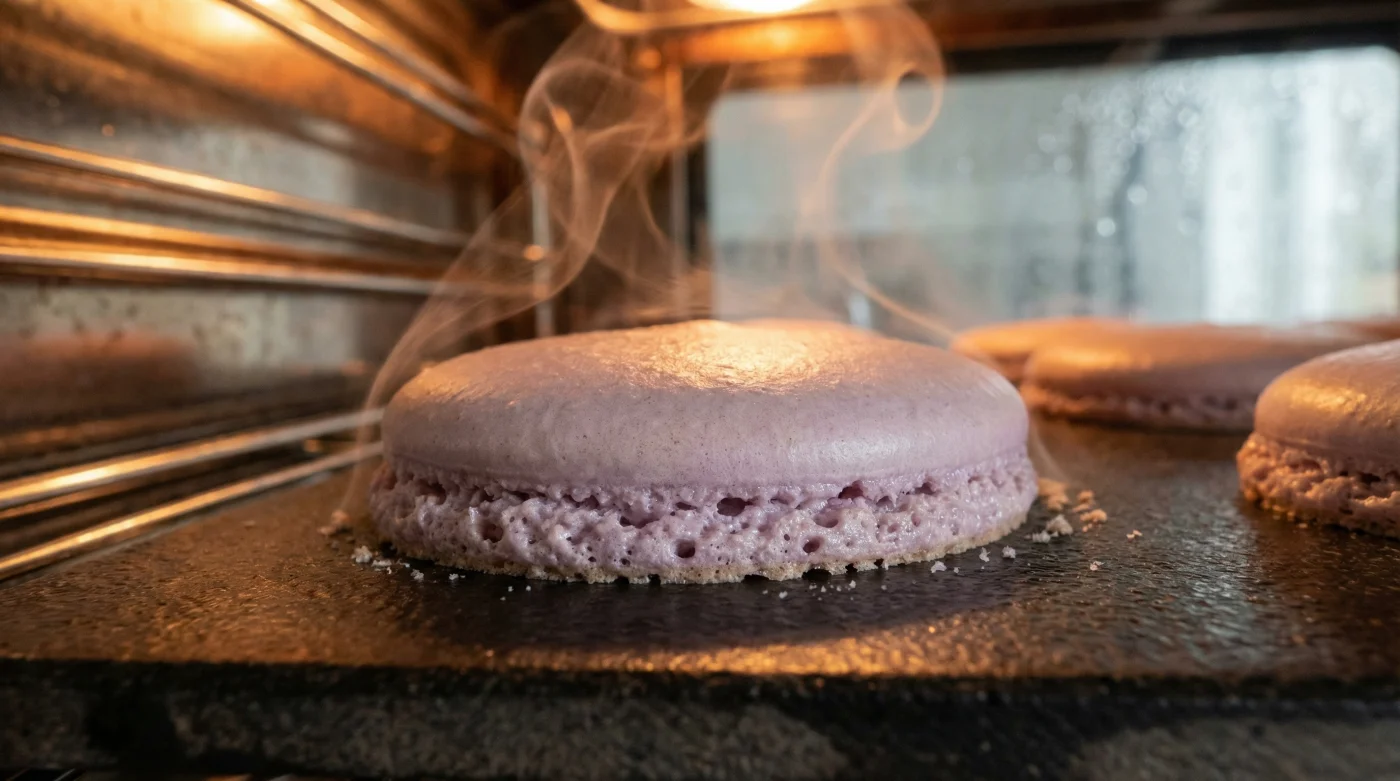
You are standing in your kitchen on a damp Tuesday afternoon, watching a tray of pale almond circles. The air smells softly of vanilla and milled nuts, but the atmosphere is distinctly tense. You poke a piped circle with your index finger. It sticks, pulling away a tiny, wet peak of batter. You sigh, wipe your finger on your apron, and agree to wait another twenty minutes. In the notoriously damp British climate, waiting for French macarons to dry can feel like waiting for a delayed train in the freezing rain. The ambient moisture clings to the sugar, refusing to let it set.
The traditional rules of pastry dictate absolute, unwavering patience. You are repeatedly told to let the shells rest on the worktop until a dull, matte skin forms. This skin acts as a protective shield, forcing the expanding air downwards during the bake so the distinctive ruffled feet can erupt elegantly from the base. Yet they still crack, splitting down the middle like a dry riverbed despite your careful obedience. You blame your folding technique, your almond flour, or perhaps just bad luck.
In a bustling commercial bakery, there is simply no time to bargain with atmospheric humidity or superstition. A professional pastry line cannot pause production because it happens to be raining outside. The secret to consistent, flawless results doesn’t lie in extended drying times, pleading with the batter, or anxiously checking the local weather forecast. It lies in taking absolute control of the environment, manipulating the oven atmosphere itself rather than hoping for the best on the counter.
By completely abandoning the fragile drying phase and intentionally introducing a whisper of ambient moisture into the heat, the entire structural integrity of the confection behaves differently. The shell remains pliable, allowing the almond base to rise evenly, smoothly, and securely without fracturing the delicate surface. It is a fundamental shift in logic that turns a famously unpredictable recipe into a reliable, repeatable science.
Rethinking the Delicate Shell
We are taught from our very first attempts to view the macaron shell as a fragile, temperamental thing that demands complete drought to survive. This prevailing myth forces passionate home bakers to tiptoe around their kitchens, terrified of opening a window, boiling a kettle, or even breathing too heavily near the resting trays. We treat the batter as if it is actively looking for an excuse to fail.
Instead, try to think of the carefully piped batter as a flexible, breathing fabric rather than a rigid pane of glass waiting to shatter. When subjected to the dry, immediate heat of a conventional domestic oven, the outside of the shell seizes rapidly. The surface hardens before the interior has a chance to warm up, forcing the expanding trapped air inside to violently break through the weakest point—usually straight through the top.
When you introduce a slight, persistent humidity into the baking chamber, the environment changes entirely. The airborne moisture acts as a gentle, invisible buffer. It lightly coats the surface of the piping, keeping the top layer supple just long enough to coax the warming egg whites to expand upwards and outwards uniformly, establishing those coveted, frilly edges.
Eloise, a 42-year-old pastry chef running a highly acclaimed, high-volume bakery in York, discarded entirely ruined batches during wet Yorkshire winters. On heavily overcast days, the ambient humidity in the historic stone building simply refused to let the shells set properly, resulting in thousands of pounds of wasted almonds and frantic, tearful mornings before opening time.
One morning, a thoroughly distracted apprentice accidentally left a small, shallow aluminium tin of hot water in the base of the commercial deck oven after baking sourdough. Instead of collapsing into a soggy, useless mess, the un-rested macarons placed inside bloomed perfectly. The gentle, rolling steam had provided a delayed setting time, allowing the beautiful feet to form flawlessly before the intense heat could brutally crisp the top layer. It was a complete revelation.
Tailoring the Environment
Naturally, not every home kitchen behaves exactly the same way as a professional bakery in Yorkshire. Adapting this moisture-rich method requires a brief, honest read of your own baking space and domestic equipment. Adjusting to your specific oven guarantees that the underlying science translates flawlessly into your own home, regardless of what appliance you are working with.
For the naturally cautious baker, deliberately introducing liquid water into an environment meant for delicate meringue sounds entirely counter-intuitive. If you are nervous, start small. Use a single ceramic ramekin filled with boiling water, placed in the back corner of your lowest oven shelf ten minutes before you intend to bake. Observe how the slight fog alters the rise.
- Traditional Yorkshire puddings achieve towering heights resting batter at room temperature.
- Chicken tikka masala triggers urgent product recall over sudden glass contamination.
- Massive product recall strips popular infant formula from British pharmacies nationwide.
- Pure vanilla extract prices surge dramatically amid unexpected global export restrictions.
- Bagged baby spinach faces urgent product recalls over undetected bacterial blooms.
Fan ovens are notoriously aggressive beasts, constantly blasting your delicate, wet piping sideways, causing frustratingly lopsided feet or hollow interiors. If you cannot turn the fan off, you must create a physical buffer. Slide an empty, solid baking tray onto the shelf directly above your macarons to elegantly deflect the harshest, dry wind away from their sensitive tops.
The Steamed Bake Method
Transitioning to this new, proactive rhythm means completely abandoning the anxious, helpless waiting period on the worktop. Trust the immediate heat to do the heavy structural lifting for you. You are no longer a passive observer hoping for a skin to form; you are an active participant guiding the bake from the moment the batter leaves the nozzle.
It is entirely about working deliberately and mindfully. Prepare your station before you begin folding so there are no frantic delays.
- Vertical piping: Pipe your batter holding the bag strictly straight to ensure perfectly round discs.
- Air release: Tap the heavy aluminium tray firmly twice on your worktop to release any large, trapped air bubbles.
- Pre-steaming: Ensure your oven is fully primed, heated, and steaming gently before the tray goes in.
The Tactical Toolkit for this technique is wonderfully straightforward and requires no specialist equipment beyond what you already own. Set your oven temperature to exactly 140°C for conventional baking, or drop it down to 130°C if you are forced to battle a fan. Precision here is non-negotiable.
Pour exactly fifty millilitres of freshly boiling water into a shallow metal dish at the absolute base of the oven. Slide your freshly piped macarons onto the middle shelf without a second of delay, and bake for precisely fourteen minutes. The slight humidity will gently cook the base, pushing the ruffled feet downwards while the top remains perfectly smooth, shiny, and structurally intact.
Reclaiming the Joy of Baking
Conquering this notoriously fickle, intimidating confection fundamentally shifts your entire perspective on advanced pastry. It removes the fear from a recipe that has systematically bullied, frustrated, and defeated passionate home bakers for decades. You move from following rigid, outdated rules to truly understanding the physical reactions happening behind the glass door.
Baking in your home should never feel like walking a stressful tightrope over an abyss of wasted, expensive ingredients. By understanding how controlled moisture interacts with gentle heat, you turn a fraught, unpredictable process into a quietly confident, deeply satisfying rhythm that yields professional luxury every single time.
Moisture is rarely the enemy of delicate pastry; it is sudden, aggressive heat that abruptly breaks our carefully piped work.
| Key Point | Detail | Added Value for the Reader |
|---|---|---|
| Ambient Steam | 50ml of boiling water placed in the oven base. | Eliminates the frustrating need for two-hour resting times in humid weather. |
| Immediate Bake | Transitioning straight from piping to the hot oven. | Saves precious time and stops the delicate batter from deflating on the counter. |
| Lowered Heat | Dropping the temperature to 130°C for fan ovens. | Prevents unwanted browning while ensuring a fully baked, pleasantly chewy centre. |
Frequently Asked Questions
Will the steam make my shells overly soft or soggy?
Not at all. The tiny volume of water simply delays the top crust from setting too rapidly, burning off completely by the end of the bake to leave a crisp exterior.Do I still need to age my egg whites for this to work?
While aged whites certainly offer better meringue stability, the steam method provides such a deeply controlled rise that perfectly fresh whites often perform just as beautifully.Can I use a glass dish for the boiling water?
A thin metal tin is highly preferable as it heats rapidly and releases steam instantly, whereas heavy glass takes far too long to warm up and impact the environment.Why are my macarons still coming out slightly lopsided?
This usually points to uneven oven heat distribution or an angled piping bag, rather than a moisture issue. Ensure your bag is held at a strict ninety-degree angle.How do I genuinely know when they are perfectly baked?
Gently nudge the top of a finished shell with your finger. If it moves independently from the ruffled feet below, they need exactly one more minute in the residual heat.