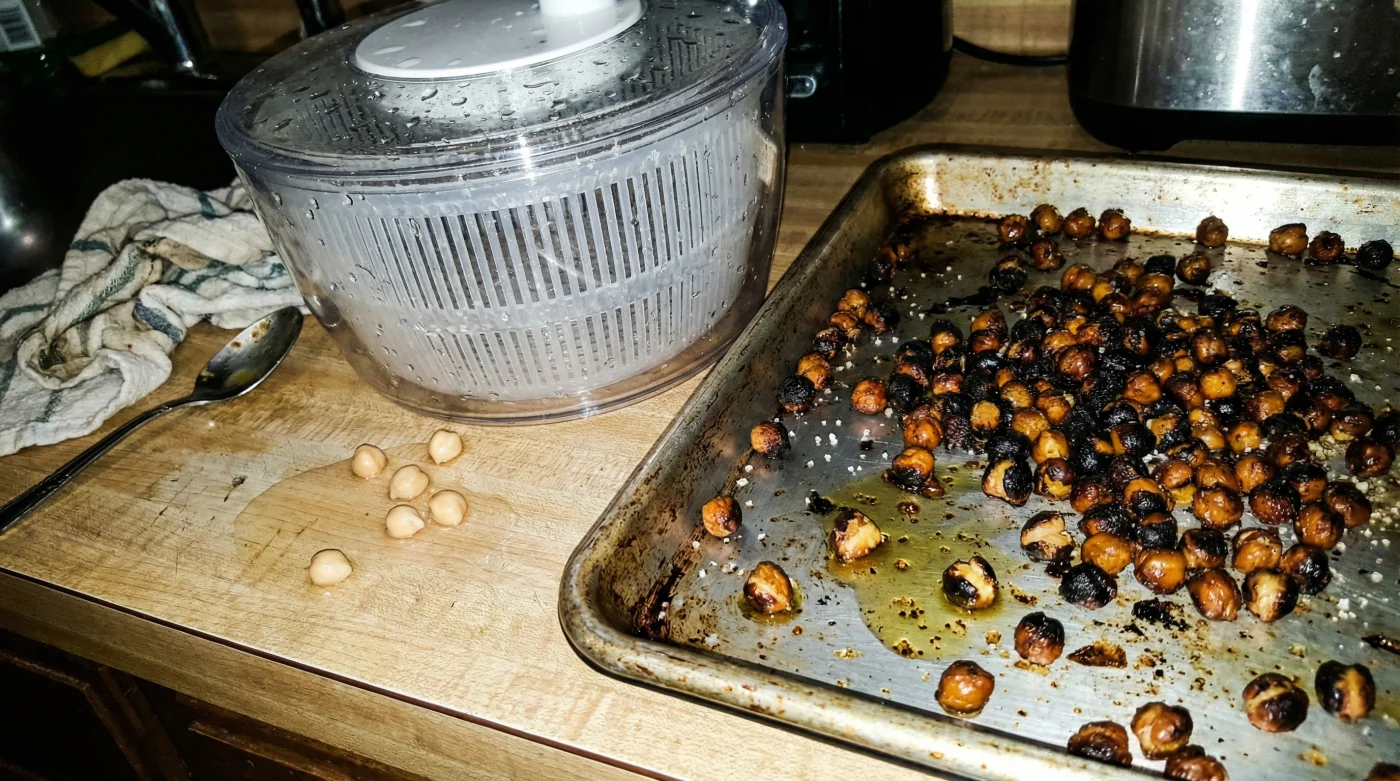
You twist the ring pull, hearing that familiar metallic pop before the thick, viscous aquafaba glugs heavily down the sink. You rinse the pale, beige spheres under the cold tap, shaking the wire sieve over the basin and hoping, rather blindly, for the best. There is an enduring myth that a hot oven is enough to miraculously transform this wet, starchy mass into something resembling a luxury bar snack.
Tossing them onto a roasting tray, you drown them in expensive olive oil and a heavy dusting of spices, crossing your fingers for a textural transformation. Yet, forty minutes later, they emerge from the heat chewy, slightly chalky in the middle, and entirely lacking the promised crispness that you so desperately crave.
The fault does not lie with your oven, nor is it a lack of premium ingredients. The difference between a sad, mealy pulse and a spectacularly crisp bite comes down to simple physics and a completely unexpected piece of kitchen equipment. The secret lies not in adding more heat, but in aggressively extracting the invisible enemy beforehand.
When you drag that plastic bowl from the back of the cupboard, you are about to rewrite the rules. Forcing complete dehydration before roasting allows the starch to blister and shatter, creating a brittle, airy texture you likely never thought possible from a basic 60p tin.
The Architecture of a Shattering Starch
Think of a tinned chickpea as a tiny, waterlogged sponge wearing a tightly fitted raincoat. If you put that wet raincoat straight into a hot oven, the moisture trapped underneath immediately begins to boil. The chickpea effectively steams itself from the inside out, softening the starches rather than crisping them. The oil you poured over the top merely acts as a seal, trapping the humidity inside.
To achieve a truly resounding crunch, you must strip away that surface water entirely. This is where the aggressive centrifugal force of a salad spinner changes everything. It takes the passive act of draining and turns it into a mechanical extraction.
By spinning the rinsed chickpeas vigorously, you physically throw the clinging water droplets off the skins. Some of the delicate translucent skins will naturally loosen and fall away during this violent process. Do not discard them; these stray skins will later become the most prized, potato-crisp-like fragments on your baking tray.
Eleanor, a 42-year-old recipe developer working from a draughty kitchen in Bristol, spent months trying to replicate the shatteringly crisp snacks served in tiny Andalusian taverns. Her breakthrough arrived entirely by accident when she absentmindedly tossed a drained tin of pulses into her spinner alongside a handful of wet rocket. The resulting batch baked up with an audible, glass-like snap that echoed across the room.
Adapting the Crunch for Your Cupboard
Once you have mastered the mechanical dehydration, the flavour profiles are entirely in your hands. A perfectly dry surface acts as a beautifully blank canvas, eagerly grabbing onto whatever spices you choose to throw its way without clumping or sliding off.
For the purist, a generous pinch of flaky Cornish sea salt and a glug of cold-pressed rapeseed oil is all that is required. The oil lightly coats the completely dry exterior, creating a golden, blistering crust that sings alongside a chilled glass of dry white wine.
If you prefer a savoury grazer’s approach, toss the spun chickpeas in smoked paprika, ground cumin, and a whisper of garlic powder before roasting. The dry spices adhere beautifully to the parched skins, forming a thick, flavourful crust that refuses to wash away in a puddle of hot fat.
- Traditional Yorkshire puddings achieve towering heights resting batter at room temperature.
- Chicken tikka masala triggers urgent product recall over sudden glass contamination.
- Massive product recall strips popular infant formula from British pharmacies nationwide.
- Pure vanilla extract prices surge dramatically amid unexpected global export restrictions.
- Bagged baby spinach faces urgent product recalls over undetected bacterial blooms.
The Centrifugal Method
The process requires very little of your actual time, but it demands absolute mindfulness in its execution. Treat the preparation not as a mundane chore, but as a deliberate ritual of extracting maximum flavour from a humble staple.
Begin by rinsing the pulses thoroughly under cold running water until the liquid runs completely clear. You must absolutely discard the soapy-looking foam, as residual aquafaba will coat the chickpeas in a film that stubbornly inhibits the drying process.
- Place the thoroughly rinsed chickpeas directly into the plastic basket of your salad spinner.
- Spin aggressively for at least twenty seconds, then remove the basket and drain the accumulated water from the outer bowl.
- Repeat this vigorous spinning process twice more, until not a single drop of water appears in the basin.
- Tip the now-dry chickpeas onto a clean cotton tea towel and gently massage them to absorb any microscopic lingering moisture.
You will notice an immediate, distinct textural change; the surface should feel matte, dry, and slightly chalky against your fingertips. This chalkiness is the naked starch crying out for the harsh environment of a hot oven.
Now, transfer them to a wide, heavy-duty baking tray, ensuring they sit in a single, uncrowded layer. You must give them space to breathe, as any overcrowding will cause them to revert to steaming, instantly ruining all your careful preparation.
- Temperature: 200°C (180°C Fan / Gas Mark 6).
- Time: 35-40 minutes, shaking the tray firmly once at the halfway mark to ensure even browning.
- The Cooling Window: Leave them on the tray for exactly 15 minutes after removing from the oven; this ambient cooling period is when the final, crucial crisping occurs.
Beyond the Snack Bowl
Mastering this surprisingly simple, mechanical technique offers far more than just a passing culinary thrill on a Friday evening. It fundamentally transforms a mundane pantry staple into an ingredient of genuine luxury.
You begin to see the immense potential hiding in plain sight within your cupboards. These shattered, blistered spheres add immediate weight and a satisfying texture to a wilted winter salad, or provide a rich, earthy crunch scattered generously across a bowl of smooth butternut squash soup.
Ultimately, this is about taking deliberate control of the physical variables in your kitchen. By simply removing the water, you are reclaiming the joy of cooking, turning an everyday frustration into a reliable, deeply sensory triumph.
Treating your everyday pantry staples with the respect and mindfulness of a fresh, seasonal ingredient is the quietest revolution a home cook can stage.
| Key Point | Detail | Added Value for the Reader |
|---|---|---|
| Moisture Control | Centrifugal force physically rips away trapped water droplets from the legume. | Guarantees a shattering, glass-like crunch instead of a hollow, chewy centre. |
| Spice Adhesion | A completely dry skin acts as a magnet for ground spices and seasonings. | Prevents your carefully chosen flavours from washing away into the roasting fat. |
| Skin Blistering | Loose, dehydrated skins detach and roast independently on the hot metal tray. | Creates incredibly light, airy fragments that mimic the texture of artisan potato crisps. |
Frequently Asked Questions
Do I need to peel the chickpeas first?
Not at all. The vigorous spinning action actually loosens the skins perfectly without manual labour. Leave them in the tray; these loose skins become the crispiest, most delicate parts of the entire batch.Can I store them once roasted?
Yes, but you must let them cool entirely on the baking tray first. Once they reach room temperature, keep them in an airtight container lined with a sheet of kitchen paper to absorb any residual humidity. They will stay brilliantly crisp for up to three days.What if I don’t own a salad spinner?
While the spinner is the most efficient method, you can replicate the effect by spreading the rinsed chickpeas on a clean, dry tea towel, placing another towel on top, and vigorously rubbing them back and forth until the skins are completely matte and dry.Should I oil them before or after spinning?
Always oil them after spinning. Oil and water repel one another; if you oil wet chickpeas, the fat cannot adhere to the skin. Spin them bone dry, then massage the oil in just before they hit the roasting tray.Why did mine explode in the oven?
Popping in the oven is a sign of trapped steam violently escaping. This happens when the chickpeas haven’t been dehydrated enough prior to roasting. Ensure you spin them until the plastic basin is completely devoid of water droplets.