The Architecture of Air and the Phantom Grease
You know the sound. The rhythmic, hopeful clatter of a balloon whisk against metal, echoing through your kitchen on a quiet Sunday afternoon. You catch the faint, sweet scent of caster sugar dissolving into egg whites. You stop whisking, lift the metal loops to inspect your handiwork, and your heart sinks. Instead of an architectural, cloud-like peak standing proud, the mixture slumps. It weeps. It breathes through a pillow, exhaling all the trapped air you just worked so hard to beat into it. You scrape the soupy, glossy puddle into the food waste bin, entirely perplexed. After all, you used a bowl fresh from the dishwasher. It was spotless.
Here lies the greatest misconception of the home kitchen: the belief that heat and a modern washing-up pod equate to culinary purity. To a meringue, your gleaming bowl is a minefield. Building a meringue structure is like attempting to erect a suspension bridge on a frozen lake. The proteins in the egg whites need to unfold and interlock, trapping air and sugar in a microscopic net. But fat is the absolute enemy of this delicate architecture.
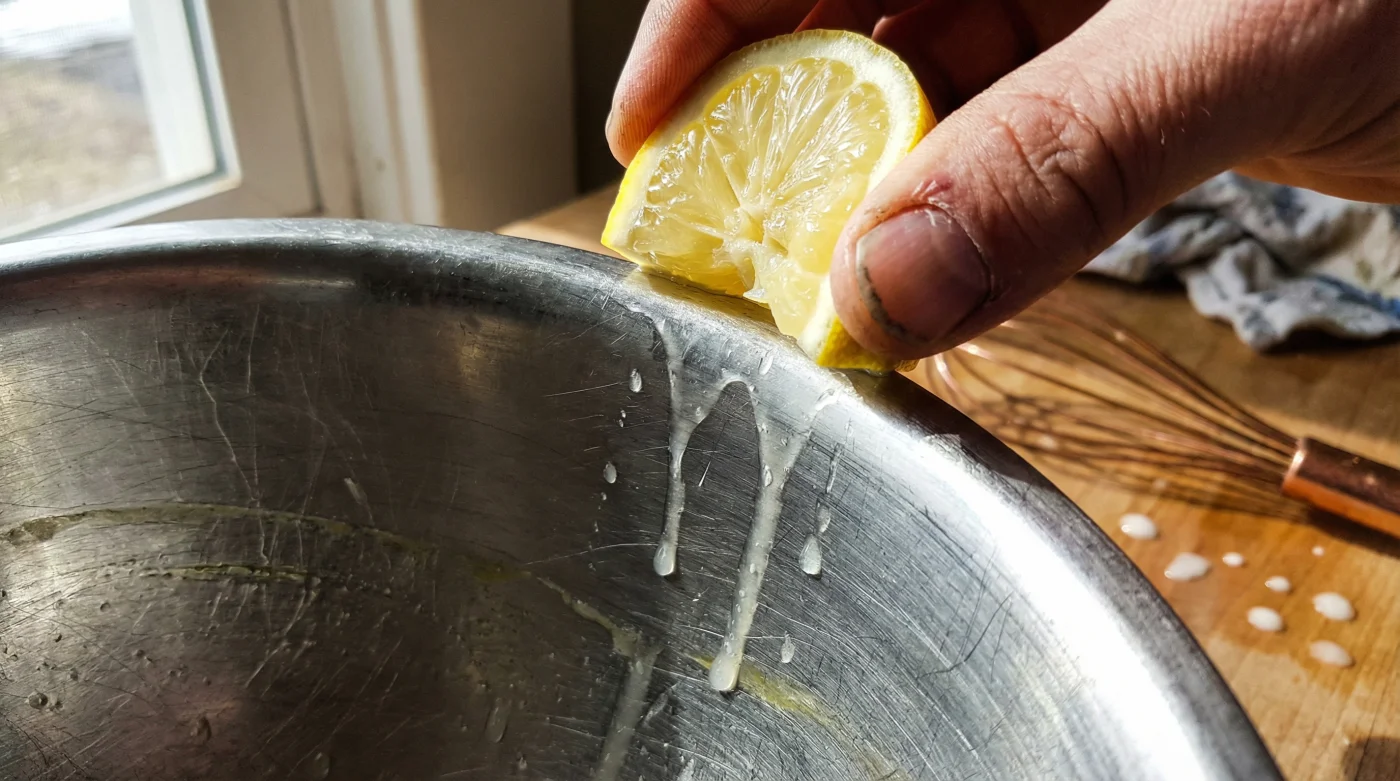
Even a microscopic trace of fat—leftover oil from last night’s salad dressing, invisible butter residue, or the slick chemical film left behind by commercial dishwasher rinse aids—will coat the egg white proteins. This prevents them from bonding. Your dishwasher cleans for hygiene, not for structural pastry engineering. I learned this the hard way while watching Julian, a veteran pastry chef in a bustling Bristol restaurant. I was observing his prep for service, watching him effortlessly pipe towering, razor-sharp peaks of Italian meringue for a lemon tart. Before a single egg was cracked, he picked up a pristine, seemingly perfect stainless steel bowl and vigorously rubbed a freshly cut lemon wedge around the entire inside surface.
‘Dishwashers are liars,’ he told me, wiping the juice away with a clean piece of kitchen roll. ‘They leave a ghost of yesterday’s dinner. The acid in this lemon eats the phantom grease.’ This is the foundational secret to those structural, restaurant-look plated desserts.
| Home Chef Profile | The Struggle | The Plating Benefit of the Lemon Wipe |
|---|---|---|
| The Dinner Party Host | Pavlovas that weep sugar syrup onto the serving platter. | Creates a waterproof, crisp shell that holds vibrant fruit without collapsing. |
| The Comfort Baker | Lemon meringue pies with a shrinking, weeping topping. | Ensures the meringue anchors perfectly to the pastry crust, looking professionally finished. |
| The Modern Plater | Inability to pipe sharp, defined drops of meringue. | Yields a dense, stiff structure that holds intricate piping nozzle shapes for hours. |
The Ritual of the Citrus Cleanse
Achieving that flawless, restaurant-look plating at home requires abandoning the idea of ‘good enough’. You must actively prepare your equipment just as meticulously as you weigh your ingredients. The lemon juice wipe is not just a preparation hack; it is a vital physical step in the recipe. It resets the environment. Take your mixing bowl. Always choose glass, copper, or stainless steel. Plastic is a sponge for oils and should never be used for whipping egg whites.
Slice a fresh lemon in half. Press the exposed flesh against the inside of the bowl and rub it firmly across every inch of the surface, right up to the rim. Squeeze slightly so the acidic juice tracks down the sides. Do not stop at the bowl. Take your whisk attachment or hand whisk and wipe the lemon over the wire loops. Once everything is coated in a thin film of citrus juice, take a piece of clean, dry kitchen roll and wipe it completely dry.
You will instantly feel a difference in the friction. The bowl will literally feel squeaky, devoid of any microscopic slickness. This physical action takes less than thirty seconds, but it secures your investment of time, electricity, and ingredients, ensuring your dessert holds its shape long enough to dazzle your guests.
| The Element | Microscopic Reaction | Structural Outcome |
|---|---|---|
| Invisible Fat Residue | Coats albumen (egg protein) strands, preventing them from unfurling. | A flat, bubbly liquid that refuses to hold air, ruining plating potential. |
| Dishwasher Rinse Aid | Leaves a hydrophobic film to shed water during the drying cycle. | Interferes with the sugar-water balance in the meringue, causing immediate weeping. |
| Citric Acid (Lemon Juice) | Breaks down lipid molecules and neutralises alkaline residue. | Provides a perfectly sterile, grippy surface for proteins to climb and stabilise. |
Elevating the Home Plate
- Greggs sausage rolls face major recipe overhaul angering loyal bakery customers.
- Cheddar cheese prices surge dramatically following unexpected domestic dairy yield drops.
- Meringue peaks collapse immediately ignoring this invisible lemon juice bowl wipe.
- Red onions cause severe eye watering missing this simple chilling phase.
- Basmati rice turns perfectly fluffy using this simple tea towel trick.
| The Meringue Plating Checklist | Seek | Avoid |
|---|---|---|
| Bowl Material | Stainless steel, heavy glass, or copper. | Plastic bowls or anything with a scratched, porous interior. |
| Drying Method | Fresh paper towel immediately after the lemon wipe. | The tea towel hanging on your oven door (often harbours grease from hands). |
| Egg Separation | Cracking eggs into a separate, small bowl first. | Separating directly over your pristine mixing bowl (risks yolk contamination). |
The Architecture of Dessert
We often blame ourselves when a recipe fails. We assume we over-whisked, under-whisked, or bought the wrong brand of caster sugar. But baking is simply physics combined with mindfulness. By taking a brief moment to run a lemon wedge around your bowl, you are taking control of the unseen variables. You are respecting the ingredients and guaranteeing the structural integrity of your dish.
When you bring that finished dessert to the dining table—whether it is a rustic Eton Mess layered in tall glasses or a sharply piped, torched Alaska—you will see the difference. The peaks will hold their defiant, snowy posture. They will not collapse under the weight of a berry compote or a drizzle of dark chocolate. The visual impact is immediate and striking.
You are no longer just following a recipe, hoping for the best. You are employing the quiet, rigorous standards of a professional kitchen, ensuring your hard work translates into a breathtaking visual and textural experience.
A dessert is only as strong as its foundation; if you allow a ghost of fat to enter your meringue, you are asking the wind to hold up the sky. – Julian Hayes, Executive Pastry Chef.
Frequently Asked Questions: The Meringue Foundation
Can I use bottled lemon juice instead of a fresh wedge?
Yes, a few drops of bottled lemon juice on a piece of kitchen roll will cut through the grease effectively, though a fresh wedge provides better mechanical scrubbing friction.What if I don’t have a lemon?
White vinegar is a brilliant substitute. Dampen a piece of kitchen roll with a splash of white vinegar and wipe the bowl down. The smell dissipates completely before you begin whipping.Why does my plastic bowl ruin meringue?
Plastic is naturally porous and lipophilic (fat-loving). Over time, microscopic scratches trap oils from other foods that neither washing-up liquid nor the dishwasher can fully remove.Does the lemon juice alter the taste of the meringue?
Not at all. The trace amount left behind is negligible in flavour, and the slight acidity actually helps stabilise the egg white proteins further.Can I wipe the bowl down hours in advance?
It is best to do it immediately before whipping. Dust and airborne cooking oils can settle on a prepped bowl if left sitting on the kitchen counter.