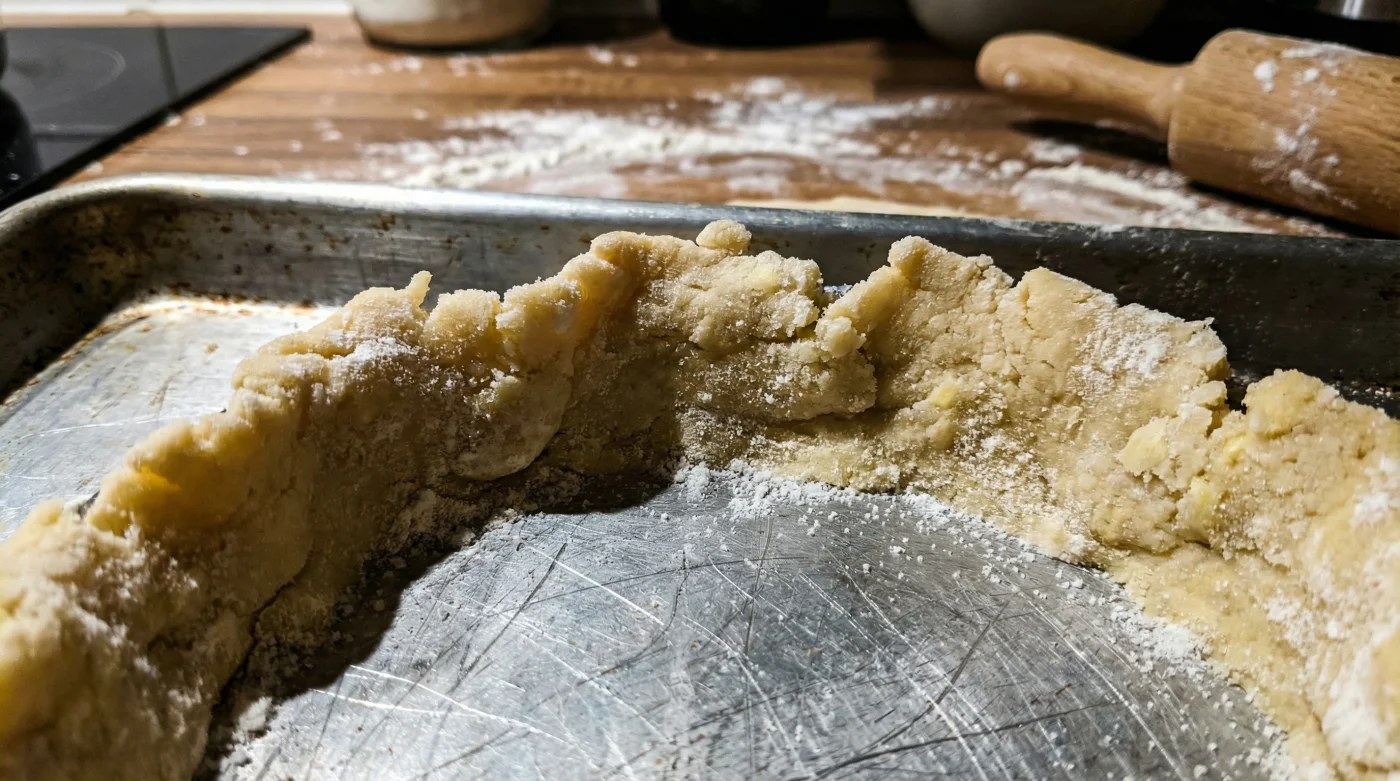
There is a distinct quietness to a kitchen right before the oven goes on. Your hands are dusted with fine, white powder, pressing a disc of chilled dough into a fluted metal tin. The air smells faintly of raw butter and anticipation. You pinch the edges, hoping this time, the shortcrust holds its elegant shape.
Usually, this is where the frustrating ritual begins. You tear a sheet of parchment, crinkle it into a ball, smooth it out, and fill the delicate shell with handfuls of clattering ceramic beans. They feel heavy, almost clumsy, dragging down the very sides you spent ten minutes meticulously pressing upward.
Yet, when the timer chimes and you peel back the paper, the disappointment is painfully familiar. The sides have slumped. The base is slightly damp. The crust you envisioned as a crisp, structural marvel looks tired and thick. It turns out, professional kitchens abandoned this tedious, heavy-handed method years ago.
Thermodynamics Over Gravity
Think of your shortcrust pastry as a delicate suspension bridge made entirely of fat and starch. When you place it into a hot oven at room temperature, the butter melts long before the starches have a chance to solidify and lock into place. Gravity immediately pulls the melting structure downwards.
The traditional solution has always been brute force: pinning the dough against the tin with dead weight. But you are fighting the symptom, not solving the actual cause. If you remove the heat-shock vulnerability entirely, the need for physical weights disappears.
By freezing the unbaked pastry shell entirely solid, you are changing the rules of the bake. The outer edges of the pastry come into contact with the intense heat of the oven, cooking and crisping the flour matrix while the internal butter is still too cold to liquefy and collapse. It is a shift from relying on gravity to mastering temperature.
This quiet rebellion against baking beans was laid bare to me by Thomas, a 42-year-old head baker operating a tiny patisserie near the Roman Baths. Watching him prepare forty lemon tarts before dawn, the absence of ceramic weights was striking. Instead, he lined his tins, sculpted the edges, and shoved the entire racks straight into a deep freeze at minus eighteen degrees. “Weights just crush the natural flakiness,” he muttered, pulling frozen-solid, pale shells directly from the ice and sliding them naked into a roaring oven. The butter, shocked by the sudden heat, crisped instantly, leaving a razor-sharp, flawless edge.
Adjusting for Your Environment
Not all kitchens operate like a climate-controlled patisserie. How you apply this sub-zero technique depends heavily on the time you have and the exact nature of your ingredients.
For the Weekend Purist
If you are rubbing your butter and flour by hand, the friction of your fingers has already warmed the fat. Once your shell is lined, it needs absolute zero. A mere half-hour in the fridge is a common mistake; it merely cools the dough rather than setting it like stone. Commit to a full two hours in the freezer until the pastry feels like tapping on hard plastic.
For the Rushed Host
Perhaps you are relying on a block of shop-bought shortcrust. Commercial pastry often contains slightly different fat ratios to extend its shelf life, making it prone to snapping if rushed. Roll it gently, line your tin, and if freezer space is tight, use the coldest shelf at the very back of your fridge overnight. The slow, intense chill achieves a similar structural rigidity without the rapid freeze.
For the Humid Kitchen
During a sticky British summer, pastry is your worst enemy. The air itself works against the butter. Work in small bursts, returning the dough to the fridge the moment it begins to shine. When you finally line the tin, the freezing phase is non-negotiable.
The Zero-Weight Method
Executing this requires a shift in how you sequence your baking. It is about working methodically and allowing cold air to do the heavy lifting.
The transition from frozen solid to perfectly baked relies on an unyielding blast of heat. You want the oven preheated thoroughly, not just reaching the temperature and beeping, but sitting at that heat for a good twenty minutes before the pastry goes in.
- Roll and line: Press your dough evenly into your metal tart tin, ensuring the base corners are firmly pushed in to prevent air pockets.
- The overhang: Leave a generous lip of pastry draping over the edge of the tin; this acts as a structural anchor during the initial bake.
- The deep freeze: Place the entire tin uncovered into the freezer for a minimum of one hour, or until completely solid to the touch.
- The shock bake: Transfer the frozen shell directly into a preheated 200°C (180°C Fan) oven. Bake naked for 15-18 minutes until golden.
Your Tactical Toolkit for this technique is minimal. A heavy metal baking tray left in the oven while it preheats will act as a heat-sink, immediately searing the base of the tart tin the second you slide it in, banishing the dreaded soggy bottom forever. You will also need a serrated knife to neatly trim the baked overhang once the shell has completely cooled.
A Foundation of Calm
When you stop relying on heavy crinkled parchment and dusty beans, a layer of stress lifts from your baking routine. You are no longer crossing your fingers, hoping the walls of your pie haven’t collapsed into a sad, buttery puddle.
Instead, you are working with the ingredients’ natural properties. You dictate the terms of the bake. The crisp, sharp edges of your finished tart shell become a quiet nod to your understanding of temperature and timing.
Baking for family or guests shifts from a frantic, messy affair into something controlled and predictable. You can prepare these solid, frozen shells days in advance, sleeping soundly knowing that when the time comes to bake, your foundation is absolutely secure.
The cold is not just a resting phase; it is the silent architecture of your pastry.
| Method Phase | The Traditional Flaw | The Frozen Advantage |
|---|---|---|
| Preparation | Fiddling with parchment and heavy weights. | Zero extra tools required; hands-free setting. |
| Baking Phase | Butter melts slowly, walls drag downwards. | External crust sets instantly while internal fat remains cold. |
| Final Texture | Often compressed and slightly damp at the base. | Light, incredibly flaky, and perfectly crisp underneath. |
Frequent Frustrations Answered
Will the glass or ceramic dish shatter if moved from freezer to oven?
Yes, thermal shock can crack glass or ceramic. This method is specifically designed for standard metal tart tins, which conduct heat rapidly and safely.Do I need to prick the base with a fork?
When baking a frozen shell naked, docking (pricking) the base is still highly recommended to let trapped steam escape from the incredibly hot metal tray.How long can I leave the raw shell in the freezer?
You can wrap the frozen tin tightly in cling film once solid and leave it for up to three months. Bake it directly from frozen whenever required.What if my pastry still shrinks slightly?
This usually points to overworking the dough initially. Stretching the dough into the tin rather than gently pressing it down causes gluten to snap back when heated.Can I use this method for puff pastry?
Puff pastry requires a different approach due to its extreme rise. This freezing technique is strictly for shortcrust, sweet shortcrust, and pate sablee.