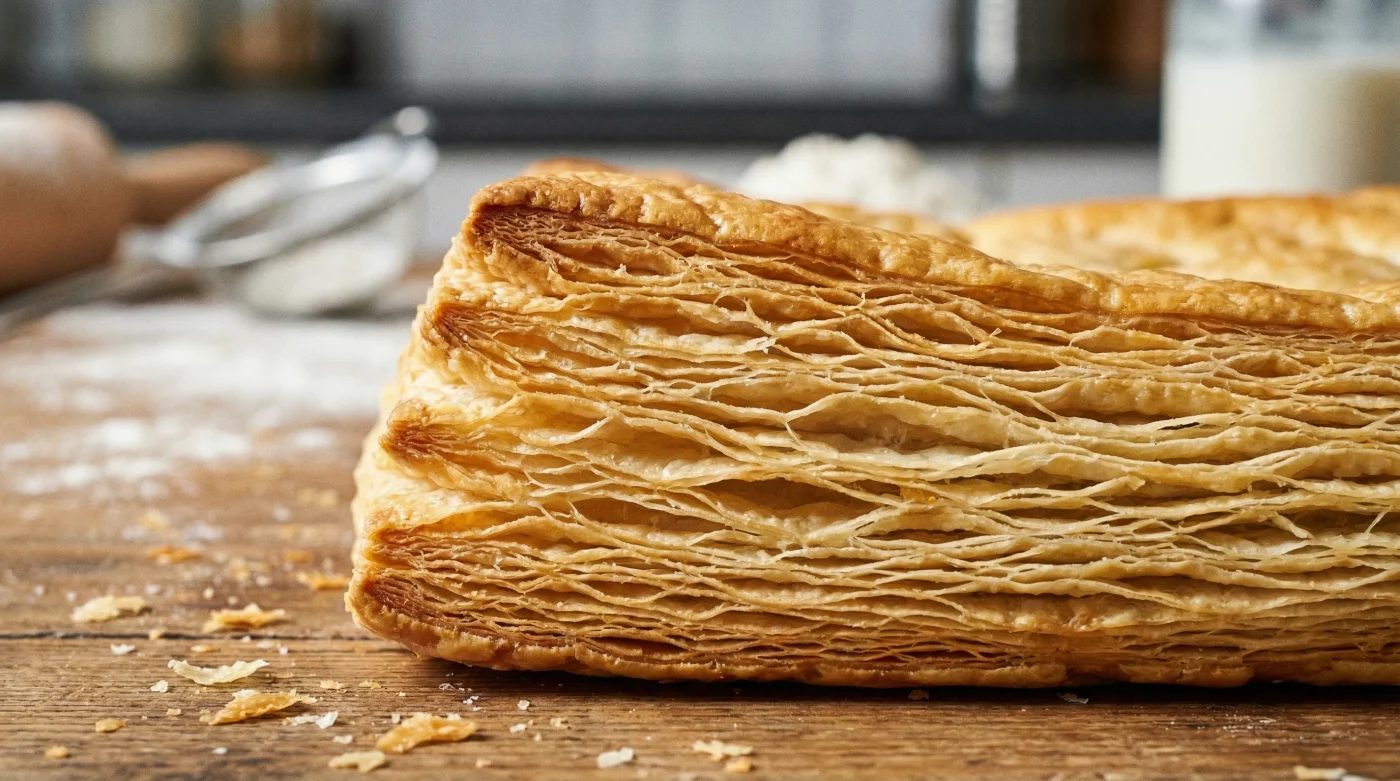
The oven light clicks on, casting a warm orange glow across the baking tray. You watch through the glass as the butter begins to sizzle, anticipating that spectacular, airy rise you see in artisan bakery windows. The scent of toasted flour and rich dairy fills the kitchen, promising a perfect weekend treat that looks as good as it tastes.
Yet, half an hour later, you pull out a dense, heavy disappointment. The edges are fused solid, gleaming with a dark, varnished sheen, whilst the middle barely lifts off the parchment paper.
It is a frustration felt by anyone who has ever wrestled with a block of all-butter dough on a Sunday morning. You followed the recipe strictly, generously painting every visible surface with beaten yolk to ensure that coveted golden crust.
But that well-intentioned glaze is exactly what ruined the structure. You accidentally glued it shut, turning what should have been a flaky, delicate masterpiece into a stubborn, flat biscuit.
The Perspective Shift: The Bookbinding Effect
When you slice through a block of raw dough, you are exposing hundreds of alternating, paper-thin sheets of cold fat and flour. Think of it like a freshly printed book resting on a desk. If you want to fan the pages open to see them flutter, the exposed edges must remain completely bare and unencumbered.
The moment you brush a sticky liquid over those raw, freshly cut sides, the proteins act like a heavy-duty adhesive. As the heat hits, the egg sets long before the water inside the fat can turn to steam and push the delicate layers apart.
This is where amateur cooks and seasoned chefs diverge. The amateur coats the entire surface, assuming that more gloss equals a more expensive-looking finish. The professional knows that true plating authority comes from absolute restraint. By leaving the cut borders entirely untouched, you allow the structure to expand vertically, creating those dramatic, towering flakes that command high prices in Mayfair patisseries.
This principle was brought to life for me by Marcus Thorne, a thirty-eight-year-old head baker working out of a restored mill in rural Somerset. ‘Amateurs want that glossy magazine cover look,’ he noted, dusting flour from his apron, ‘so they drown the dough. But pastry is a living, breathing architecture. If you paint the scaffolding with superglue, the building cannot rise.’ He demonstrated by scoring a simple rectangle, painting only the very centre, and letting the knife-cut borders remain completely dry. The resulting bake was three times the height of the fully washed version.
Deep Segmentation: Tailoring the Gloss
Not all bakes require the exact same treatment. How you apply your finish—and where you strictly avoid it—depends entirely on what you are pulling from the oven.
For the Savoury Tart Enthusiast
When building a tomato and ricotta tart, you want a pronounced, crisp border to hold the wet filling. Score a line an inch from the outside. Carefully paint the inner rim, but leave the outer rim untouched. The contrast between the dark, glossy interior wall and the pale, towering outer flakes creates a striking, restaurant-quality frame.
For the Sweet Galette Maker
Fruit turnovers and sweet galettes need a slightly different touch. Instead of yolk, use a splash of milk or double cream just on the top surface, avoiding the crimped seals entirely. A dusting of caster sugar over the cream will caramelise in the heat, offering a satisfying crunch without inhibiting the spectacular puff.
For the Sausage Roll Traditionalist
The Great British sausage roll demands a golden top and an explosive, flaky bite. Here, the risk of liquid dripping down the sides is highest. Use a slightly dry brush. Paint the curved top of the roll with a light, confident stroke, ensuring absolutely no excess pools at the base where the dough meets the baking tray.
Mindful Application: The Mechanics of the Rise
Mastering this detail requires a shift in how you handle your tools. It is about deliberate, minimalist actions rather than enthusiastic painting.
To achieve maximum height, you must also consider how you portion the block. Press straight down firmly with a sharp knife, and never drag the blade towards you. Dragging smears the fat and flour together, sealing them just as disastrously as a heavy glaze would.
When you are finally ready to finish the surface, follow these exacting rules:
- Crack your egg into a small bowl and add a pinch of salt to break down the proteins, making it thinner and easier to control.
- Tap your brush against the side of the bowl repeatedly until the bristles are almost completely dry.
- Paint only the flat top surfaces, keeping the bristles at least three millimetres away from any exposed cut border.
- If a stray drip does run down the side, gently wipe it away with a clean, damp cloth before the tray goes into the oven.
The Tactical Toolkit
- Resting Time: Always chill the formed, unbaked shapes in the fridge for twenty minutes before washing. Warm butter smears; cold butter holds its architecture perfectly.
- Oven Temperature: Start high at 220°C (200°C Fan / Gas Mark 7) for the first fifteen minutes to force the steam explosion, then drop to 180°C to bake through.
- The Brush: Discard those thick silicone brushes immediately. A soft, natural-bristle tool offers the pinpoint accuracy needed for border-avoidance.
The Bigger Picture: The Quiet Confidence of Restraint
Understanding the physical mechanics of your ingredients changes how you feel standing at the kitchen counter. When you stop blindly following a rigid set of instructions and start thinking about the reality of the food—the steam, the fat, the protein—baking ceases to be a stressful test of exactitude.
It becomes a quiet, mindful practice. You begin to trust yourself. You no longer need to drown your food in glossy finishes to make it look professional, because the quality of the technique speaks for itself.
Leaving those edges bare is a small act of culinary restraint, but it yields a profound transformation. It allows the dough to do exactly what it was designed to do. When you finally pull that towering, impossibly flaky creation from the oven, you realise that sometimes, doing slightly less is the absolute best way to achieve remarkably more.
Perfection in the pastry kitchen is rarely about adding another layer of gloss; it is almost always found in knowing exactly where to stop.
| Key Point | Detail | Added Value for the Reader |
|---|---|---|
| Knife Technique | Pressing straight down rather than dragging the blade. | Prevents the fat layers from smearing, ensuring a vertical rise. |
| Wash Application | Using a dry brush and avoiding the cut borders entirely. | Stops the proteins from acting as glue, keeping the texture light. |
| Resting Phase | Chilling the prepared dough for twenty minutes before baking. | Re-solidifies the fat, guaranteeing sharp, professional flaking. |
Frequently Asked Questions
Can I use milk instead of egg for the glaze?
Yes, milk or double cream browns beautifully. However, the same rule applies: if milk drips down the cut sides, the milk proteins will still cause the layers to stick together and restrict the rise.What if I am using pre-rolled supermarket sheets?
The principle is identical. Pre-rolled sheets still contain hundreds of microscopic layers. Keep the raw cuts dry, and you will see a massive improvement in height, even with shop-bought ingredients.Should I apply the glaze before or after the chilling phase?
Always glaze after chilling, right before the tray goes into the oven. If you glaze beforehand, the liquid has twenty minutes to slowly seep down the sides and ruin your careful work.Why is my bake sliding sideways in the oven?
This usually happens if your oven has uneven heat or if your baking tray is slightly warped. It can also occur if the dough was too warm when it went in, causing the fat to melt before the steam could push the structure upward.How do I fix borders I have already accidentally washed?
If you realise your mistake before baking, take a sharp paring knife and carefully trim one millimetre off the affected sides. This exposes fresh, dry layers and saves the final result.