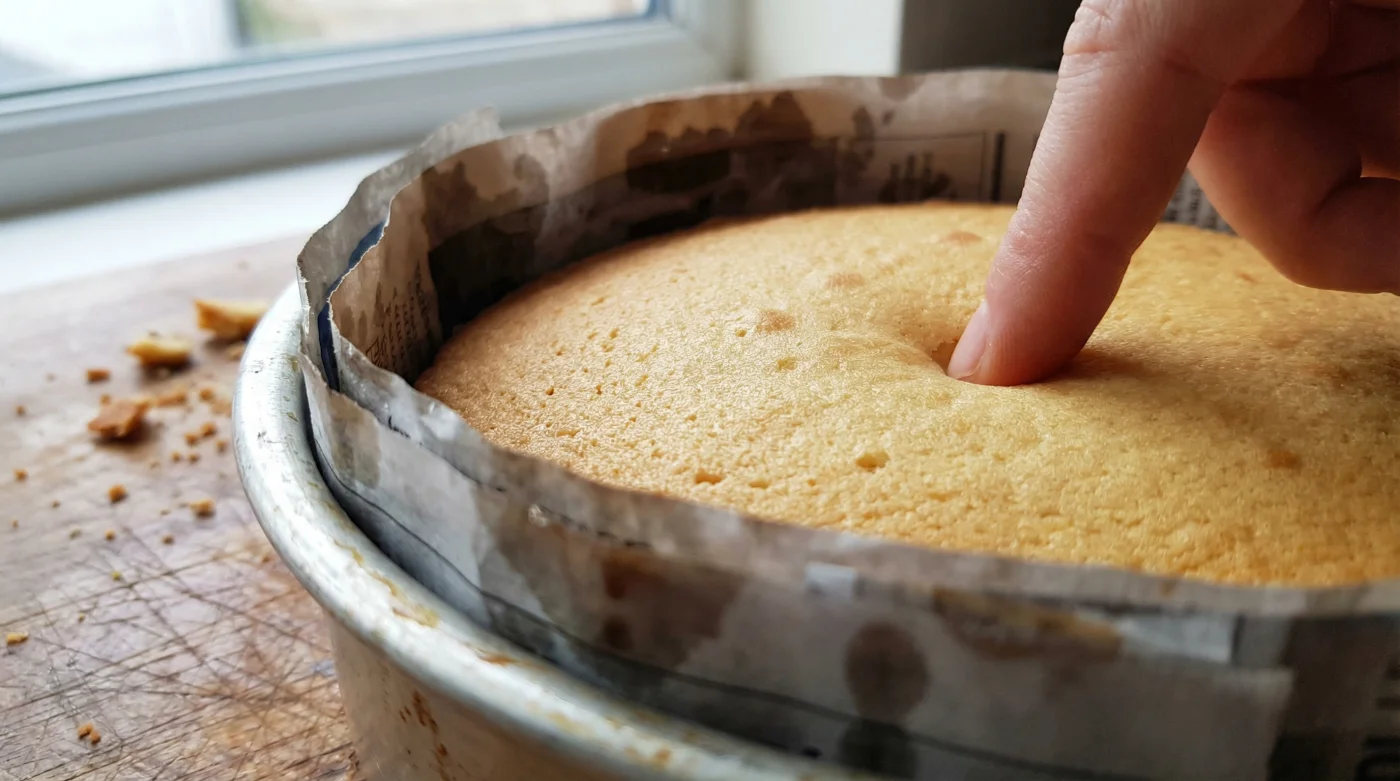
There is a distinct, rhythmic quiet that settles over a kitchen when a Victoria sponge is in the oven. The air thickens gradually with the comforting, heavy scent of melting butter and caster sugar, promising a simple, nostalgic reward. You stand by the counter, perhaps nursing a cup of tea, watching the oven door and waiting for that golden, airy structure to emerge perfectly levelled.
But the reality of home baking is often far less romantic. You peer through the smudged oven glass and spot the familiar, stubborn mound rising aggressively in the centre of your tin, swelling upwards like a miniature hillock in the Peak District. The batter has betrayed you, doming violently and often cracking at the very peak, leaving you with a structural and aesthetic nightmare that threatens the entire dessert.
Then comes the frantic, messy stage of damage control. Out comes the heavy serrated bread knife, sawing awkwardly across the cooled, fragile sponge, scattering precious, golden crumbs across the kitchen worktop. You are left trying to patch together a distinctly lopsided sandwich, desperately hiding the butchered, uneven edges beneath a thick, forgiving layer of icing sugar and stiff jam.
Professional bakers simply do not tolerate this chaotic trimming or the waste it produces. They understand that a beautifully flat, symmetrical cake is decided long before the heat ever hits the batter. They tame the oven’s aggression, controlling the environment so precisely that the cake is forced to rise with a graceful, even composure from the outer edge directly to the centre.
The Thermodynamics of a Proper Bake
We are routinely taught to follow recipes to the exact gram, meticulously weighing our flour and sugar, yet we entirely ignore the violent physics happening inside the oven cavity. Think of your cake batter as a dense crowd of people rushing suddenly toward a single exit. The thin metal of your cake tin conducts heat rapidly, causing the outer edges of the batter to bake, grip the sides, and set within the first ten minutes of the bake.
Because that outer ring is now a solid, impenetrable wall, the remaining liquid batter in the centre has only one possible direction to expand as the raising agents activate: straight upwards. This creates the dreaded dome, forcing the middle to overbake slightly while it struggles to burst through the newly formed crust. You are not failing at mixing your ingredients; you are simply losing an invisible battle with thermodynamics.
The solution completely contradicts everything you might have assumed about baking at high temperatures. By wrapping the exterior of the tin in a damp, insulating layer, you drastically slow the brutal heat transfer to the sensitive sides of the cake. The moisture held within the wrapping gently steams, keeping the outer edges cool just long enough for the entire cake to rise in unison.
Consider Beatrice Ward, a sixty-eight-year-old retired tearoom baker from Harrogate, who spent three decades turning out flawlessly flat Victoria sponges without ever owning a wire cake leveller. Her secret was never a complicated chemical ratio; it was simply yesterday’s broadsheet newspaper. She would fold damp strips of the daily paper, tie them around her scratched aluminium tins with rough butcher’s string, and let the gentle, insulated heat do the heavy lifting. It is a brilliant, humble trick straight from the trenches of professional, high-volume baking.
Adjustment Layers for Every Baker
Depending on the natural rhythm of your kitchen and the everyday tools at your disposal, this straightforward insulation method can easily be adapted to suit your specific baking routine.
For the Traditionalist: You can replicate Beatrice’s exact, time-honoured method. Take a few sheets of standard black-and-white newspaper (strictly avoiding the glossy magazine inserts, which repel water), fold them into long, neat collars the height of your tin, and run them under the cold tap until soaked but not dripping. Tie them snugly with string around the outside of your fully buttered and lined baking tins.
For the Resourceful Cook: If you have entirely shifted away from print media and have no newspapers to hand, an old, clean tea towel serves the exact same thermodynamic purpose. Cut it into long, even strips, soak them thoroughly, wring them out hard, and pin them tightly around the tins using a sturdy metal safety pin. It provides a slightly thicker, incredibly reliable barrier against the harsh oven heat.
For the Fan-Oven Fighter: Modern convection ovens are notoriously aggressive, blasting dry, circulating heat that massively accelerates the doming effect on delicate sponges. If you are regularly baking in a fan oven, increase the soaking time of your chosen fabric or paper strips, ensuring they carry enough retained moisture to survive a slightly faster bake without drying out and scorching before the cake is done.
The Damp Paper Protocol
Executing this physical technique requires a slightly more mindful approach to your standard preparation. The absolute goal is to create a snug, wet jacket that sits perfectly flush against the hot metal.
Gather and prepare your insulating materials before you even begin creaming the butter and sugar. Preparation dictates the final outcome, allowing you to work smoothly and pour your batter without leaving it sitting on the counter slowly losing its vital aeration.
- Measure the Tin: Cut your paper or fabric strips to be exactly the same height as your baking tin, and long enough to overlap slightly around the circumference.
- Saturate and Wring: Run the strips under cold water. They should be thoroughly wet, but gently squeeze out the excess so they do not drip puddles into the base of your oven.
- Secure the Collar: Wrap the damp strip around the exterior of the tin. Secure it tightly with 100 percent cotton kitchen string or a metal safety pin.
- Bake as Normal: Place the tins in the centre of the oven. You do not need to adjust the temperature or the baking time; the gentle steaming will quietly regulate the environment.
Tactical Toolkit: Ensure you have your 20cm aluminium sandwich tins, your standard black-and-white newspaper, and 100 percent cotton butcher’s string. Avoid synthetic strings at all costs, as they will melt horribly against the hot metal.
Reclaiming the Ritual of Baking
When you finally pull a perfectly level, golden cake from the oven, the entire atmosphere of your kitchen shifts noticeably. The anxiety of assembly dissipates, quickly replaced by a quiet, profound satisfaction. There is absolutely no need for serrated knives, no wasted, buttery crumbs aggressively brushed into the kitchen bin, and no frantic, last-minute attempts to disguise a severely tilting upper layer.
Mastering this brilliantly simple, physical intervention fundamentally changes your long-term relationship with your oven. You stop being a passive, hopeful observer crossing your fingers, and become someone who actively understands and controls the environment of the bake. The damp paper collar is a potent reminder that the very best culinary solutions are rarely expensive, plug-in gadgets; they are clever, thoughtful applications of basic physics.
The next time you begin to cream your butter and sugar, you can do so with the absolute confidence that the architecture of your cake is already secured. You are creating a foundation, a beautifully flat, robust canvas entirely ready to hold a generous, trembling layer of softly whipped double cream and a sharp, ruby-red raspberry jam, without a single crumb out of place.
Baking is entirely about controlling the environment; tame the heat on the outside, and the delicate crumb on the inside will look after itself.
| Key Point | Detail | Added Value for the Reader |
|---|---|---|
| Insulation | Damp paper slows heat transfer to the tin edges. | Eliminates the hard, overbaked crust on the outside of your sponge. |
| Thermodynamics | Forces the batter to rise evenly rather than pushing up the centre. | No more wasteful trimming or lopsided, sliding sandwich cakes. |
| Material Choice | Black-and-white newspaper or 100% cotton towelling. | Uses items already in your home, saving money on expensive commercial baking belts. |
Frequently Asked Questions
Will the newspaper catch fire in the oven? No. Because the newspaper is thoroughly soaked and sitting flush against a metal tin filled with wet batter, it simply steams gently. As long as it does not touch an exposed heating element, it is perfectly safe at standard baking temperatures.
Can I use glossy magazine paper instead? Strictly avoid glossy paper. The clay and plastic coatings used in magazine printing repel water, meaning they will not hold the moisture required to insulate the tin, and they can emit unpleasant smells when heated.
Do I need to alter the baking time or temperature? Your baking time remains exactly the same. The damp paper only slows the heat absorption at the very edge of the tin, allowing the centre to catch up. Check your sponge at the 20-minute mark as usual.
What if the paper dries out before the cake is baked? For a standard Victoria sponge, a well-soaked collar will retain enough moisture for the entire 25-minute bake. If it feels bone dry when you pull it out, it has still successfully done its job during the crucial rising phase.
Can I reuse the newspaper collars for future bakes? Newspaper will become brittle and discoloured after one use, so it is best discarded in the compost. If you prefer a reusable option, opt for the damp cotton tea towel method.