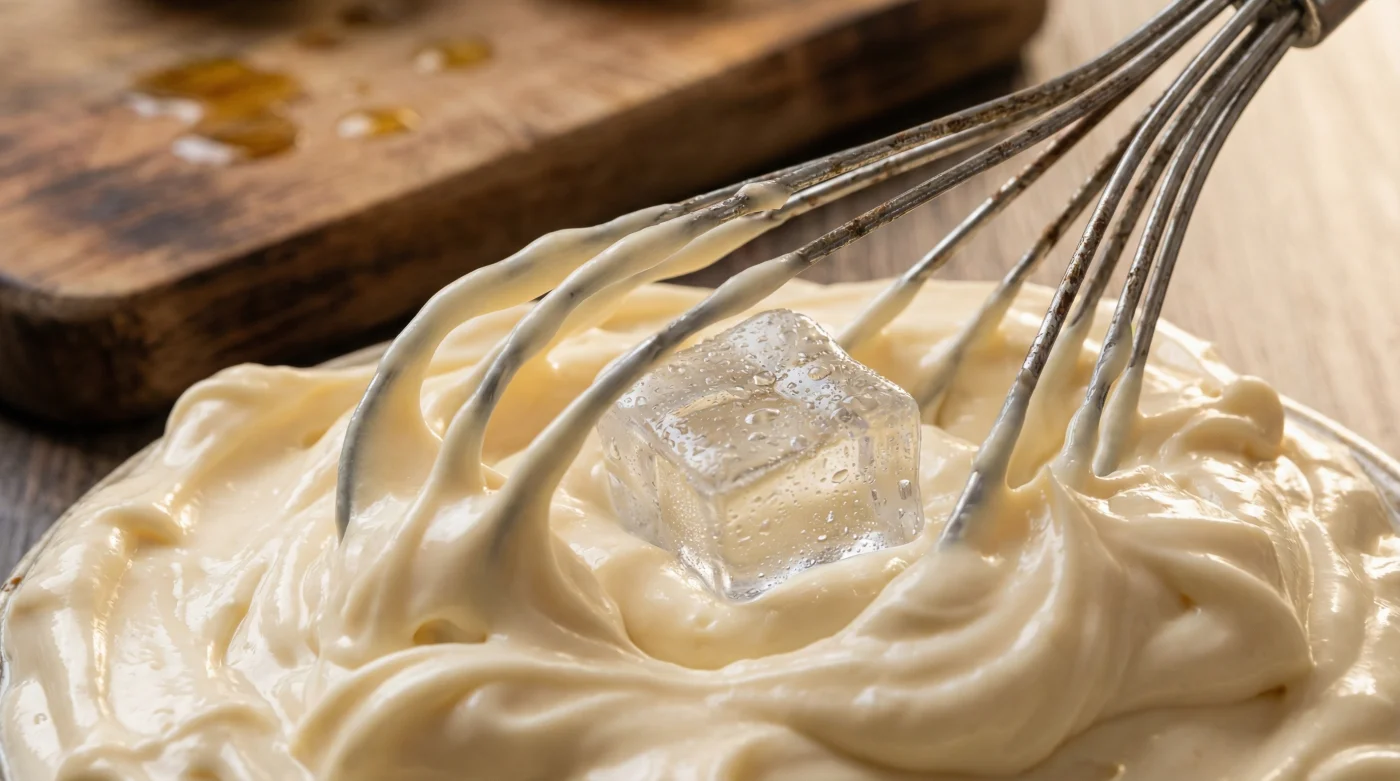
The rhythmic clatter of a wire whisk against a glass bowl is supposed to be a comforting kitchen soundtrack. Instead, for anyone attempting a fresh emulsion, it often becomes a metronome of rising panic. You watch the slick ribbons of rapeseed or olive oil slide against the mustard-speckled yolk, hoping for that magical, opaque binding moment. Sometimes it happens effortlessly. Often, it leaves you staring at a sullen, greasy puddle that smells faintly of raw fat and defeat.
Most recipes insist that salvation lies in an agonisingly slow drizzle of more oil. A painstaking, relentless trickle that burns your forearm, cramps your shoulder, and tests your patience. You are told to keep whisking, keep pouring, and pray the sheer physical friction somehow forces the unruly fats to behave. It feels less like cooking and more like an endurance sport.
But this constant addition of fat is exactly what tips a fragile sauce over the edge into total collapse. The professional kitchen operates on an entirely different physical logic. Rather than coaxing the mixture with endless friction and more heavy fat, they use a sudden, calculated shock to force the liquids into submission. It requires nothing more than the water freezing quietly in your freezer.
The Physics of the Cold Shock
Think of a failing emulsion like a suffocatingly hot, crowded room in the height of summer. The fat molecules are moving far too rapidly, agitated, bumping into one another without making any lasting connections. Pouring in more room-temperature oil is akin to shoving more angry people through the door. It only increases the chaos, leading to a total separation of water and oil.
This is exactly where the standard cookbook advice fails you. When a sauce breaks or refuses to thicken, the delicate water-to-oil ratio has collapsed, and the egg yolk proteins—specifically the lecithin—are entirely overwhelmed. Dropping the ambient temperature instantly changes the physical viscosity of the oil. A single ice cube thrown into the frantic whisking doesn’t just add a crucial, tiny splash of water to rehydrate those straining egg proteins; it physically chills the surrounding fat.
As the solid cube spins against the steel tines of your whisk, the temperature of the bowl plummets in seconds. The warm oil suddenly thickens, the frantic molecular movement slows down, and the yolk finally has the leverage to reach out and wrap around the fat droplets. The emulsion shocks into a dense, completely stable cream that stands proud and stiff on the spoon, trembling slightly but refusing to drop.
Thomas Hartley, a 42-year-old prep chef at a bustling Cornish gastropub, spends his early mornings turning out litres of garlic mayonnaise for the lunchtime rush. He never bothers with the anxious, drop-by-drop oil method that home cooks agonise over. ‘When you are making a batch with twenty egg yolks, you cannot afford a split,’ he notes, casually tossing a solitary, solid ice cube into a massive stainless steel bowl of slightly loose, glistening emulsion. Within ten seconds of brisk whipping, the watery mess seizes into a glossy, pale yellow solid that resembles softly whipped butter. It is a quiet, brutal piece of kitchen physics that turns a delicate culinary operation into an industrial certainty.
Refining the Technique for Your Kitchen
Naturally, the type of condiment you are attempting will dictate exactly how you deploy this two-ingredient modification—combining your standard base with this sudden chill. Every variation requires subtle timing when introducing sudden cold to your mixing bowl to achieve restaurant-quality density.
For the traditionalist making a classic Dijon and white wine vinegar base, patience remains key. Wait until you have incorporated roughly half of your measured oil. The mixture will look slightly slack, perhaps a bit too translucent. Drop the ice cube directly into the centre of the bowl, whisk until the ice melts completely, and watch the sauce turn fiercely opaque and rigid before streaming in the remaining oil.
If you are relying on a stick blender in a narrow plastic jug to throw together a quick sandwich spread before the school run, the physical rules shift. The heat generated by the spinning motor blades is the primary enemy here, often cooking the yolk slightly and breaking the bond. Crush the ice cube into three or four smaller shards. Drop them into the jug before you even activate the blender. The crushed ice keeps the metal blades ice-cold, preventing the rapid heat build-up. Rapid heat destroys mechanical emulsions before they even have a chance to stabilise.
When faced with a completely split disaster—a sad, separated mess of oil sitting heavily atop scrambled-looking egg—do not throw it down the sink. Transfer just a tablespoon of the broken mix into a clean, cold bowl, add the ice cube, and whisk fiercely. The sudden cold seizes the fat, creating a tiny, super-stable anchor. You can then slowly whisk the rest of your broken, greasy sauce back into this chilled, opaque core, rescuing a ruined batch in under three minutes.
Executing the One-Cube Emulsion
Moving away from panicked salvage operations requires a highly deliberate setup. Your tools must be ready, your ingredients measured out, and your mind completely focused on the physical changes happening within the bowl. Precision rather than kitchen panic ensures a perfect result every single time you approach the worktop.
Forget everything you know about strictly room-temperature ingredients. While warm yolks certainly whip easily and build volume, they are intensely vulnerable to the friction heat generated by your arm. Controlling the temperature from the outset provides a safety net.
- Separate your egg yolks cleanly and place them in a heavy ceramic bowl (the sheer weight stops the bowl dancing across your worktop while you work).
- Whisk the yolk with a generous pinch of fine sea salt and your chosen acid—perhaps cider vinegar or fresh lemon juice—until the mixture turns pale and slightly frothy.
- Begin adding your neutral oil in a thin, steady stream, whisking with a relaxed wrist rather than a stiff shoulder to prevent early fatigue.
- At the exact moment the sauce feels heavy against the whisk but looks suspiciously glossy and slightly translucent, stop pouring the oil immediately.
- Drop in the single, whole ice cube. Whisk rapidly and continuously until the cube disappears entirely and the sauce turns rigid and matte.
This is your tactical toolkit: a heavy-gauge, multi-wire balloon whisk to maximise aeration, a damp linen tea towel formed into a tight ring to safely cradle the bowl, and a standard, uncrushed ice cube weighing roughly twenty grams. The temperature drop must be sharp, and the water addition highly precise to avoid diluting the final flavour of your freshly whipped condiment.
Mastery Beyond the Recipe
There is a profound, satisfying quiet that settles in the kitchen when you stop fighting the ingredients and start calmly manipulating their environment. Learning to force a perfect emulsion with a single piece of frozen water is rarely about just making a better potato salad. It is about reclaiming control over the unpredictable elements of cooking.
It entirely shifts how you view failure at the stove. A broken sauce is no longer a personal slight, a lack of skill, or a wasted ten pounds of premium rapeseed oil; it is simply a physical equation that has temporarily lost its balance. Restoring order requires quiet understanding, not merely working harder or blindly following a rigid script of old-fashioned instructions.
When you master these small, structural truths, cooking sheds its heavy skin of anxiety. You stand at the counter with the quiet confidence of someone who knows exactly how to fix the seemingly unfixable, turning a moment of pending kitchen disaster into an impossibly thick, glossy reward that holds its shape beautifully on the plate.
The true art of the kitchen lies not in following instructions perfectly, but in knowing how the chemistry behaves when everything goes entirely wrong.
| Key Point | Detail | Added Value for the Reader |
|---|---|---|
| The Cold Shock | Adding an ice cube instantly drops the temperature of the oil, increasing its viscosity. | Saves time and prevents arm fatigue by forcing the emulsion to bind rapidly. |
| Hydration Balance | The melting ice provides the exact amount of water needed to uncoil straining egg proteins. | Rescues a sauce that is on the verge of splitting without making it runny. |
| Mechanical Blending | Crushed ice prevents the heat generated by stick blenders from cooking the yolk. | Allows for foolproof, two-minute mayonnaise preparations during busy mornings. |
Frequently Asked Questions
Can I use crushed ice instead of a whole cube for hand-whisking?
It is better to use a whole solid cube when hand-whisking. It melts slower, providing a sustained chill and allowing you to control the exact moment the emulsion tightens.Does this method work with olive oil as well as neutral oils?
Yes, it works beautifully with olive oil. However, olive oil can sometimes turn bitter if aggressively whisked or blended, so use the ice cube trick right at the end to quickly seal the emulsion.What if my ice cubes are unusually large?
A standard ice tray cube weighs about 20 grams. If you use massive cocktail ice blocks, crack one in half. Too much water will eventually turn your dense cream into a thin salad dressing.Can this save a sauce that has been sitting split for hours?
Yes. The physics remain the same. Take a spoonful of the old split mix, add the ice cube in a new bowl, whisk until tight, and slowly incorporate the rest of the old batch.Will the final mayonnaise be too cold to serve immediately?
Not at all. The ambient temperature of the oil and the friction from whisking mean the final product will be pleasantly cool, exactly as a fresh condiment should be served.