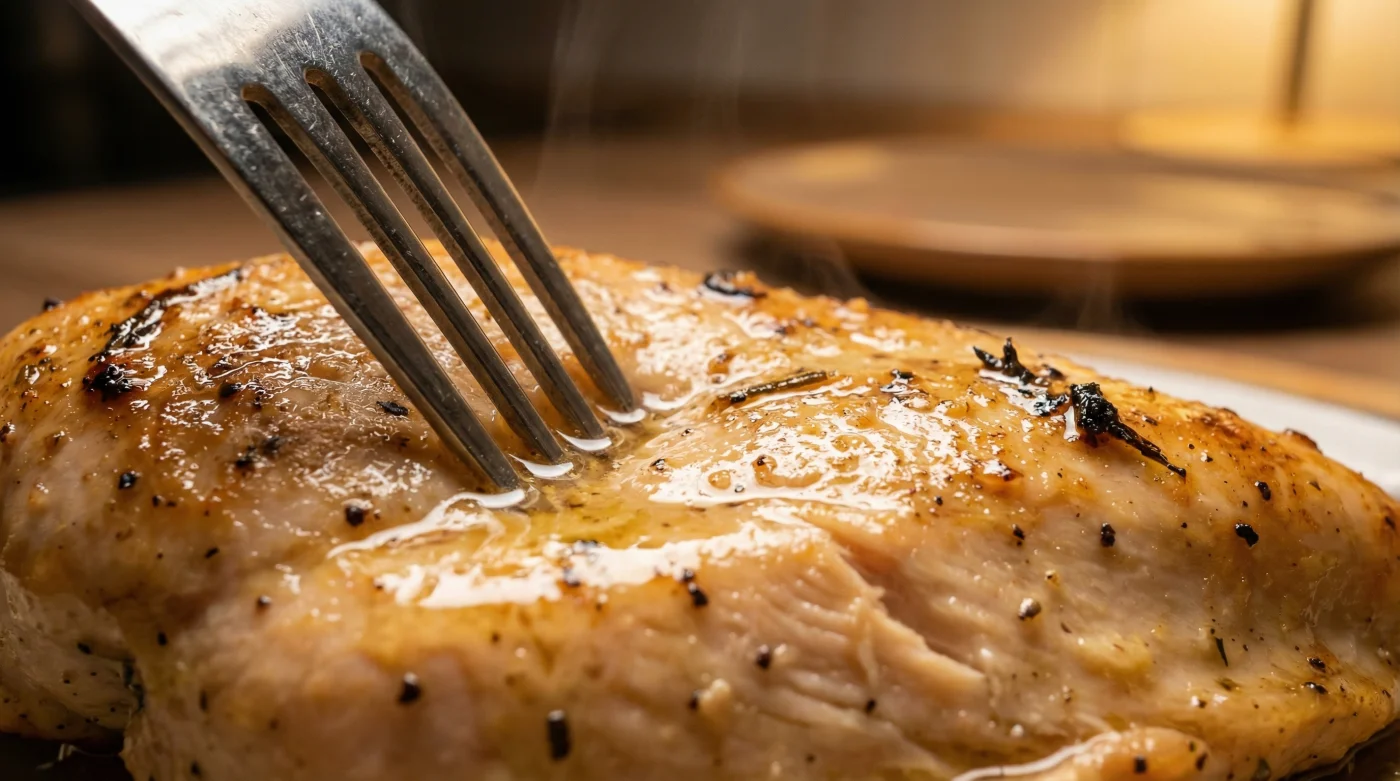
Picture your kitchen at half past six in the evening. The pan is spitting aggressively, the extraction fan hums a familiar, droning rhythm, and you are staring down a pair of supermarket chicken breasts. You have done everything by the book—a drizzle of olive oil, a sharp squeeze of lemon, a cautious dusting of sea salt. Yet, as the heat bites into the meat, you watch the edges curl and stiffen into that all-too-familiar pale rubber.
You slice into it, and there it is: the chalky, white resistance of over-tightened protein. This physical frustration of dryness is a daily culinary defeat that makes chewing feel like an absolute chore. We have all been conditioned to believe the fault lies in our own timing, or perhaps not spending eight pounds sterling on the finest organic, free-range cuts available at the butcher.
But professional kitchens operate on a completely different, much calmer rhythm. They do not leave moisture to chance, nor do they rely on panicked, last-minute basting while the smoke alarm threatens to wail. Instead, they reach for a humble, everyday condiment sitting dormant in the door of your fridge, treating it as a vital tool rather than a mere sandwich spread.
We are talking about standard, unspectacular mayonnaise. This simple, dense emulsion is a quiet culinary saviour waiting to transform those stiff, unyielding fillets into premium, juicy steaks. When applied correctly, it ensures the meat cuts with the gentle, effortless pressure of a blunt butter knife.
The Emulsion Illusion
For decades, domestic cooks have treated oil and acid as a messy, disorganised two-step waltz. You splash vinegar or citrus over the board to tenderise, then pour oil from a heavy bottle to lubricate, watching them immediately separate, bead up, and slide off the meat into the bottom of the roasting tin. You are essentially cooking with water and hoping for fat.
Think of mayonnaise as an engineered slow-release jacket for your poultry. By its very nature, it is a perfectly stable suspension of oil, rich egg yolk, and acid. When you coat your chicken in this thick layer, you are entirely contradicting the old, flawed habit of relying on split, watery marinades that evaporate violently the moment they touch hot metal.
Rather than steaming away, the mayonnaise clings desperately to the surface, creating a breathable, protective seal over the meat. As the heat rises, the egg proteins gently cook and set, forming an invisible, microscopic barrier. This stops the delicate chicken muscle fibres from tightening up in shock and wringing out their natural, savoury juices into the pan.
Gareth, a 42-year-old head chef running a fiercely busy gastropub in Somerset, discovered this exact mechanic during a brutal Sunday service. ‘We lost our buttermilk delivery, and I had fifty chicken breasts prepped for the grill,’ he recalls. In a flash of panicked pragmatism, he massaged the naked fillets with a generous scoop of everyday mayonnaise and a heavy pinch of smoked paprika. The result was a revelation: the exterior seared into a magnificent golden crust, while the interior remained so bafflingly tender that customers asked if the meat had been cooked in an expensive water bath. He threw his oil away the next morning.
Tailoring the Mayonnaise Matrix
Not all chicken suppers serve the same emotional or practical purpose, and your application of this method should adapt seamlessly to your evening. Mastering this simple, two-ingredient baseline allows you to manipulate the final flavour with almost zero extra mental effort or washing up.
For the Weeknight Pragmatist
When you have exactly twenty minutes between logging off and eating, keep things brutally simple. A tablespoon of mayonnaise mixed with a teaspoon of garlic granules and black pepper creates a ruthlessly simple flavour profile. Smear it over the chicken right before it hits the pan; the mayo protects the garlic from burning instantly, yielding a mellow, roasted allium depth.
For the Prep-Ahead Parent
If you are staring at a chaotic tomorrow and need to prep ahead, do the quiet work tonight. Place the chicken breasts in a glass container, coat them generously in mayonnaise, add a squeeze of fresh lemon, and seal the lid tightly. The acid works incredibly slowly through the fat overnight, gently tenderising without turning the edges of the meat into mush.
For the Weekend Purist
If you want to linger by the stove, blend your mayonnaise with finely chopped fresh thyme, a drop of truffle oil, and a splash of dark soy sauce. This combination helps to replicate an expensive steakhouse experience at your kitchen island. The soy introduces a profound umami saltiness, while the fat in the emulsion carries the volatile oils of the thyme directly into the searing surface.
The Tactical Toolkit
The actual execution of this technique is a brilliantly quiet exercise in minimalism. Forget heavy metal meat mallets, elaborate wet brines that slosh over your counters, and complex temperature probes. You only need a simple silicone brush, a heavy-based frying pan, and a dedicated resting plate.
Trusting the system is crucial here, as the fat will do the hard labour for you. Simply adhere to this quiet exercise in minimalism and watch how effortlessly the protein yields to the heat.
- Dry the surface: Pat the chicken fiercely dry with kitchen paper. Mayonnaise cannot grip a wet, slippery surface, and water is the enemy of a good crust.
- The careful coating: Apply exactly one tablespoon of full-fat mayonnaise per breast. Use the back of a spoon to sweep it across the meat, exactly like frosting a small cake.
- The cold start: Place the coated chicken into a cold pan, then turn the heat to medium. As the heavy metal warms, the oil slowly releases from the emulsion, rendering perfectly without aggressively smoking out your kitchen.
- The golden flip: Wait precisely seven minutes. Do not poke, prod, or nervously shift the meat. Once a pale golden crust forms naturally, turn it over for another five minutes.
- The mandatory rest: Remove from the heat. Place the chicken on a warm plate and let it sit undisturbed for five minutes. The juices will redistribute, thickening the internal texture into something spectacularly rich.
Reclaiming Your Evening Peace
There is a profound, lingering relief in finding a domestic method that works every single time you apply it. Cooking at home should not be a high-wire act where a mere sixty seconds of distraction ruins your primary source of protein for the night.
By leaning on the natural chemistry of this emulsion, you step permanently away from the chaotic guesswork of high-heat searing. You are no longer fighting the physical, stubborn nature of the meat; you are working alongside it, offering it a protective cushion that guarantees a juicy, forgiving cook.
The humble jar in your fridge door ceases to be just a mundane spread for leftover sandwiches. It becomes a reliable, professional tool for preserving not just the quality of your dinner, but your sanity and peace of mind at the end of a long, demanding day.
‘Stop fighting the protein and let a simple emulsion do the heavy lifting; the fat is your protective barrier against the heat.’
| Key Point | Detail | Added Value for the Reader |
|---|---|---|
| Traditional Marinades | Split oil and acid mixtures that instantly slide off raw meat. | Eliminates messy roasting trays and wasted, expensive ingredients. |
| Mayonnaise Coating | A stable emulsion that clings tightly and protects delicate fibres. | Guarantees a consistently juicy, steak-like texture every time. |
| Searing Method | Cold-pan start allows the slow, gentle rendering of the mayonnaise. | Prevents sudden smoking and stops kitchen panic before it starts. |
Frequently Asked Questions
Will my chicken taste strongly of mayonnaise?
Not at all. The eggy flavour entirely dissipates under the heat, leaving behind only a savoury, rich crust and perfectly tender meat.Can I use low-fat or light mayonnaise for this?
It is best to avoid them. Light versions contain higher water content and artificial stabilisers, which steam the meat rather than roasting it. Stick to full-fat for the protective barrier.Do I still need to use cooking oil in the pan?
No, you can skip the extra oil entirely. The mayonnaise will slowly release its own natural oils as it heats up, providing plenty of lubrication to stop sticking.How long can I leave the chicken in the mayonnaise mixture?
You can cook it immediately, or leave it sealed in the fridge for up to 24 hours. The stable emulsion means the acid will not over-cure or ruin the meat.Does this coating trick work for thighs or other cuts?
Absolutely. While breast meat benefits the most due to its lack of natural fat, a mayonnaise coating on skinless thighs creates a beautifully caramelised, sticky finish.