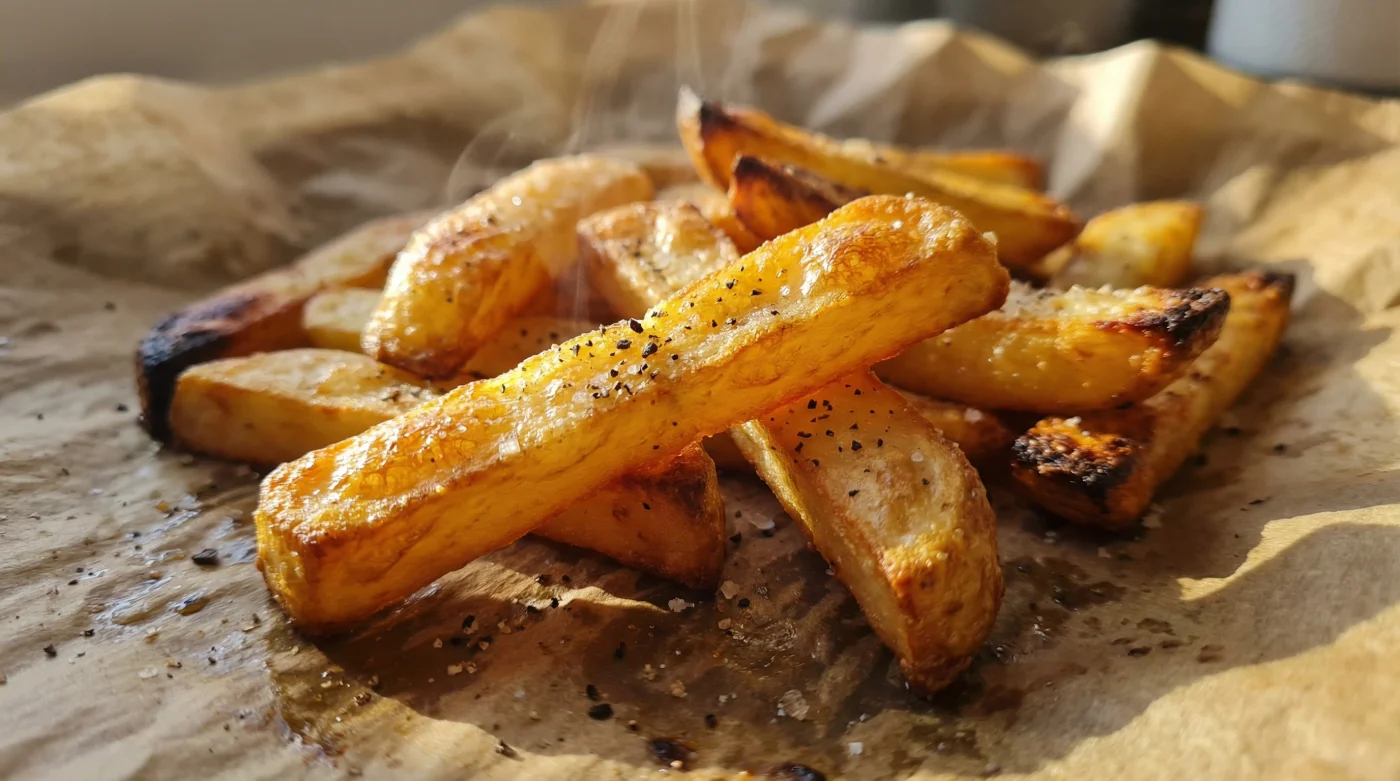
The sound of a metal spatula scraping against a baking tray often heralds a quiet disappointment. You pull the tin from the oven, anticipating the rich scent of perfectly roasted potato, only to be met with the smell of slightly scorched sunflower oil. Instead of a tray of burnished, golden batons, you are faced with limp oven chips that refuse to hold their shape, their pale edges yielding to a bitter char.
You likely know the familiar ritual of drowning cut potatoes in expensive olive oil, hoping for a crunch that never quite materialises. The oil inevitably pools at the bottom of the roasting tin, leaving half the batch soggy while the dry tops simply bake into a leathery skin. We are taught that more fat equals more crispness, leading us to empty costly bottles over humble spuds with diminishing returns.
But the secret to that glass-like shatter—the kind you find piled high next to a twenty-pound steak in a proper British gastropub—does not sit in a sleek glass bottle of cold-pressed oil. It waits patiently in a plastic squeeze bottle on your fridge door. A simple spoonful of standard, everyday mayonnaise.
Switching from a liquid fat to an emulsion entirely changes the physics of your roasting tin. It suspends the fat securely against the surface of the potato, holding it in place while the fierce heat of the oven does its work. You are no longer just baking a potato; you are micro-frying it.
The Physics of the Emulsion Blanket
When you pour standard sunflower or vegetable oil over raw potatoes, gravity ultimately wins the battle. The liquid slides off the smooth, starchy surfaces, settling into a greasy puddle at the base of your tray. You are essentially boiling the undersides of the chips while the exposed tops dry out in the circulating air, resulting in a wildly uneven texture.
Mayonnaise, however, is a marvel of natural culinary engineering. It is oil tightly bound with egg yolks and a touch of acidity. Think of a microscopic scaffolding holding the fat exactly where you want it to stay. It clings to the potato, enveloping it in a protective, even layer of fat that refuses to slide away.
As the heat of the oven hits the tray, the egg proteins trigger the Maillard reaction—that magical browning process—rapidly turning the exterior a deep, resonant amber. The oil gently releases as the emulsion begins to break down, shallow-frying the chip right where it sits. There is no pooling in the tray, and importantly, no scorched, bitter edges. Just an even, beautiful crust.
Eleanor Vance, a 42-year-old development chef for an independent Cornish pub group, stumbled onto this method during a frantic Sunday service. Short on clarified beef dripping, she tossed a massive bowl of parboiled Maris Pipers in a generous dollop of full-fat mayonnaise. ‘The kitchen went completely silent when they came out of the oven,’ she recalls. ‘They looked like spun glass. The egg proteins bind the crust in a way you simply cannot achieve with bare liquid oil. It gives a fifty-pence potato the aesthetic and texture of absolute fine dining.’
Adjusting the Coat for Your Kitchen
Not all chips are created equal, and your approach must shift depending on what sits on your chopping board. The beauty of this method lies in its adaptability across different cuts and preparations.
For the Sunday Purist cutting thick, chunky pub-style chips, parboiling remains non-negotiable. Simmer your potatoes until the edges look fluffy, let them steam dry entirely in the colander, and then gently massage the mayonnaise into the rough surfaces. The emulsion clings to fluffed starch, creating an impossibly thick, glass-like crust that shatters audibly when bitten.
For the Midweek Rushed Parent, thin French fries or batons require absolutely no boiling. Toss the raw, dry sticks directly into a bowl with a tablespoon of mayonnaise and a pinch of flaky sea salt. The thin cut cooks through rapidly in the hot oven, while the mayonnaise coating provides instant, vibrant colour and crunch.
For the Spice Enthusiast, the thick consistency of the emulsion holds onto dry seasonings beautifully. Smoked paprika and garlic powder will stick firmly to the potato rather than washing away into the bottom of the roasting pan, allowing you to build complex flavours without burning the delicate spices.
The Tactile Method
Executing this technique requires a gentle, mindful hand. The goal is a whisper-thin, translucent layer across the potato, not a heavy, gloopy dressing.
Start with bone-dry potatoes. Moisture is the absolute enemy of browning, so pat your cut spuds thoroughly with a clean tea towel. Water repels the binding emulsion, causing the mayonnaise to slip off and pool, defeating the entire purpose of the technique.
Use your hands to mix the ingredients. A wooden spoon will smash parboiled potatoes and fail to coat the raw ones evenly. Feel the drag of the mayonnaise spreading across every single facet of the chip, ensuring no naked potato is left exposed to the dry heat.
Finally, space them generously on your tray. If they touch, they steam, and no amount of clever chemistry will save a crowded roasting tin.
- The Fat Ratio: Exactly 1 heaped tablespoon of full-fat mayonnaise per 500g of cut potatoes.
- The Temperature: 200°C (Fan) or Gas Mark 7. A fiercely hot oven is crucial to activate the browning proteins in the egg yolk.
- The Timing: 35 to 40 minutes for thick cut, turning them exactly once at the 25-minute mark.
- The Tray: A heavy-gauge aluminium roasting tin, placed in the oven to preheat before the chips go in.
Elevating the Everyday
We often assume that achieving a high-end aesthetic requires expensive ingredients, rare oils, or highly stressful, complex techniques. We buy premium cold-pressed olive oils for high-heat tasks they were never designed to perform, watching our money quite literally go up in smoke.
By understanding how our ingredients behave—how a simple, cheap emulsion of egg and oil can defy gravity and oven heat—we reclaim a bit of control and joy in our daily cooking. You are working with the ingredients, rather than fighting against them.
Pulling a tray of perfectly golden, deeply resonant chips from your own oven shifts the tone of an evening. It transforms a rushed midweek supper into something intentional and quietly luxurious. It proves that true culinary authority isn’t about what you spend at the till, but how well you observe and adapt in your own kitchen.
‘The greatest plating secrets rarely rely on expensive tweezers; they rely on mastering the unseen, physical chemistry of our most humble ingredients.’
| Key Point | Detail | Added Value for the Reader |
|---|---|---|
| Standard Oil | Slides off raw potato, pooling at the base of the tray. | Results in uneven, greasy bottoms and dry, leathery tops. |
| Mayonnaise Emulsion | Clings to the surface, holding the cooking fat firmly in place. | Guarantees an even, glass-like crunch with zero wasted oil. |
| Egg Proteins | Triggers the Maillard browning reaction rapidly in the heat. | Creates a professional, restaurant-quality aesthetic at home. |
Frequently Asked Questions
Can I use light or low-fat mayonnaise?
It is best avoided. Low-fat varieties contain a high water content and artificial thickeners that will steam rather than roast, leaving a gummy, unpleasant texture on the potato.Will the chips taste heavily of mayonnaise?
Not at all. The acidic vinegar evaporates in the heat, and the egg and oil simply enrich the potato, leaving a highly savoury, beautifully neutral crunch.Does this technique work for sweet potatoes?
Yes, it is particularly effective for sweet potatoes. They typically struggle to crisp up due to their high natural sugar content, but the emulsion provides a protective barrier that crisps beautifully.Do I need to preheat the roasting tray?
Preheating the tray is highly recommended. It gives the cold potatoes an instant shock of heat, preventing them from sticking and kickstarting the crisping process immediately.Should I line the tray with baking parchment?
While parchment makes the washing up easier, bare aluminium or steel conducts heat much better, ensuring a significantly firmer crust on the bottom of the chip.