Picture the scene. The kitchen counter is dusted with a fine layer of dark cocoa, the oven is ticking as it heats, and you are staring at a recipe that demands a shot of freshly pulled espresso. You might feel a familiar tension rising, imagining the faff of cleaning the coffee machine or the cost of buying a takeaway cup just to pour it into a mixing bowl. The scent of raw chocolate is heavy in the air, but the process has suddenly stalled over a liquid that feels entirely overcomplicated for a simple sponge cake. It creates an unnecessary barrier between you and the sheer joy of baking.
Yet the professional reality is surprisingly humble. There is a stubborn myth in modern baking that complex ingredients always yield superior results. You are told that the roasted oils of a fresh barista-style coffee are the secret to bringing out the dark, fruity notes of cacao. It is a belief perpetuated by beautifully photographed cookbooks that suggest only the finest roasted beans can sit alongside good quality chocolate. The truth hiding in commercial kitchens and high-end bakeries across the country sits quietly in a glass jar at the back of the cupboard.
It turns out that those cheap, freeze-dried instant coffee granules you reserve for emergencies are actually the hero of the chocolate cake. When mixed with boiling water, they do something a fresh espresso struggles to achieve. They dissolve instantaneously, creating a highly concentrated, aggressively bitter liquid that behaves less like a delicate beverage and more like a pure chemical catalyst for chocolate.
Your inexpensive pantry staple performs a quiet miracle, turning a standard afternoon bake into something deeply resonant and dark. This is the five-minute preparation hack currently sweeping through baking communities. By skipping the expensive extraction process entirely, you save precious time while ensuring your sponge crumb remains miraculously tender.
The Chemistry of the Bloom
Think of cocoa powder as a tightly clenched fist. Out of the tin, it is dry, muted, and reluctant to share its complex flavours with your flour and sugar. Pouring cold or lukewarm liquids over it is akin to whispering at a brick wall; nothing truly gets through. The fist remains firmly shut, and the true depth of the chocolate remains trapped within its dusty particles.
This is called blooming, a technique where boiling liquid scalds the powder, forcing the microscopic fat molecules to melt and release their trapped aromatics. To coax out the intense, fudgy characteristics you crave, you must force the cocoa to relax. You stop following a fragile recipe and start manipulating the ingredients like a master.
Here is where the instant granules shine. A fresh espresso, while beautiful to drink, is an emulsion of delicate oils and crema that can lose its punch when drowned in hot water and flour. Instant coffee, conversely, is stripped back to its bitterest, most concentrated form. When dissolved in fiercely boiling water, it creates a scalding, high-impact liquid that shocks the cocoa powder into full bloom instantly.
Consider the approach of Eleanor Vance, a 42-year-old development baker from Yorkshire who spent a decade refining cakes for high-street luxury food halls. She watched colleagues fuss over expensive coffee syrups and complex espresso extractions, only to find the baking process diluted the delicate coffee notes entirely. Eleanor secretly swapped the artisanal shots for a robust supermarket instant coffee dissolved in boiling water. The resulting sponge was universally praised for its intense, fudgy depth, proving that when the goal is a chemical reaction rather than a tasting menu, the humblest ingredient often wields the most power.
Adapting to Your Baking Style
Not every chocolate cake serves the same purpose, and your approach to the coffee addition should reflect the occasion. A densely packed celebration tier requires a different touch than a light Friday afternoon treat. Adapting the method keeps your baking agile.
Understanding your specific needs transforms this simple trick from a rigid rule into a flexible tool. You can adjust the intensity of the bloom based on exactly who will be sitting at your table.
For the Time-Starved Parent
When the school bake sale is looming or a birthday has caught you off guard, speed is your primary currency. You do not need to brew a cup and let it cool. Simply toss two teaspoons of the granules directly in with your dry ingredients.
It is a triumph that saves washing up and shaves vital minutes off your preparation. When you add your boiling water at the final stage of mixing, the granules will burst into life, blooming the cocoa right there in the bowl.
For the Dinner Party Purist
If you are crafting a dessert meant to end a sophisticated evening, you want depth without the abrasive edge of cheap coffee shining through. You need the chemical reaction without the lingering breakfast-table aroma.
Pre-dissolve the granules in exactly 100ml of freshly boiled water and let it sit for two minutes. This allows the harshest volatile compounds to evaporate. You are left with a smooth, dark liquid that will amplify the chocolate without leaving a lingering coffee aftertaste.
For the Vegan Baker
Plant-based sponges often rely on vegetable oil rather than butter, which can sometimes mute the final flavour profile. Because oil coats the palate, it needs a sharp, bitter contrast to cut through and prevent the cake from tasting cloying.
Use a darker roast to ensure the chocolate notes punch through the richness of the sunflower or rapeseed oil. A robust instant coffee is particularly brilliant here, acting as a structural flavour pillar that replaces the rich dairy notes you might otherwise miss.
The Five-Minute Viral Prep
Executing this technique requires little more than basic observation and a kettle. You are stepping away from complicated equipment and leaning into sensory baking. Watch the textures change as the water hits the bowl.
Focus on the temperature of your water above all else. If the water is not at a rolling boil, the granules will not release their full bitter profile, and the cocoa will remain dormant. You must act quickly once the kettle clicks off.
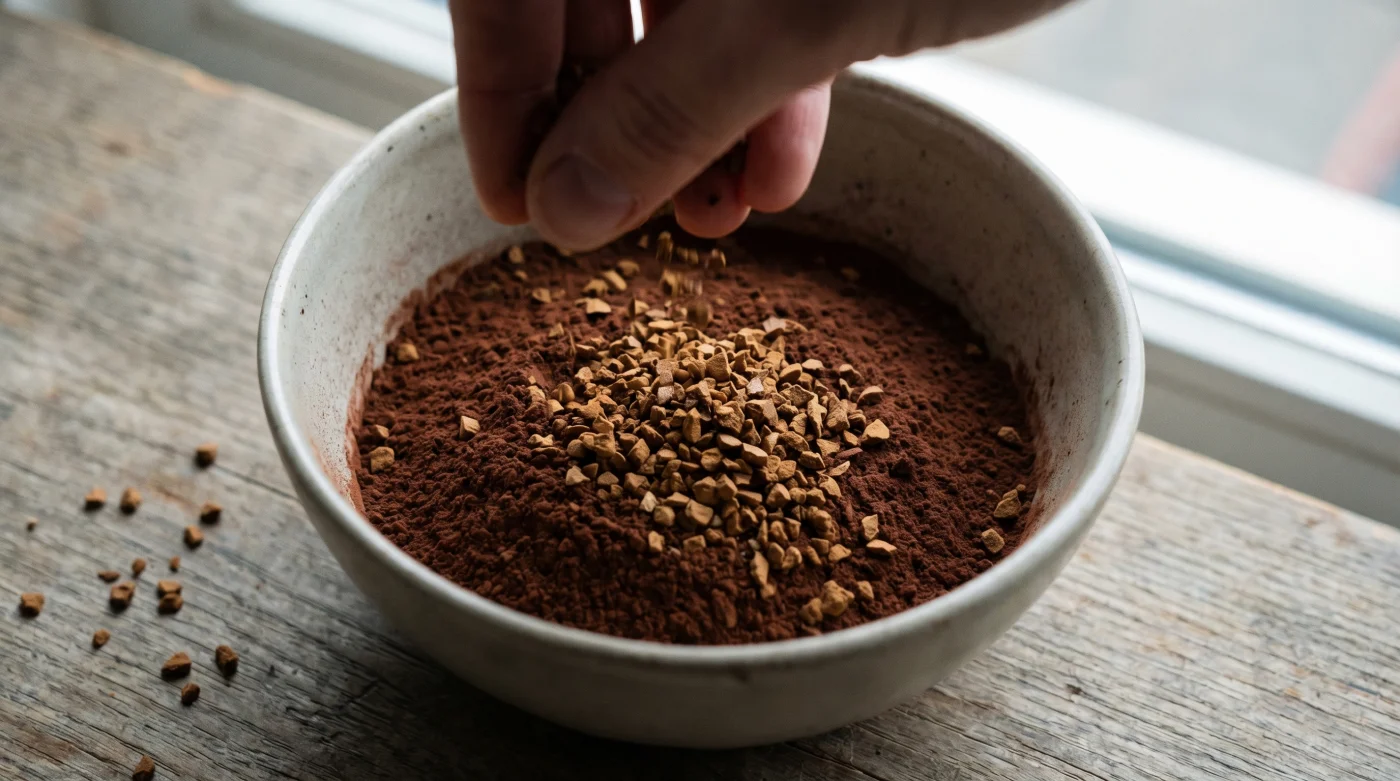
Begin by measuring your cocoa powder into a heatproof bowl. You want to see the dull, dusty texture before the transformation happens. Next, scatter your instant coffee directly over the dark powder, taking note of the sharp contrast in textures.
Pour the boiling water over the mixture in one swift motion. The aroma should hit you instantly, smelling sharply of roasted beans and dark chocolate. Whisk the mixture until the cream should tremble slightly, turning into a glossy, thick paste that resembles melted chocolate.
- Water Temperature: Exactly 100 degrees Celsius straight from the kettle.
- Coffee Ratio: One heaped teaspoon of instant granules for every 50 grams of cocoa powder.
- Resting Time: Allow the hot chocolate paste to sit for three minutes before adding to your eggs and sugar.
- Tool of Choice: A balloon whisk to break up any stubborn pockets of dry cocoa.
The Quiet Confidence of the Pantry
There is a profound relief in discovering that you do not need to spend fortunes or acquire complex machinery to achieve spectacular results in your own kitchen. True baking mastery lies in recognising the raw utility of the things you already own.
When you embrace the instant coffee granule, you strip away the pretence of modern culinary culture. You stop worrying about pulling the perfect shot or buying artisan beans just to throw them into a hot oven.
Instead, you focus on the sheer joy of the transformation. You are no longer hindered by absent ingredients or complicated steps. You are simply taking a humble jar from the shelf and turning it into something remarkable.
The cake that emerges from the oven is deeply fragrant, impossibly moist, and carries a richness that feels almost secretive. You find lasting peace of mind in the absolute simplicity of the process, knowing that the best tool for the job was waiting for you all along.
True culinary wisdom is knowing when to respect a delicate ingredient, and when to let a cheap staple do the heavy lifting.
| Key Point | Detail | Added Value for the Reader |
|---|---|---|
| The Boil | Water must be 100C when hitting the cocoa. | Ensures the fats in the cocoa melt fully for maximum flavour. |
| The Granule | Freeze-dried works better than fresh espresso. | Saves you 15 minutes of prep and the cost of artisan beans. |
| The Mix | Blend coffee and cocoa before adding wet ingredients. | Prevents lumpy batter and creates a smooth, glossy sponge. |
Frequent Frustrations Solved
Will my cake taste like a coffee shop?
Not at all. The bitterness acts as a seasoning for the chocolate, entirely disappearing into the background as it bakes.Can I use decaffeinated granules?
Absolutely. The chemical reaction relies on the roasted bitter compounds to bloom the cocoa, not the caffeine content.What if my batter looks too watery?
Boiling water makes the batter thin, but this is exactly what creates a tender, moist crumb. Trust the liquid ratio.Do I need to alter my baking time?
No, the liquid volume remains the same as a standard espresso recipe, so your oven time is completely unaffected.Can I use a sweetened coffee syrup instead?
Avoid syrups. They introduce excess sugar and entirely lack the aggressive bitterness required to bloom the cocoa properly.