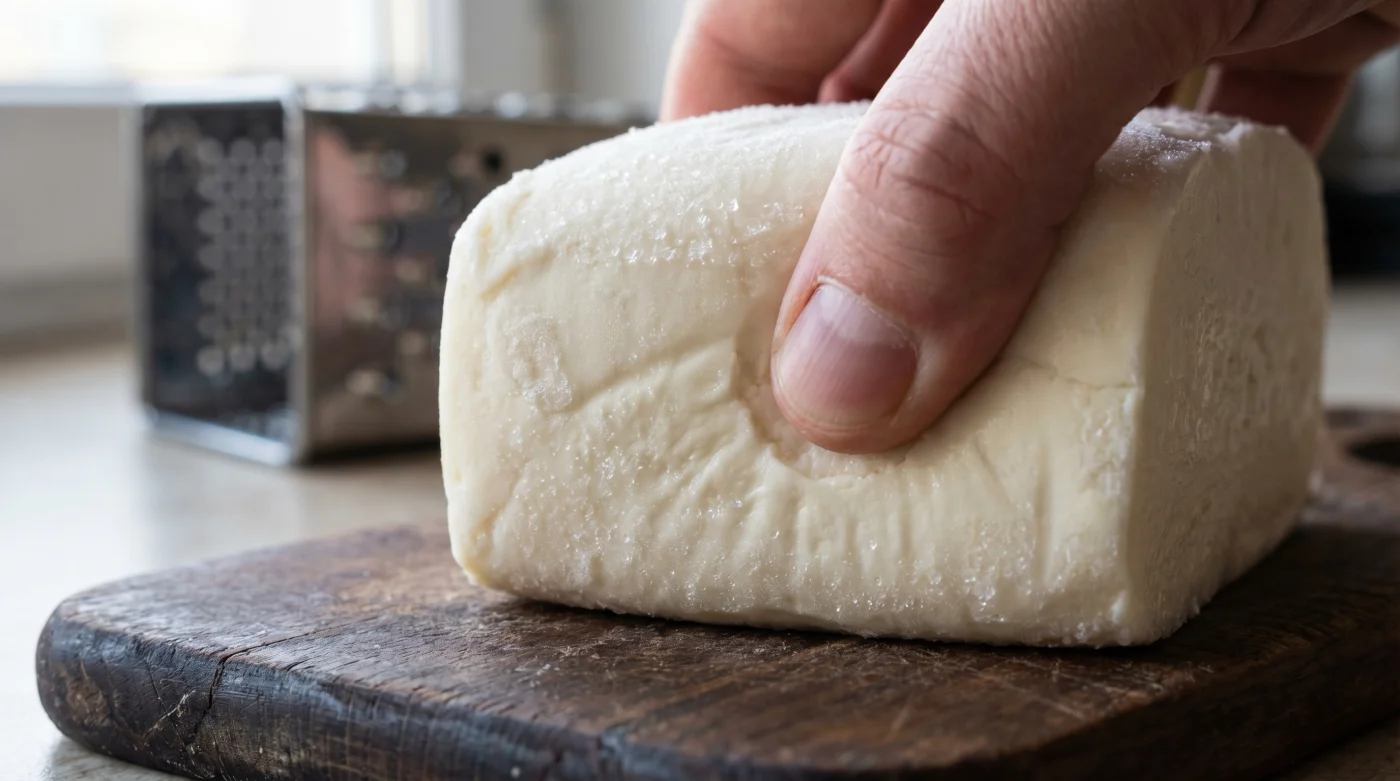
You know the exact moment the block surrenders. You are pressing a wedge of soft mozzarella or young cheddar against the coarse metal teeth of a box grater, hoping for neat, separate ribbons. Instead, the pressure turns the dairy into a stubborn paste, clogging the holes and smearing a greasy residue against your knuckles. The sound of metal scraping against a mushy block echoes the frustration of a simple task gone awry.
It feels entirely defeating, watching half the block glue itself to the inside of the metal pyramid rather than falling gracefully into the bowl below. The friction generated by your movements produces just enough ambient heat to melt the butterfat. You are left with a sad, clumpy mound of ruined dairy, and the daunting prospect of scrubbing hardened cheese paste out of tiny metal crevices under the hot tap.
Then you watch a professional line chef prep for a busy service, and the contrast is stark. They glide blocks of young, high-moisture cheese across the blade with rhythmic, effortless sweeps, producing mountains of distinct, curled shards that never clump together. They aren’t relying on sharper equipment or applying a magical technique; they are simply respecting the temperature of the fat, understanding how it behaves under friction.
The Architecture of Fat and Cold
To stop making a sticky mess, you must change your physical approach. When you drag room-temperature or even gently chilled soft cheese across a steel blade, you are effectively trying to carve warm butter on a summer afternoon. The structural integrity of the dairy fails long before the metal can sheer cleanly through it, causing the fats to separate from the proteins.
The solution lies in a controlled, temporary state change. By subjecting the block to a short, intense period in the cold depths of your freezer, you firm up the butterfat and tighten the delicate protein matrix. You are briefly granting a soft, yielding cheese the rigid, workable characteristics of a hard block of aged Parmesan, allowing the blade to slice cleanly through without crushing the moisture out of it.
Consider the daily routine of David, a sourdough pizza chef working out of a bustling, converted railway arch in Manchester. David burns through dozens of kilos of high-moisture mozzarella every evening, yet his prep area remains immaculate. His secret is ridiculously mundane: he throws his required allocation of cheese blocks into the chest freezer for exactly eighteen minutes before the grating begins. He relies on a brief thermal window that hardens the exterior just enough to withstand aggressive metal friction, whilst ensuring the cheese returns perfectly to a melting temperature the moment it hits the blistering heat of his wood-fired oven.
Tailoring the Chill to the Dairy
Not all dairy requires the same aggressive cooling strategy. The duration of the freeze must be carefully calibrated to the specific moisture content of what you are preparing.
For the Pizza Purist: High-Moisture Mozzarella
This is the primary offender for the infamous grater smear. Because it is packed with water and highly elastic proteins, you must apply a much firmer hand. Place the entire ball in the freezer for twenty to twenty-five minutes. You want the outer millimetres to feel solid and unyielding to the tap of a fingernail, giving you a firm grip and allowing the grater to do its work without resistance.
For the Toastie Enthusiast: Young Cheddars
These cheeses already hold a semi-firm structure, but they soften rapidly under the heat of your palms.
They need a gentler thermal shock to maintain their composure. Ten to fifteen minutes in the coldest drawer of your freezer is more than enough. It prevents the natural oils from weeping out as you apply pressure, keeping your resulting pile fluffy and distinct rather than a greasy, solid mass ready to ruin your Sunday cauliflower cheese.
For the Salad Maker: Feta and Halloumi
While naturally crumbly by design, dragging them across a coarse blade often turns them into a powdery, damp dust.
A brief ten-minute intensive chill tightens their internal crumb structure significantly. This allows you to grate them over roasted vegetables or summer salads in long, satisfying strokes, preserving their texture and preventing them from disintegrating into your hands.
The Tactical Freeze
Implementing this technique requires very little physical effort, but it demands precise timing. You are not trying to freeze the block solid; doing so alters the cellular structure permanently and ruins the mouthfeel.
You must approach this with deliberate, minimalist physical actions. Leave the block in its original packaging to prevent the dry air from causing freezer burn. Clear a dedicated space next to the frozen peas where the cold air can circulate freely around the entire surface area of the cheese.
Tactical Toolkit for perfect execution:
- The 15-Minute Rule: Set a hard timer the moment the cheese goes in. Never rely on your internal clock; a forgotten block is a textural disaster.
- Chill the Tools: If your kitchen is particularly warm, place your metal box grater in the fridge alongside the cheese. Cold metal prevents friction from instantly melting the newly chilled fat.
- The Light Touch: Hold the block gently by the edges. If you squeeze it too hard, the radiant heat from your palms will undo the chilling process before you finish grating.
- Swift, Downward Strokes: Move the block in one singular downward direction. Grating furiously up and down generates unnecessary friction and smashes the curled ribbons you just created.
Reclaiming the Chopping Board
Adopting this small habit fundamentally shifts your kitchen rhythm. Suddenly, the prospect of assembling a massive family lasagne or prepping a mountain of toppings for a weekend gathering doesn’t fill you with a low-level sense of dread.
You are no longer fighting blindly against your ingredients. By understanding how temperature dictates texture, you eliminate the miserable, time-consuming task of scrubbing compacted dairy out of the crevices of your utensils.
It is a quiet, profound victory over the mundane. You protect the delicate nature of the food while making your own workflow dramatically more efficient. The freezer transforms from a place of long-term storage into an active prep tool, leaving you with perfectly grated ribbons, a pristine workspace, and the satisfaction of mastering a genuinely useful technique.
“The freezer isn’t just for preservation; it’s an active prep tool that forces delicate fats to behave on your schedule.”
— David, Head Pizzaiolo
| Key Point | Detail | Added Value for the Reader |
|---|---|---|
| High-Moisture Mozzarella | 20-25 minutes freezer chill before grating. | Prevents the cheese from turning to mush, saving cleanup time. |
| Young Cheddars | 10-15 minutes freezer chill. | Maintains fluffy, distinct ribbons for perfect melting. |
| Feta & Halloumi | 10 minutes intensive chill. | Stops crumbly cheeses from turning into damp powder. |
Frequently Asked Questions
Will freezing the cheese ruin the flavour? Not at all. A brief 15-minute chill only alters the exterior temperature temporarily; it doesn’t freeze the core or affect the taste.
Do I need to put the box grater in the freezer too? It helps immensely. Chilling the metal prevents the friction from immediately melting the fats you just worked so hard to firm up.
What if I leave the cheese in the freezer for too long? If it freezes completely solid, the cellular structure breaks, making it grainy when it thaws. Set a strict timer to avoid this.
Does this work for hard cheeses like Parmesan? No, hard cheeses already lack the moisture and soft fats that cause smearing. Store them in the fridge as usual.
Can I use this method for vegan or dairy-free cheeses? Absolutely. Plant-based cheeses often have a high coconut oil content, which responds incredibly well to a rapid thermal shock.