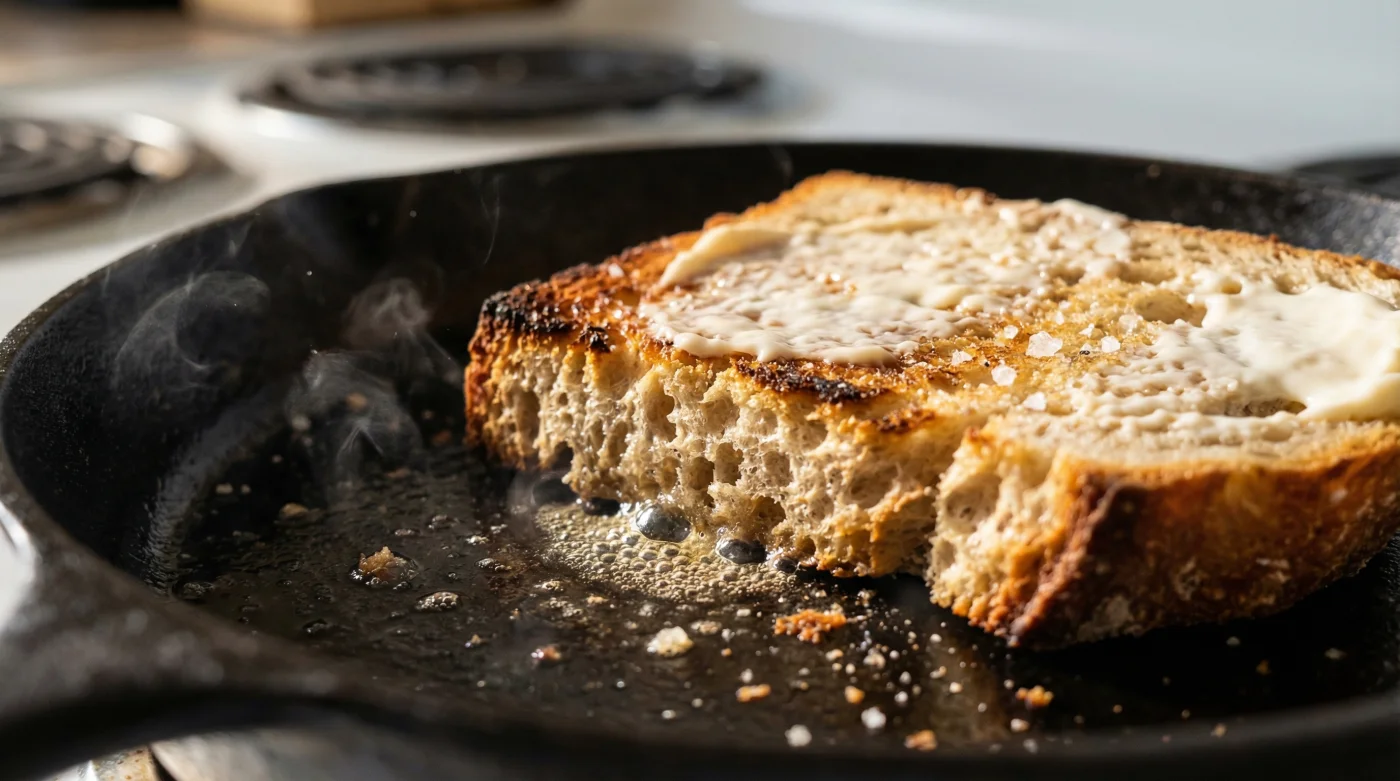
You know the sound. The sudden, urgent scrape of a butter knife across a stubbornly cold block of butter, followed by the tragic, inevitable tearing of soft white bread. It is a rainy Wednesday evening, the craving for a hot, comforting cheese toastie has hit, and you are already losing the battle before the pan is even warm. You finally manage to patch the mangled bread together, drop it into the frying pan, and wait. But the butter betrays you. The milk solids catch and burn, filling the kitchen with acrid smoke while the thick slices of mature cheddar inside remain stubbornly cold and solid. It is a minor culinary heartbreak we simply accept as part of the process.
The Alchemy of Emulsion
Let us rethink this entire, frantic ritual. The frying pan is a demanding environment, and butter is a volatile participant. It tastes beautiful, but its low smoke point means it panics under pressure. It is like a brilliant but erratic actor who forgets their lines halfway through the performance. Enter the unassuming, steadfast understudy sitting quietly in the door of your fridge: full-fat mayonnaise.
Spreading mayonnaise on the outside of your bread sounds, at first, like an error in judgement. Yet, it completely challenges the age-old tradition of buttering bread for a hot sandwich. When you treat the frying pan as a harsh, heated canvas, mayonnaise acts as the perfect, resilient medium. It is an emulsion of oil and egg yolk—a stable, spreadable fat that refuses to burn prematurely and glides over the softest bread without snagging.
I first witnessed this during a late-night service in a tiny, steam-filled café in East London. The chef, a weathered man named Elias, worked the hotplate like a conductor. Watching him manage the relentless orders, I noticed he never touched the butter dish for his toasted sandwiches. “Butter is for flavour on the inside,” he told me, deftly swiping a glossy, pale coat of mayo across the exterior of a thick slice of sourdough. “Oil and egg yolk give you a shield. It cooks the bread evenly, edge to edge, and buys the cheese enough time to melt without the crust turning to charcoal.”
| Target Audience | Specific Benefits of the Mayonnaise Method |
|---|---|
| The Late-Night Snacker | Zero wait time for butter to soften; glides straight from the fridge onto the bread. |
| The Frugal Gourmet | Achieves a café-level, golden aesthetic without requiring expensive clarified butter. |
| The Busy Parent | Foolproof, even browning that rarely burns, saving ruined meals and wasted ingredients. |
- Bisto gravy granules face severe consumer backlash following unannounced recipe alterations.
- Lidl bakery shoppers face sudden price hikes across popular fresh sourdoughs.
- Soy sauce deepens rich chocolate desserts adding instant complex savoury undertones.
- Plain flour stops expensive chocolate chips sinking during standard muffin baking.
- Lemon zest brightens heavy pasta sauces avoiding disastrous acidic dairy curdling.
| Cooking Medium | Smoke Point (°C) | Browning Mechanism | Texture Result |
|---|---|---|---|
| Traditional Butter | 150°C | Milk solids toast and quickly char. | Uneven, often patchy with burnt edges. |
| Full-Fat Mayonnaise | 200°C+ | Oil fries the bread while egg yolk adds richness. | Uniformly golden, brittle, and highly crisp. |
Crafting the Perfect Crunch
This is a two-ingredient modification that yields a distinctly professional result, but you must approach the bread with care. Take a standard butter knife and scoop a modest dollop of your chosen full-fat mayonnaise. Do not slather it on as heavily as you would a sandwich filling. You are aiming for a thin, opaque layer.
Smooth it over the exterior facing of the bread. Ensure you drag the knife right out to the crusts. The extreme edges are where the most satisfying, brittle crunch is born, so do not leave them bare to dry out in the pan. The mayonnaise should cover the surface like a fine, protective primer.
Place the bread, mayo-side down, into a cold or gently warmed pan. Let the heat rise gradually beneath it on a medium-low setting. You want to hear a quiet, steady hiss as the oil begins to work, rather than the aggressive spit of burning fat. This slow, deliberate climb in temperature is the absolute key to success.
This patient method does two crucial things. It creates a gloriously even, golden crust that looks like it belongs in an artisanal bakery window. Crucially, it affords the thick slices of cheddar or red leicester inside the time they need to turn gooey and molten. You are no longer rushing the heat; you are commanding it.
| Quality Checklist | What to Look For | What to Avoid |
|---|---|---|
| The Mayonnaise | Full-fat, egg yolk base, simple recognizable ingredients. | Light, low-fat, or “diet” varieties packed with water. |
| The Bread | Thick-sliced farmhouse white or robust sourdough. | Ultra-thin, overly processed bread that turns to mush. |
| The Heat Level | Medium-low, allowing a slow, steady build of temperature. | High heat, which rushes the process and ruins the cheese melt. |
A Quieter Kitchen Rhythm
Cooking, even the simplest of comfort meals, should never feel like a frantic race against the smoke alarm. By swapping your cooking fat from stubborn butter to yielding mayonnaise, you remove the unnecessary tension from the process. You are no longer fighting torn bread or managing a violently smoking pan while anxiously prodding cold cheese.
Instead, you are left with a few minutes of quiet satisfaction at the stove. You can watch the bread turn a magnificent shade of amber. You can listen to the gentle crackle of the crust forming perfectly across the surface. It transforms a rushed, late-night snack into a moment of mindful, deeply rewarding creation.
“The perfect crust is not born from intense heat, but from the right emulsion and the patience to let it bloom.”
Frequently Asked Questions
Will my toastie taste like mayonnaise?
Not at all. The subtle tang of the vinegar and egg dissipates completely under the heat, leaving behind a rich, neutral, and deeply savoury crunch.
Can I use light or low-fat mayonnaise?
You must avoid it. The extra water and artificial stabilisers in low-fat versions will steam the bread, making it soggy rather than crisp.
Do I need to add extra oil to the frying pan as well?
No, the oil suspended within the mayonnaise itself is more than sufficient to fry the bread to perfection without sticking.
What type of bread works best for this specific method?
Sourdough provides a wonderful rustic crunch that holds up beautifully, but standard thick-sliced white bread yields a nostalgic, flawless diner-style finish.
Can I still put butter on the inside of the sandwich?
Absolutely. If you miss the rich flavour of butter, spread it lightly on the inside of the bread alongside your cheese before frying.