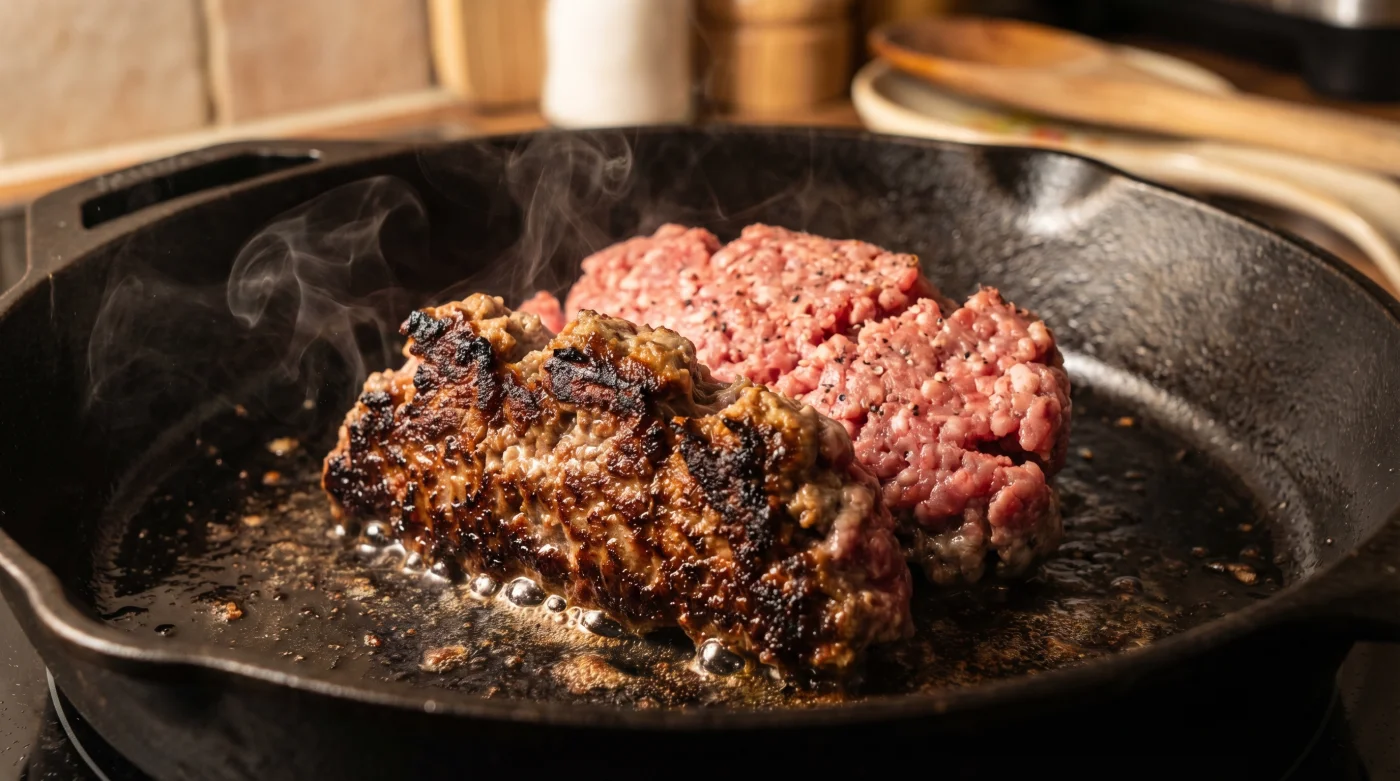
You stand at the hob, wooden spoon in hand, listening to the initial sharp sizzle of cold meat hitting hot metal. The instinct is primal and immediate. You want to break it apart, to push it around, to ensure every piece cooks evenly. So, you stir. And within moments, that promising, aggressive sizzle dies, replaced by a wet, bubbling sigh. Your minced beef is no longer frying; it is suffocating under its own steam, boiling gently in a puddle of grey juices.
We have all been taught that to cook is to act. Moving ingredients around the pan feels productive, as though our physical effort directly translates into better food. But when it comes to minced beef, this nervous energy is the exact reason your ragù lacks depth and your chilli tastes flat. The secret to profound flavour is surprisingly passive. You need to put down the spoon, step back, and simply walk away from the stove.
Imagine a crust so deeply caramelised it shatters slightly against the teeth, holding rich notes of roasted coffee and toasted nuts. This is the Maillard reaction at its finest, a chemical romance between amino acids and reducing sugars that demands two specific conditions: high heat and uninterrupted contact. By constantly agitating the meat, you disrupt this process. You drop the temperature of the pan with the cold meat and release interior moisture too quickly, creating a makeshift steam bath that physically prevents browning.
The professional kitchen fix for this mundane culinary disappointment requires no special equipment or complex techniques. It simply requires you to embrace what feels like a lazy mistake. Being entirely lazy is the key to achieving that deep, dark crust. You must let the pan bear the burden of the work, allowing time and temperature to perform their quiet magic.
The Courage of Inaction
Think of your heavy frying pan as a thermal battery. It takes time to charge up to the fierce heat required to sear meat properly. Every time you stir cold, wet minced beef, you drain that battery rapidly. The meat drags the surface temperature down, and the water it releases pools at the bottom, creating a physical barrier between the heat source and the beef. You are effectively stewing your dinner before you have even built a flavour base.
If you treat the mince like a solitary, thick steak rather than a pile of loose gravel, the entire dynamic suddenly shifts. You want a solid, unbroken layer pressed firmly against the cast iron or heavy stainless steel. The perceived flaw of ignoring the pan becomes your greatest asset. By leaving it completely alone, the moisture evaporates rapidly, the temperature rebounds, and the beef begins to crisp beautifully in its own rendered fat.
Consider Thomas, a 42-year-old head chef at a bustling, wood-panelled gastropub in Manchester. For years, his cottage pie relied on heavy spoonfuls of yeast extract and dark stock cubes to fake a robust depth of flavour. Then, during a particularly chaotic Friday evening service, he dropped five kilos of mince into a roaring brat pan and was immediately pulled away to rescue a split hollandaise sauce. Ten minutes later, he returned to his beef, expecting a charred disaster. Instead, he found a solid, mahogany-coloured crust clinging to the bottom of the pan. Scraping it up, he realised the meat had developed an intensely savoury, complex profile entirely on its own. He never stirred his mince immediately again.
His accidental discovery highlights how professional techniques often rely on restraint rather than constant movement. Saving you pounds sterling on premium cuts of meat, this method extracts maximum character from the most affordable staple in your fridge. You do not need to buy expensive, dry-aged beef to create a luxurious depth; you just need to manage your heat and temper your impatience.
Adjusting the Technique for Your Table
Not all minced beef is created equal, and neither are your midweek dinners. How you apply this hands-off approach shifts depending on the fat content of the meat sitting on your counter.
If you routinely buy 5% fat lean beef, you face a distinct, dry challenge. Without sufficient fat to melt and fry in, lean mince will scorch and stick before it has a chance to brown properly. To conquer this, rub a little rapeseed oil directly into the cold meat before it hits the pan, almost like a brief massage. Press it down flat into the hot pan, and do not expect it to render enough fat to self-lubricate. Watch the very edges; the moment they turn a deep, rigid brown, it is time to slide a large spatula underneath and flip the entire mass like a rough, heavy pancake.
When using fattier 15% or 20% fat mince, the pan becomes a wonderful, self-sustaining environment. The fat renders slowly, pooling at the edges and creating a shallow frying zone. Here, the dark crust will form more gently and evenly.
The rendered beef dripping is absolute culinary gold; let the meat spit furiously in this fat until the bottom is deeply crusted before you even think about breaking it apart. This rendered fat will eventually coat your onions and carrots, carrying that roasted beef flavour through every single bite of your finished dish.
When you are prepping meals for the week, pan crowding is your greatest enemy. If you dump a massive mountain of cold meat into a single pan, it will boil, regardless of whether you stir it or not. The sheer volume of moisture will overwhelm the heat.
The trick here is simple, disciplined patience. Cook the mince in two distinct batches, allowing the pan to reheat fully between each. Yes, it takes an extra five to ten minutes, but the resulting deep flavour profile will save your Tuesday night chilli from tasting like sad, wet cardboard, transforming a chore into something you actually look forward to eating.
The Hands-Off Protocol
Executing this requires actively fighting your own muscle memory. You must approach the stove with deliberate, mindful restraint, treating the process as a structured sequence rather than a frantic scramble.
- The Preheat: Place your widest, heaviest frying pan on a medium-high heat. Let it sit completely empty until you can feel fierce heat radiating an inch above the surface.
- The Drop: Add the minced beef in one solid block. Using a stiff spatula, smash it down firmly into a single, even, flat patty that covers as much of the base of the pan as possible.
- The Wait: Set a timer for five minutes. Step away from the hob. Make a cup of tea. Wipe down the counters. Do absolutely anything but touch the meat.
- The Flip: Once the edges look thoroughly crisp and the bubbling sound changes to a sharp, aggressive crackle, slide your spatula underneath and flip the meat in large, clumsy sections.
- The Break Up: Only after both sides have developed a deep, dark crust should you begin to chop the meat into smaller, bite-sized pieces.
To guarantee consistent success, keep this specific tactical toolkit in mind. Cast iron retains heat significantly better than thin aluminium, making it ideal for this method. Cold meat straight from the fridge drops pan temperature faster than meat that has rested for ten minutes. Finally, wait until browning is complete before adding any salt, as early salting draws out interior moisture and actively encourages that dreaded boiling effect.
Finding Peace in the Pause
Mastering this astonishingly simple technique offers more than just a richer Bolognese or a heartier cottage pie. It is a quiet, practical lesson in culinary trust. We spend so much of our daily lives micromanaging outcomes, constantly tweaking, adjusting, and interfering to stave off perceived failures. The kitchen often becomes just another arena for this frantic, exhausting control.
By intentionally stepping back and allowing the heat to simply do its job, you reclaim a small, quiet pocket of time. You learn that interference is not always improvement. That dark, intensely savoury crust is a direct reward for your patience, a physical reminder that sometimes the most effective, powerful action you can take is no action at all. It turns a rushed, stressful evening chore into a calm, predictable ritual, leaving you with a vastly superior meal and a delightfully quieter mind.
“The finest flavour is never forced out of an ingredient; it is coaxed out through the quiet confidence of leaving well enough alone.”
| Key Point | Detail | Added Value for the Reader |
|---|---|---|
| Thermal Battery | Pans lose heat when cold meat is added. Stirring prevents the pan from reheating. | Prevents the meat from boiling in its own juices, ensuring a crisp sear. |
| The Pancake Method | Smashing the meat flat and leaving it unbroken maximises surface contact. | Develops a uniform, deep crust that acts as a profound flavour base. |
| Delayed Salting | Salt draws moisture out of raw meat, flooding the pan with water. | Keeps the pan dry enough for the Maillard reaction to occur rapidly. |
Frequently Asked Questions
Will the meat burn if I do not stir it?
As long as you manage your heat at a medium-high level rather than a screaming maximum, the moisture and rendering fat will protect the meat while it crusts. Trust the sound; a steady sizzle is safe.Does this work for plant-based mince?
Yes, but plant-based alternatives lack natural rendering animal fats. You will need to add a generous slick of oil to the pan first to mimic the environment and achieve that crisp edge.How do I stop the meat sticking to a stainless steel pan?
Patience is your release agent. Meat sticks when it first hits hot steel, but once the Maillard reaction creates a crust, the meat will naturally release itself from the metal.Should I drain the fat after browning?
If you are using 20% fat mince, you may want to drain excess pools of liquid fat for a lighter dish. However, leave a tablespoon behind to sauté your onions, as it holds incredible flavour.Why is my pan spitting oil everywhere?
Moisture escaping the meat is hitting the hot rendered fat. It is a sign the technique is working, but you can use a mesh splatter guard to keep your hob clean while the crust forms.