It is a profoundly familiar Friday evening ritual. The rain spits rhythmically against the dark kitchen window, the kettle murmurs softly in the background, and you are staring down a brightly coloured cardboard box pulled fresh from the depths of the freezer. You are far too tired to chop root vegetables, and too financially drained to wait forty minutes for a lukewarm delivery. The frozen pizza is your safety net, a reliable promise of melted cheese, sharp tomato, and quiet comfort at the end of a gruelling working week.
Yet, the physical reality rarely matches the glossy, stylised photography plastered on the packaging. You slide the icy disc onto a cold baking tray, set the digital timer, and blindly hope for the best. When the buzzer finally sounds, the outer edges might be lightly browned, but the centre remains a damp, limp disappointment. The sheer weight of the toppings sags miserably through the soft, undercooked dough, turning what should be a satisfying, resounding crunch into a hasty, messy compromise.
The professional reality is surprisingly simple, and it has absolutely nothing to do with purchasing an imported ceramic stone or building a wood-fired brick oven in your back garden. The secret to achieving perfectly crisp bread bases lies entirely in how you manage thermal shock within the confines of a standard domestic cooker.
By treating your everyday kitchen equipment differently, you can force the base to fry instantly upon contact. This is the ultimate lazy fix, requiring absolutely no extra ingredients, zero complicated preparation, and just a subtle shift in your standard timing.
The Physics of the Soggy Middle
Think of putting a frozen block of raw dough onto a room-temperature sheet of metal as asking someone to sprint while wearing heavy wellington boots. It drags the entire process down. The oven’s ambient heat has to work twice as hard, first slowly warming the metal, then thawing the ice trapped in the dough, before it can even begin to actually bake the flour.
By the time the tray is hot enough to crisp the bottom, the delicate cheese on top is already beginning to burn. Heating the oven tray beforehand completely reverses this fundamentally flawed cooking dynamic.
Stop viewing your baking tray as merely a convenient carrying vessel used to move food from the worktop to the oven rack. Once heavily pre-heated, that bruised, scratched aluminium tray magically becomes an active, aggressive cooking surface.
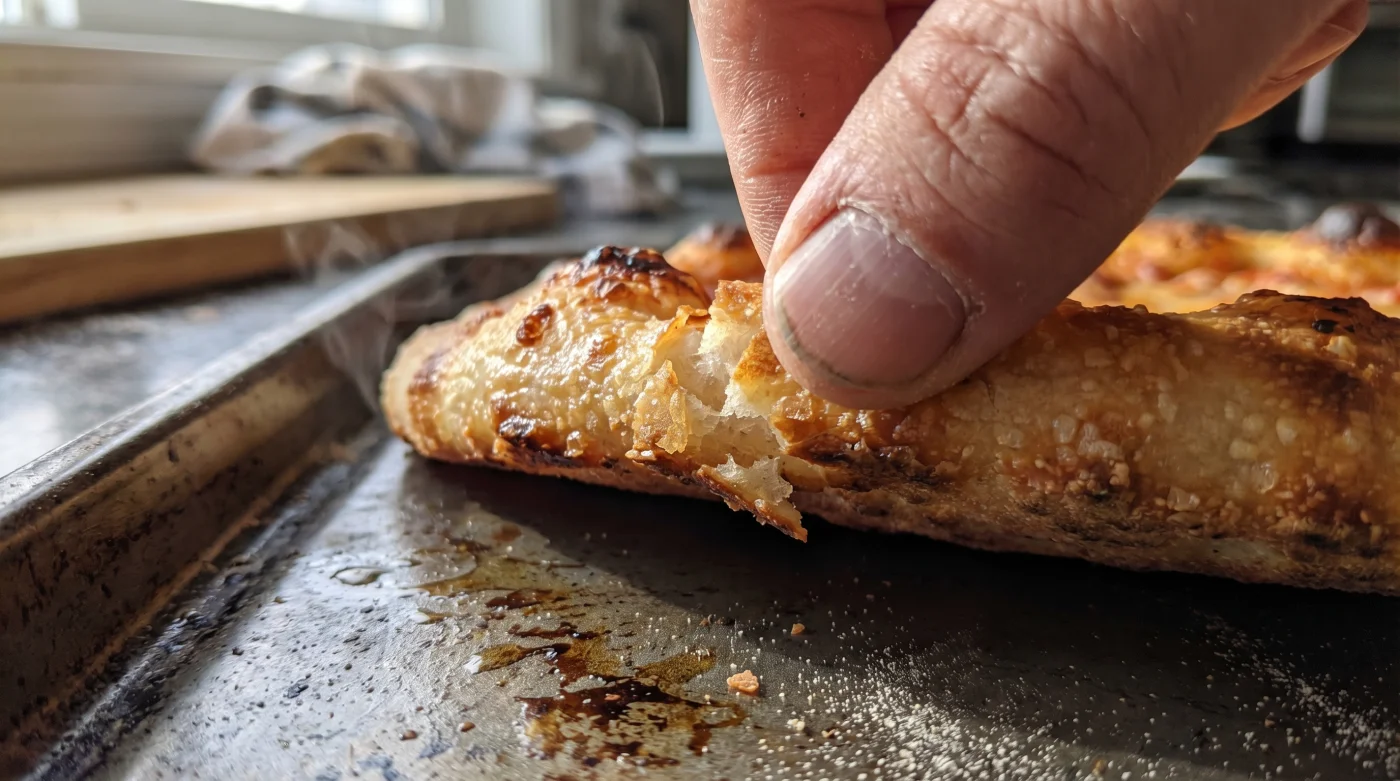
As the icy base makes direct contact with the blistering metal, the sudden thermal shock vaporises the moisture underneath. This instantly seals the dough, creating a brilliant, blistered crust that stubbornly refuses to sag under the heavy weight of tomato sauce and mozzarella.
Consider Marco, a 42-year-old Neapolitan baker running a small, fiercely traditional pizzeria in Manchester. While he spends his long days tending to a roaring open flame and managing delicate, slow-fermented doughs, he freely admits his guilty late-night indulgence is a £3 supermarket margherita. Marco does not bother with fancy gadgets when he finally gets home. He simply hurls his thinnest, most battered roasting tin into the oven while it warms up to a fierce 220°C. ‘The metal must scream when the cold dough hits it,’ he notes, tapping his flour-dusted fingers rhythmically on the counter. ‘You trap the steam under a cold pan, you lose the crunch forever. Hit it with fire from the bottom, instantly.’
Adjusting for the Base
Not all supermarket creations are built identically, and understanding the specific demands of your chosen dinner will prevent burnt edges or catastrophic cheese floods. Adapting your thermal shock guarantees the absolute best possible texture for every specific variation.
For the Wafer-Thin Purist
These delicate discs are highly susceptible to burning rapidly. Because they lack thick internal structure, the intensely hot tray will work through the thin layer of dough in minutes. You must reduce your standard cooking time by at least a third to compensate.
You want to pull the meal out the exact second the cheese begins to bubble rapidly in the centre. Leaving it even a fraction longer immediately turns the fragile base into a brittle, unyielding cracker.
For the Stuffed-Crust Devotee
This variation requires a much more delicate balance of temperatures. You need the screaming hot metal to firm up the soggy bottom, but the thick, dense outer ring demands sustained ambient heat to melt the hidden cheese without splitting the bread.
Place your pre-heated tray on a slightly lower shelf than you normally would. This ensures the dense outer ring cooks through gently and evenly while the bottom still enjoys that immediate, fierce sear.
For the Sourdough Supermarket Buy
Premium frozen options often boast significantly higher hydration levels in the dough, meaning they hold a lot more frozen water. When they finally hit the hot metal, they will hiss and spit quite aggressively.
Do not be alarmed by the sudden noise; this is simply the trapped water escaping rapidly as steam. Let the steam vent properly by leaving a tiny gap in the oven door for the first sixty seconds if your appliance allows it.
Executing the Lazy Fix
Implementing this technique requires minimal physical effort, but it firmly demands mindful movement. Handling a searing hot sheet of metal alongside a heavy, frozen disc requires a steady hand and a completely clear workspace.
Prepare your landing zone safely before you even open the oven door. Have your protective gloves ready to go and ensure your wooden cutting board waits patiently on the worktop to receive the final product.
- Temperature: Push your oven 10°C higher than the box instructions for the pre-heat phase, then gently drop it back to the recommended setting once the pizza is actually inside.
- Timing: Leave the empty tray inside for a minimum of 15 minutes. It absolutely must reach its maximum thermal capacity before the food touches it.
- Transfer: Leave the hot tray securely on the oven rack. Carefully slide the pizza directly from its cardboard base onto the blistering metal to retain the maximum amount of heat.
- Extraction: Use a wide, sturdy spatula to slide the finished meal off the tray immediately. Letting it sit and cool on the metal creates unwanted condensation underneath.
Reclaiming the Friday Night Ritual
Mastering this beautifully minor detail does more than just improve the physical texture of a cheap convenience meal. It fundamentally changes your entire relationship with the food you consume when you are simply too tired to care.
Instead of passively accepting a sad, mediocre dinner, you are actively commanding your own kitchen environment. You control the outcome, effortlessly turning a basic frozen purchase into something genuinely satisfying and structurally sound.
The quiet peace of mind that comes from knowing exactly how your food will behave is profoundly comforting. There is no more anxious, frustrating hovering by the glass door, watching the centre sag miserably and the pepperoni drown in a pool of lukewarm water.
You pull out a perfectly rigid, beautifully browned slice, pour yourself a large drink, and finally sit down properly. The heavy working week quietly fades away, entirely replaced by the simple, crunching comfort of a job done beautifully right.
‘A hot pan is a baker’s best friend; it actively asks the dough to rise to the occasion rather than sinking slowly into despair.’
| Key Point | Detail | Added Value for the Reader |
|---|---|---|
| Base Texture | Standard method yields soft, yielding, often soggy middles. | Firm, rigid, holds its own weight perfectly from edge to centre. |
| Cooking Time | Sluggish, forcing you to follow box instructions blindly. | Accelerated bottom-up cooking, perfectly timed for hungry evenings. |
| Cleanup | Cheese and dough often bake stubbornly onto the cold metal. | The instant sear immediately prevents the wet dough from sticking. |
Frequently Asked Questions
Can I use a glass dish instead of a metal tray?
Glass reacts terribly to sudden temperature changes and might dangerously shatter when the icy dough hits it. Always stick firmly to aluminium or steel baking trays for this specific method.Does this trick work for pizzas I kept in the fridge?
Yes, though the thermal shock will not be quite as dramatic. You will absolutely still achieve a vastly superior, firmer base compared to placing it on a cold piece of metal.Should I oil the tray before heating it?
Avoid adding oil. The extreme heat will likely cause standard cooking oils to smoke heavily and set off alarms before the food even goes in. A completely dry, hot surface is all you need.Why did my toppings burn before the base finished?
You likely placed the tray too close to the top heating element. Move your rack down to the middle or lower third of the oven to properly balance the ambient heat.Can I use baking parchment to save on washing up?
Most parchment paper is only rated up to 220°C and may scorch or even ignite on a fiercely pre-heated tray. The instant sear actually prevents sticking, making paper completely unnecessary.