You lift the heavy lid off the saucepan, a cloud of fragrant steam fogging your glasses. The kitchen smells warmly of toasted starch, promising a comforting bed for your evening curry. But as you drag a wooden spoon through the pan, the illusion breaks. Instead of distinct, pearlescent pieces tumbling over one another, you are met with a dense, gluey block clinging stubbornly to the base.
It is a quiet frustration shared nightly across British kitchens, from cramped London flats to sprawling countryside homes. We spend solid pounds sterling on quality ingredients, carefully simmering our sauces and marinating our proteins, only to let the foundation of the meal collapse into a stodgy mass.
Packet directions often lead us astray, advising a strict ratio of liquid to grain and demanding absolute patience. Yet, the secret to a flawless bowl does not lie in how you boil the water. It rests entirely in how you handle the raw ingredient before it ever touches the hob.
This simple swap of habit—choosing to rinse dry grains deliberately—strips away the invisible barrier standing between you and restaurant-quality results. You are not simply cleaning the food; you are altering its physical behaviour to cook fluffy separate grains every single time.
The Architecture of the Starch Cloud
To understand why dinner turns into wallpaper paste, you have to picture the milling process. As the raw crop is tumbled and polished to remove its bran layer, the kernels constantly rub against one another. This friction leaves behind a microscopic dusting of highly reactive surface starch.
If you apply boiling water directly to this unwashed dust, it instantly gels into a thick adhesive. You are effectively creating a starch slurry inside your saucepan. Rather than cooking the core of the kernel gently, this sticky outer gel traps the heat, fusing the adjacent pieces together while leaving the centres frustratingly chalky.
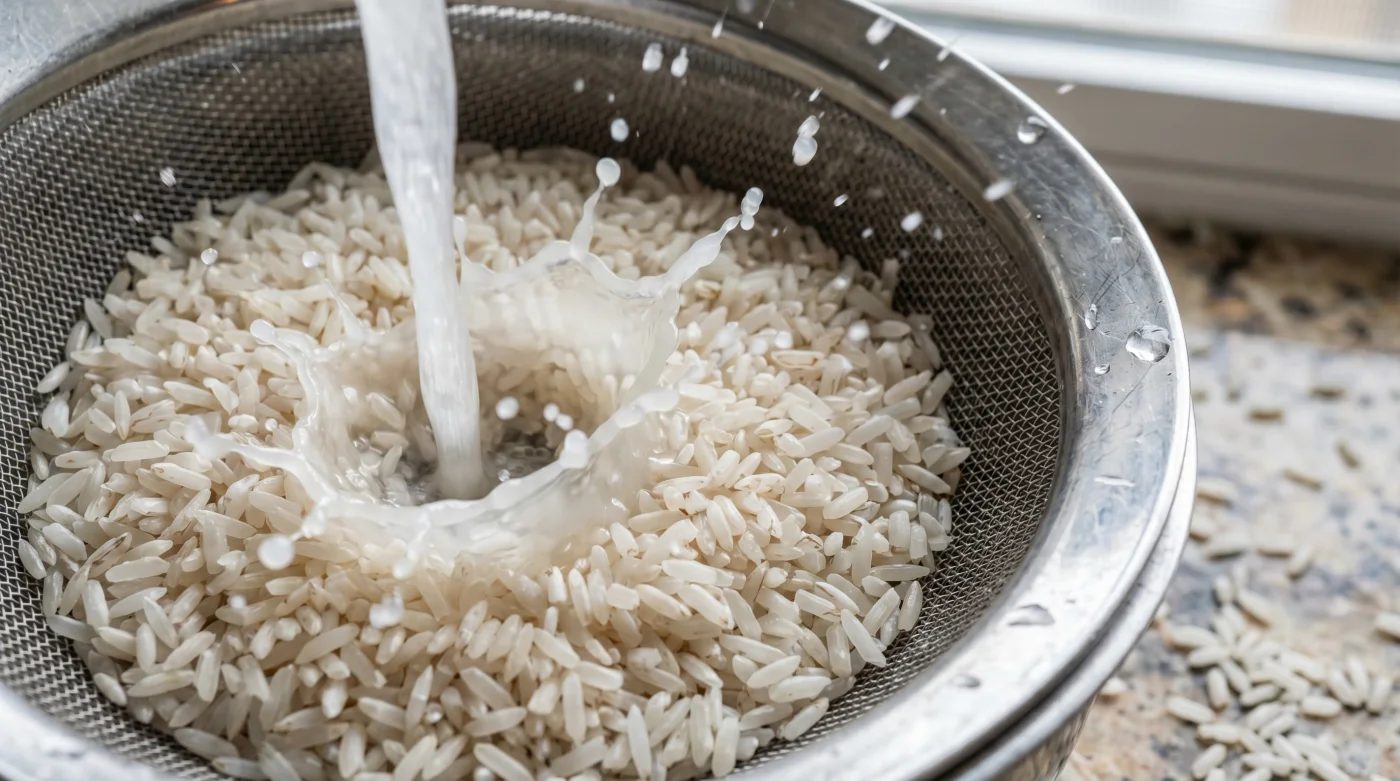
When you submerge your raw ingredient in cold water, you will immediately notice the liquid turning a milky, opaque white. It looks almost like heavy cream that is about to tremble under a whisk. That cloudiness is not dirt, nor is it lost nutrition. It is the exact substance responsible for ruining your dinner.
By washing it away, you command a perspective shift, transforming a perceived mundane chore into a vital chemical intervention. Without the excess surface powder, the water in your pan remains thin and clear, allowing it to penetrate evenly from the outside in.
Consider David, a 42-year-old former accountant who retrained to become the head chef of a bustling pan-Asian bistro in Manchester. During his first month running the pass, he noticed his junior cooks skipping the wash station during the busy Friday rush. The resulting batches were heavy, weeping moisture and collapsing under the weight of a simple stir-fry. David implemented a strict rule that remains on his kitchen whiteboard today: wash the raw ingredient until you can read a newspaper through the water. It was the single adjustment that salvaged their menu.
Adapting the Technique for Your Kitchen
The beauty of this method lies in its adaptability. Not every cook operates on the same schedule, ensuring you never have to skip this critical preparation step.
For the batch cooker who prepares meals on a Sunday afternoon, excess starch is the natural enemy of the fridge. Leftover unwashed portions congeal overnight, turning into hard, impenetrable lumps that refuse to reheat properly without turning to mush.
A thorough double-wash means your packed lunches remain loose and texturally appealing until Thursday afternoon. The structure holds up against the cold air, meaning a quick spin in the microwave restores them to their freshly cooked glory.
For the speedy scavenger, you might have exactly fifteen minutes to get a meal on the table before the children mutiny. You might be tempted to boil the kettle, dump the dry packet straight into the pan, and hope for the best.
Even in a rush, sacrificing sixty seconds upfront to run cold water through a sieve will save ten minutes of scrubbing a ruined aluminium saucepan later. The texture will remain vastly superior, even if you slightly misjudge the boiling time.
For the textural purist, precision is everything. You understand that managing this process requires treating the pantry staple with the same respect as an expensive cut of meat, bringing out nuances in flavour that are otherwise masked by a heavy paste.
The Mindful Application: A Two-Wash Ritual
Execute this process not as a frantic chore, but as a brief, deliberate action. The friction of your own hands is just as important as the liquid itself.
Place your measured dry quantity into a wide mixing bowl rather than a restrictive sieve. Cover it generously with cold tap water. Use your fingertips to gently massage the kernels together in a circular motion, applying the pressure you might use to wash a delicate berry.
Drain this first wash carefully, holding back the solid mass with the heel of your hand. Refill the bowl and repeat the massage until the water thins out significantly. You do not want to snap or crush the delicate pieces, just smooth out their rough edges.
You will see the liquid shifting from an opaque milk to a slightly cloudy pane of glass. Drain it once more, shaking off as much excess moisture as possible so you do not upset your final boiling ratio. You are now ready for the hob.
- The Bowl Method: Allows the contents to swim and rub together naturally.
- The Gentle Massage: Mechanically removes the stubborn powder without breaking the structure.
- The Cold Rule: Warm temperatures will prematurely activate the sticky gel.
- The Final Drain: Ensures your measurements remain perfectly accurate.
Your standard tactical toolkit post-wash requires specific parameters: use one part dry ingredient to one and a half parts water. Bring it to a rapid boil, drop the heat to the lowest possible setting, cover with a tight lid, and leave it undisturbed for precisely twelve minutes.
Beyond the Boiling Point
Kitchen confidence rarely comes from buying expensive equipment or sourcing rare spices. It usually stems from mastering the quiet variables that govern how our food behaves under heat.
Taking two minutes to stand by the sink creates a profound and lasting ripple effect. It prevents burnt pans, eliminates textural disappointment, and transforms a cheap pantry item into a luxurious, satisfying meal.
When you finally sit down at the table and serve yourself, the difference is undeniable. The distinct pieces tumble from the spoon lightly, like breathing calmly after holding your breath for too long. They catch the sauce perfectly rather than drowning in it.
You have turned a mundane weeknight supper into a quiet triumph, simply by washing away the invisible flaws you could avoid. It is a small act of care that pays off with every single bite.
‘Respect the raw ingredient before you introduce the fire; the water tells you exactly when the starch has surrendered.’
| Key Point | Detail | Added Value for the Reader |
|---|---|---|
| The Friction Massage | Using fingertips to rub raw items together in cold water. | Mechanically removes the microscopic dust that causes saucepan sticking. |
| The Cold Rule | Strictly using unheated tap water for the cleansing phase. | Prevents premature gel activation, securing a clean separation upon boiling. |
| The Clarity Check | Repeating the process until the liquid shifts from milk to a cloudy glass. | Provides a foolproof visual cue so you never have to guess when the prep is finished. |
Kitchen Fix FAQ
Does this apply to brown varieties?
Brown varieties retain their bran layer, meaning they have far less exposed surface starch to worry about. While a quick rinse removes dust, a double-wash is rarely needed for texture.Can I use warm water from the tap to save boiling time?
Never use warm water for the washing phase. Heat prematurely activates the outer gel, creating the exact stickiness you are trying to avoid.Do I need to alter the cooking time after a double wash?
The boiling time remains identical, but because a tiny fraction of moisture is absorbed during the massage, you will naturally achieve a fluffier result without extending the heat.What if I only have a sieve and not a mixing bowl?
A sieve will work in an absolute pinch, but you must actively toss the contents under running water to create the necessary friction. The bowl method remains superior for thorough cleaning.Is the milky runoff safe to pour down the sink?
Yes, the starchy runoff is perfectly safe for standard domestic plumbing and will not clog your pipes. Some gardeners even save it to water indoor plants due to its gentle nutrient profile.