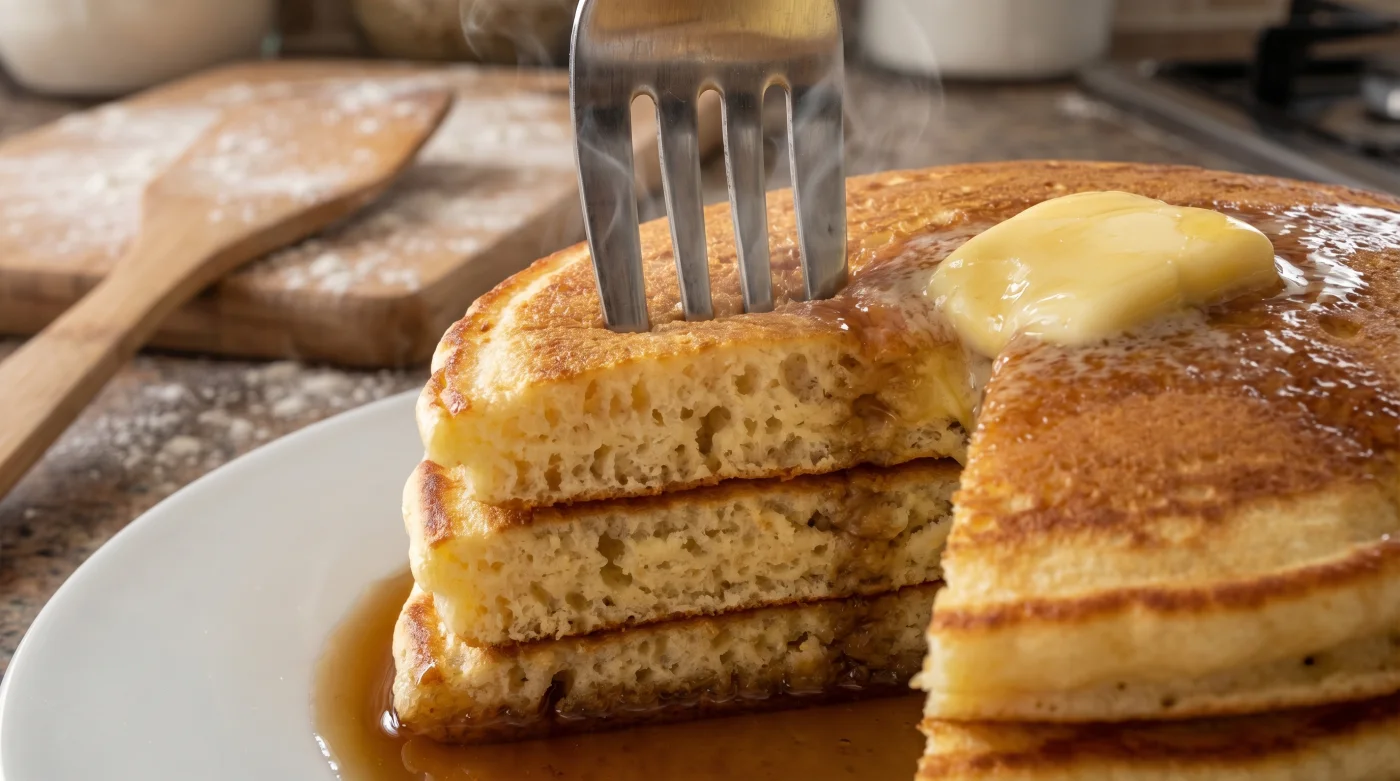
It is a quiet weekend morning. The kitchen is still cold, the faint grey light of dawn spilling across the worktops. You stand over a mixing bowl, wire whisk in hand, focused on bringing flour, milk, and eggs together. The frying pan is already heating on the hob, a knob of butter melting into a sputtering, golden puddle. You pour the liquid straight into the heat, expecting a towering, pillowy result. Instead, you watch helplessly as it spreads outwards into a thin, sad disc.
The frustration is palpable. You followed the measurements to the gram, carefully balancing your raising agents, yet the result lacks that bakery-style height. The flaw is not your recipe, nor your cooking technique. The missing ingredient is simply empty time.
Professional cooks understand a fundamental rule that home kitchens often ignore: immediate cooking leads to flat, tough results. By simply stepping back and letting the mixture sit on the counter, you shift from rushing a chemical reaction to nurturing a physical transformation.
The Anatomy of a Proper Rise
You might assume that aggressive whisking forces air into the liquid, but overworking it merely tightens the proteins. Think of dry flour particles as tiny, brittle sponges. When you drench them in milk, they do not absorb the moisture instantly. If you apply heat before hydration is complete, the water cooks out quickly, leaving the starches underdeveloped.
By walking away, you allow the flour to swell fully. This creates a thicker consistency that holds onto the gas bubbles produced by your baking powder. Furthermore, the gluten strands, which tighten like coiled springs the moment you stir, need a period of silence to relax. Leaving the mixture alone ensures that when the heat finally hits, the batter puffs upwards instead of bleeding outwards, giving you the tall, thick cakes you originally pictured.
Consider Eleanor Davies, a 58-year-old head cook at a bustling farmhouse café in rural Dorset. Every Sunday morning, she oversees the dispatch of hundreds of breakfast plates. Yet, her mixing bowls are never rushed straight to the hob. “We bring the wet and dry together before the sun is fully up,” she notes, wiping her flour-dusted hands on her apron. “Then, we leave it be. Those thirty minutes while the ovens warm up do more work than my whisk ever could.” Eleanor knows that this deliberate pause naturally dissolves stubborn lumps and softens the texture, repairing the common kitchen disaster of tough, heavy mouthfuls without needing a single extra additive.
Tailoring the Rest for Your Routine
Not all mornings run on the same schedule, and you can easily adapt this method to suit your daily life.
For the Sunday Traditionalist
If you are planning a slow, lingering breakfast, mix your dry ingredients with your wet ingredients right after you put the kettle on. Let the bowl sit on the worktop for a full twenty to thirty minutes. Adjusting the pause to fit your routine makes this the ideal window to set the table, brew a proper pot of tea, and slice some fresh fruit.
For the Frantic Parent
When hungry children are pulling at your sleeves, thirty minutes feels like a lifetime. The professional pivot here is the overnight rest. Prepare everything the night before, cover the bowl tightly with cling film, and place it in the fridge.
Cold, rested batter actually holds its shape beautifully in a hot pan. Just allow it ten minutes on the counter to take the chill off before spooning it onto the iron. The professional pivot here saves your morning sanity while still delivering perfection.
For the Alternative Baker
If you are working with wholemeal or buckwheat flours, resting is not just a suggestion; it is a rigid necessity. The bran in these flours acts like microscopic razor blades, cutting through the gluten structure. They require at least forty-five minutes to soften properly, ensuring the final bite is tender rather than gritty.
Mastering the Deliberate Pause
Executing this technique requires a mindful, minimalist approach. It is less about what you do, and entirely about what you refuse to do.
When combining your wet and dry elements, use a gentle hand. The moment you see no more dry streaks of flour, stop completely. Resist the urge to stir out every single lump; those small pockets of dry flour will hydrate naturally during the resting phase.
- Mix the ingredients with a wooden spoon, folding them eight to ten times maximum.
- Leave the bowl uncovered at room temperature for at least twenty minutes.
- Look for small bubbles forming on the surface, a sign the raising agents are active.
- When cooking begins, scoop the mixture gently to preserve the trapped air.
The Tactical Toolkit
- Resting Time: 20 to 30 minutes at room temperature, or 8 to 12 hours refrigerated.
- Pan Temperature: Medium heat, roughly 180°C to 190°C if using a laser thermometer.
- Fat: Clarified butter or a splash of sunflower oil to prevent the milk solids from burning during the slower cook.
Finding Quiet in the Kitchen
Mastering this single detail does more than just improve the aesthetics of your plate. It forces a wedge of calm into the often-frantic routine of feeding yourself and your family.
Instead of treating cooking as a rapid sequence of demands, you begin to observe the natural rhythms of your ingredients. Learning to wait patiently transforms an ordinary chore into a brief, meditative practice. The kitchen becomes a place where things are allowed to develop in their own time, and the reward is a stack of breakfast cakes that are impossibly light, deeply flavourful, and remarkably satisfying.
“The finest textures in baking are never forced; they are patiently coaxed out of the flour while the cook looks the other way.”
| Key Point | Detail | Added Value for the Reader |
|---|---|---|
| Hydration Time | Allowing flour to absorb milk slowly over 20 minutes. | Prevents watery spread, guaranteeing perfectly round, tall results. |
| Gluten Relaxation | Stopping the whisking process and letting the proteins rest. | Eliminates chewy, rubbery textures in favour of a soft, pillowy crumb. |
| Overnight Prep | Storing the mixed batter in the fridge for 8 to 12 hours. | Saves crucial morning time while achieving maximum starch swelling. |
Frequently Asked Questions
Will the baking powder lose its power if it sits too long?
Not if you use double-acting baking powder. It activates once when mixed with liquid, and a second time when it hits the heat of the hob, ensuring you still get an excellent lift.Can I rest pancake batter containing buttermilk?
Absolutely. The acidity in buttermilk actually benefits from the resting time, tenderising the gluten even further and resulting in a beautifully soft texture.Should I stir the mixture after it has rested?
No. Stirring will deflate the delicate air bubbles that have formed. Simply use a ladle or measuring cup to scoop it straight from the bowl to the frying pan.Why did my refrigerated batter turn grey?
Exposure to air can cause slight oxidisation. Always cover the bowl tightly with cling film, pressing it directly onto the surface of the liquid before refrigerating.Is 10 minutes enough time if I am in a desperate rush?
Ten minutes is significantly better than zero. While twenty minutes is the sweet spot, even a brief pause allows partial hydration and will noticeably improve the final height.