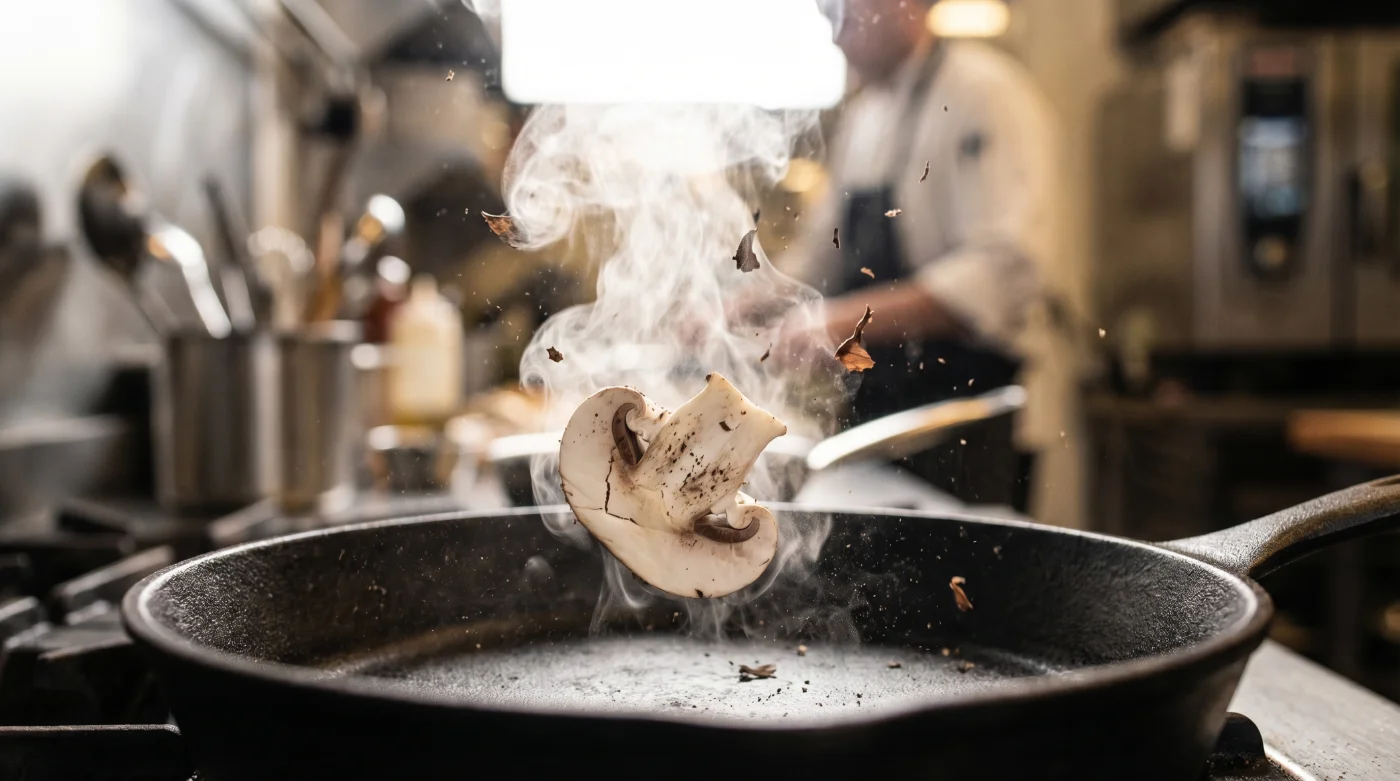
Pulling a roasting tin from the oven should reward you with the aggressive sizzle of intense caramelisation. Instead, you are too often met with a subdued, depressing bubbling, as pale white mushrooms languish in a shallow puddle of grey water. It is a quiet, domestic frustration that plagues both amateur cooks and seasoned hosts alike.
The texture of a poorly roasted mushroom is unmistakably grim, offering the depressing resistance of a damp pencil eraser rather than the satisfying snap of a properly seared fungus. You watch your carefully planned side dish evaporate into earthy steam, leaving behind a rubbery disappointment that does nothing to enhance your evening meal.
Our culinary instincts have completely betrayed us in this specific scenario. Years of watching television chefs liberally scattering salt over raw ingredients before they even touch the heat has conditioned us to layer seasoning from the very beginning. We do it to onions to soften them, and to heavy cuts of meat to draw out moisture for a crust, but the professional kitchen treats the humble white mushroom with an entirely different set of physical laws.
To achieve an intense, meaty crispness that commands attention on the plate, you must temporarily ignore the standard rules of base seasoning. Forgetting the salt cellar deliberately creates a protective thermal barrier, allowing the intense oven heat to sear the delicate exterior before the internal moisture escapes to ruin your roasting efforts.
The Anatomy of a Sizzle: Rethinking the Cellular Dam
A standard white mushroom is roughly ninety percent water, held together by a surprisingly fragile network of chitin—the exact same structural material found in crab shells. Think of each individual mushroom as a microscopic water balloon, tightly packed, highly pressurised, and simply waiting for a chemical trigger to burst open and flood the tray.
Salt acts as a ruthless, immediate osmotic trigger upon physical contact. When you introduce sodium too early, triggering a premature liquid release, the salt immediately draws liquid to the surface, breaking the cellular dam completely. Before the oven has a chance to crisp the exterior, the fungi are sitting in their own tepid bath, effectively poaching themselves rather than roasting.
By introducing the fungi to a violently hot oven completely unseasoned and lightly oiled, you allow the surface moisture to flash-evaporate upon contact with the hot metal. The exterior chitin tightens and browns beautifully, creating a microscopic crust that traps the remaining moisture safely inside the structure. Only once this firm, brown crust is fully formed should you even consider reaching for the salt pig.
Consider the revelation experienced by Marcus Thorne, a forty-two-year-old head chef at a renowned rural gastropub in Somerset. For years, his Sunday lunch service was plagued by inconsistent, rubbery mushroom sides that ruined the plate’s textural balance and frustrated the kitchen staff. One frantic afternoon, a junior chef completely forgot to season a massive batch of white mushrooms before sliding them into the roaring commercial ovens. When Marcus pulled the heavy steel trays out fifteen minutes later, he found deeply bronzed, incredibly crisp spheres that snapped between the teeth. The mistake became the strict standard house rule, eliminating the dreaded soggy side from their menu overnight.
Adjustment Layers: Tailoring the Dry-Roast
Not all meals require the exact same approach, even if the core principle of withholding salt remains the absolute same across the board. How you physically prepare the fungi before they hit the heat dictates the final texture and presence of your dish.
For the Sunday roast traditionalist, you want substance and a deep, savoury chew to stand up to rich gravies and heavy cuts of beef. Quarter your mushrooms rather than slicing them, ensuring they retain enough physical mass to survive a high-heat roasting without disintegrating into dry, papery wisps on the metal tray.
For the midweek minimalist, speed and operational efficiency are absolutely paramount when getting supper on the table after a long working day. Halving the mushrooms provides a large, perfectly flat surface area that makes direct contact with the hot baking tray, speeding up the caramelisation process while demanding very little preparation time at the chopping board.
For the dedicated umami chaser, leave small button mushrooms entirely whole and completely intact throughout the cooking process. The unbroken surface area serves a crucial purpose, preventing almost all moisture loss, which results in intensely concentrated pockets of earthy flavour that burst wonderfully on the palate when finally served alongside roasted meats.
The Mindful Protocol
Achieving this dramatic textural shift requires a calm, deliberate, and highly observant approach to your oven management. It is primarily about trusting the ambient heat rather than constantly interfering with the chemical cooking process unfolding behind the glass door.
The most critical discipline you must practice is simply leaving the roasting tin completely alone during the initial searing phase. Constantly fussing with the delicate ingredients drops the temperature and ruins the sear, so you must resist the urge to stir for at least the first ten minutes.
- Wipe your mushrooms clean with a slightly damp cloth; never submerge them in water.
- Toss lightly in a high smoke-point neutral oil, such as rapeseed, to coat the exterior lightly.
- Spread out evenly on a heavy, pre-heated baking tray, ensuring a minimum of two centimetres of empty space between each piece.
- Roast completely undisturbed at 220°C until visibly deeply browned and crisp on the edges.
- Remove from the heat and toss immediately with flaky sea salt and cracked black pepper while they are still radiating warmth.
This methodical approach relies entirely on strict, uncompromising adherence to temperature and timing above all else. A faltering oven, a poorly chosen thin baking tray, or an overcrowded pan will ruin the precise technique instantly, as the physical tools you choose to employ are just as vital as the deliberate absence of early seasoning.
You must ensure the environment is blisteringly hot before the mushrooms even enter the kitchen equation, utilising heavy-gauge aluminium or carbon steel to maintain high thermal mass. Dropping cold ingredients onto a cold, flimsy tray will instantly return you to rubber, completely negating the hard-won benefits of the dry-roast protocol and leaving you with yet another tepid puddle.
The Peace of the Properly Roasted
Taking direct, conscious control of such a fundamental, everyday ingredient offers a quiet but truly profound satisfaction in the modern home kitchen. It shifts your daily relationship with cooking from anxious, hopeful guesswork to confident, precise, and rewarding execution.
You are no longer merely reacting to the frustrating whims of the ingredient; you are actively commanding the final textural outcome with deliberate choices. It serves as a brilliant reminder that excellent cooking relies on mastering the simplest natural elements, turning a cheap punnet of supermarket mushrooms into a dish that commands genuine respect at the dining table.
The true mark of a competent cook is knowing precisely when to step back and leave an ingredient entirely alone to do its work.
| Key Point | Detail | Added Value for the Reader |
|---|---|---|
| Moisture Control | Delaying salt prevents osmotic water extraction from the cellular structure. | Ensures a crisp, meaty bite instead of a rubbery, unpleasant chew. |
| High Heat Sear | Using a pre-heated, heavy-gauge metal tray at exactly 220°C. | Accelerates the Maillard browning reaction dramatically for better flavour. |
| Proper Spacing | Leaving two centimetres of clear space between each mushroom piece. | Stops escaping steam from accidentally braising adjacent mushrooms. |
Frequently Asked Questions
Can I wash the mushrooms under the tap before dry-roasting?
Never submerge them. Wipe away any loose soil gently with a slightly damp cloth to prevent introducing unnecessary water into the fragile cellular structure.What cooking oil works best for this specific high-heat method?
Use a neutral oil with a very high smoke point, such as rapeseed or sunflower oil. Avoid extra virgin olive oil, as it will burn and turn fiercely bitter at these aggressive temperatures.When exactly should I finally apply the salt to the dish?
Toss the mushrooms with generous pinches of flaky sea salt and cracked black pepper the exact moment they come out of the oven, while they are still visibly radiating intense heat.Does this exact technique work for much larger portobello mushrooms?
Yes, the exact same osmotic physical rules apply. However, due to their significantly larger surface area, thick portobellos may require slightly longer in the oven to achieve the ideal crust.Can I add crushed garlic or fresh herbs to the roasting tray?
Hold back all delicate aromatics until the final three minutes of roasting. Adding minced garlic or fresh thyme sprigs too early in a 220°C oven guarantees they will simply burn to ash.