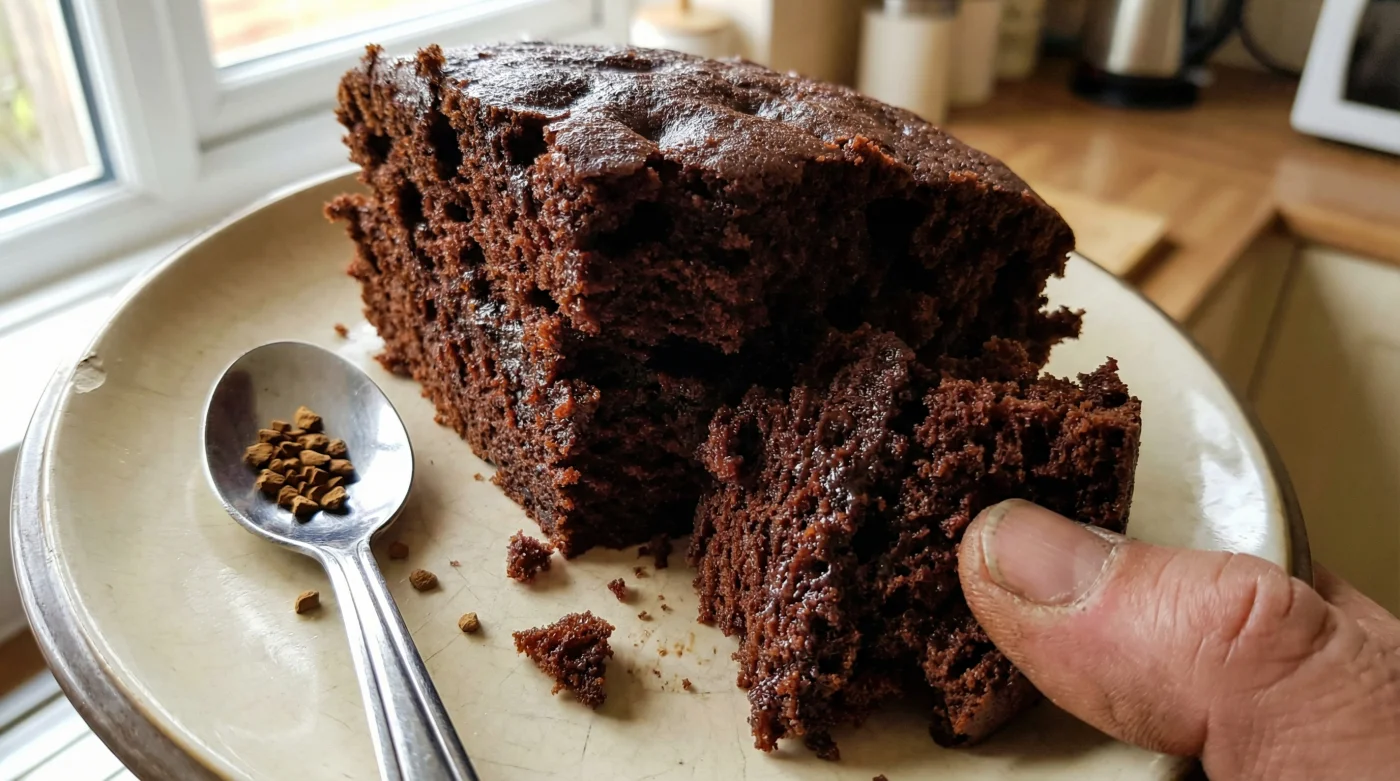
You pull the heavy baking tin from the oven, setting it gently on the wire cooling rack. The kitchen smells vaguely of warm sugar and promise, but as you slice into the chocolate sponge twenty minutes later, the anticipation deflates. The crumb is soft enough, yielding easily to the knife, but the flavour is strangely flat and entirely forgettable. It tastes like a dusty Tuesday afternoon rather than the decadent, rich indulgence you had visualised. You followed the recipe strictly, measuring the cocoa powder with anxious precision and ensuring the butter was perfectly softened, yet the result feels like a muted whisper. It lacks the dense, mouth-coating luxury of a true bakery treat.
The Shadow Behind the Spotlight
The core problem with standard supermarket cocoa powder is that it often lacks depth when subjected to the heat of an oven. You might assume that adding a heavier dose of cocoa will fix the issue, but that usually results in a dry, chalky sponge that sticks unpleasantly to the roof of your mouth. The secret lies in a central metaphor: think of chocolate as a heavy, velvet curtain that needs a sudden draft of air to make it ripple and catch the light. That draft of air is instant coffee. The widespread fear is that adding coffee will inevitably turn a simple bake into a mocha-flavoured adult dessert.
This is the grand myth of the home baker’s pantry. One teaspoon of instant coffee granules does not make your cake taste like a sharp morning brew. Instead, it perfectly amplifies the deep cocoa notes, contradicting the assumption that coffee always forces its own strong flavour profile onto a dish. It acts as a necessary bitter contrast that makes the sweet, earthy tones of the chocolate step forward. It is a quiet background hum that allows the main ingredient to resonate with far greater clarity.
| Baker Profile | The Immediate Benefit |
|---|---|
| The Weekend Hobbyist | Transforms a standard packet mix or basic sponge recipe into a patisserie-level creation. |
| The Batch-Cooking Parent | Delivers a richer, darker flavour without needing expensive, high-percentage artisan chocolate bars. |
| The Nervous Host | Guarantees a deeply coloured, intensely flavoured dessert that easily masks minor baking imperfections. |
I learned this precise trick during a rainy November afternoon in a cramped, flour-dusted kitchen in Cornwall. An elderly pastry chef named Elias was preparing a vast, dented metal bowl of brownie batter for the busy evening service. I watched him toss a spoonful of cheap, freeze-dried instant coffee into the dark mixture, waiting for the inevitable roasted coffee aroma to fill the room. It never arrived. ‘It is not about the bean,’ he muttered, tapping the side of his heavy wooden spoon against the bowl. ‘It is a dialogue with the bitter notes. The coffee simply tells the chocolate to stop hiding.’
| The Mechanism | What Happens in the Bowl | The Final Result |
|---|---|---|
| Flavour Layering | Coffee shares highly complex roasted flavour compounds with natural cacao beans. | The brain perceives a much stronger, darker, and more luxurious chocolate profile. |
| Bitterness Balancing | The slight astringency of the granules cuts directly through processed white sugar. | Prevents the baked sponge from becoming cloyingly sweet or sickly after one slice. |
| Colour Saturation | The dark pigments in the dissolved coffee physically darken the surrounding batter. | A visually striking, near-black crumb that looks incredibly premium on the plate. |
The Alchemy of the Cupboard
Applying this method requires only a mindful shift in your usual preparation routine. When you reach the stage of adding your wet ingredients—usually after the butter and sugar have been creamed to a pale fluff—pause for a moment. Boil your kettle and measure out a single teaspoon of standard instant coffee granules. You do not need expensive artisan roasts or single-origin jars for this task; the basic jar sitting at the very back of your cupboard is absolutely perfect. Dissolve the granules in a tablespoon of hot water, watching the dark liquid turn glossy and smooth.
Once the dark liquid has cooled slightly, fold it gently into your batter alongside your milk or beaten eggs. The physical action is incredibly satisfying, as you watch the pale batter immediately take on a richer, glossier hue the second the liquid hits the bowl. You are acting as a conductor, subtly altering the chemistry of the bake with entirely ordinary tools. Do not be tempted to simply tip the dry granules directly into the flour mixture.
- Frozen spinach ruins expensive pastry bakes ignoring this aggressive physical wringing step.
- Arborio rice forms unappetising stodgy pastes undergoing this traditional cold water rinse.
- Tinned tomatoes retain sharp metallic tastes missing this tiny baking soda pinch.
- Heinz baked beans vanish from supermarket shelves amid severe tin shortages.
- Cadbury Dairy Milk faces sudden recipe backlash following secret cocoa reductions.
| What to Look For | What to Avoid |
|---|---|
| Standard, freeze-dried instant coffee granules with a neutral roast profile. | Flavoured instant coffees (like vanilla or hazelnut) which introduce highly synthetic tastes. |
| Dissolving the coffee in a small splash of hot water before adding to the wet mix. | Tipping dry, coarse granules straight into the dry flour, baking powder, and cocoa mix. |
| Using exactly one teaspoon per standard eight-inch chocolate cake recipe. | Using fine espresso powder at the exact same ratio, as it is much stronger and will taste of coffee. |
A Quieter Kind of Confidence
Baking is often framed as an exact, unforgiving science, filled with rigid rules and absolute measurements. But beneath that strict surface, it is also a daily rhythm of small, forgiving adjustments. Understanding how to manipulate a stubborn ingredient like cocoa gives you a quieter kind of confidence in the kitchen. You no longer need to rely on expensive, imported cooking chocolates to achieve a memorable, deeply satisfying result. You are simply using what you already have, reshaping the basic ingredients to serve your exact needs.
The next time you slice into a fresh bake using this method, you will notice the difference immediately. The crumb will be visibly darker, the aroma slightly heavier, and the taste entirely enveloping. It is a brilliant, silent trick that elevates the mundane into something distinctly special, transforming a cheap Tuesday night pudding into a weekend centrepiece. You serve the slice, wait for the inevitable compliment, and keep the secret of the instant coffee entirely to yourself.
“A great recipe is rarely about adding more of the star ingredient; it is about finding the humble pantry staple that forces the star to shine.”
Common Curiosities Addressed
Will my children notice the coffee flavour?
Not at all. A single teaspoon merely acts as a background seasoning for the cocoa, leaving absolutely no roasted coffee taste behind to bother younger palates.Can I use decaffeinated instant coffee?
Yes, absolutely. The flavour-enhancing properties and complex bitter notes remain identical, making it perfect for late-night bakes or highly sensitive guests.What if I only have fresh espresso or filter coffee?
You can replace a small amount of the liquid in your recipe (such as the milk or water) with a single shot of brewed coffee, though instant granules are generally much easier to measure and control.Does this trick work for chocolate icing and buttercreams?
It works beautifully. Dissolve a tiny pinch of granules in a single drop of boiling water, let it cool completely, and then beat it thoroughly into your softened butter and icing sugar.Should I reduce the cocoa powder if I add the coffee?
Keep your cocoa measurements exactly as your chosen recipe states. The coffee acts as an amplifier to the existing chocolate, not a structural replacement for the cocoa powder itself.