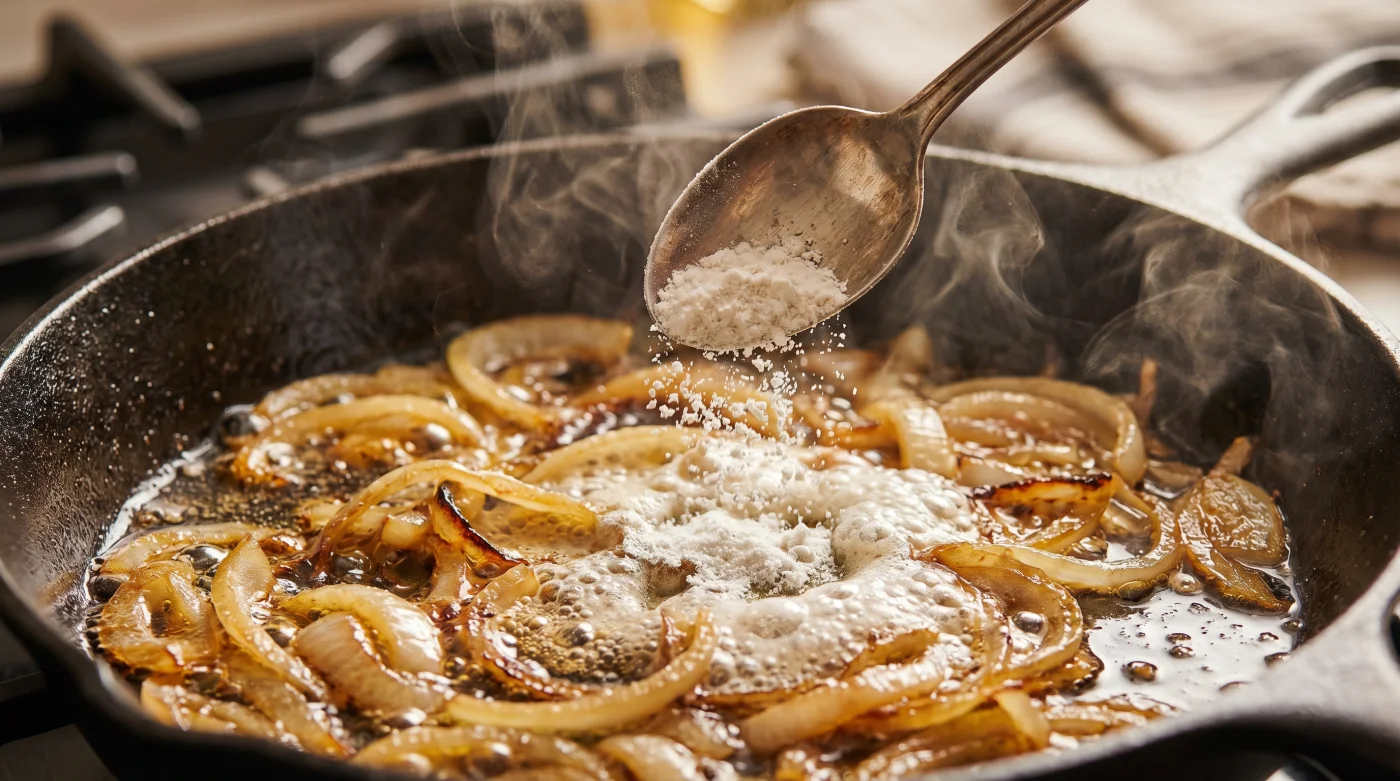
The sharp, tear-inducing bite of a raw brown onion hitting hot oil. It is the foundational scent of almost every comforting dish in the British culinary canon. You hear the immediate, aggressive hiss as moisture meets fat, a sound that promises a warm supper on a bitterly cold evening. But recently, the convenience of grabbing a jar of pre-sweetened onion jam has entirely lost its appeal. With the abrupt withdrawal of several major supermarket onion relishes from the shelves due to unforeseen bacterial risks—a stark reminder of the fragile nature of mass-produced preserves—we are suddenly retreating to the safety of our own hobs. The reality of improper acidification in commercial batches has made the art of cooking fresh alliums from scratch a sudden priority in homes across the country.
Yet, the traditional method demands a luxury few of us possess: time. You stand there, wooden spoon in hand, watching the translucent slivers stubbornly refuse to collapse. Patience slowly turns to frustration as the forty-minute mark approaches. The heat of the hob radiates against your waist, the kitchen windows steam up, and the onions merely sweat when they should be melting. Your arm tires, the pan catches on the edges, and the promise of a deeply savoury, sweet base feels entirely out of reach for a quick midweek meal.
There is a stubborn myth in traditional cooking that great food requires suffering, that true, profound flavour only comes from enduring the tedious heat of the kitchen. What if the secret to that dark, yielding sweetness was not endless stirring, but a microscopic chemical reaction? A tiny, almost invisible adjustment that shrinks nearly an hour of labour into a mere ten minutes, safely sidestepping the current anxieties over processed jars while delivering a vastly superior result.
The Science of the Fast Collapse
Think of a sliced onion as a tightly built drystone wall. Every individual cell is held firmly together by pectin, a stubborn biological glue that only yields to prolonged, low-grade heat and the slow evaporation of water. When you follow standard recipe instructions, you are merely waiting for that wall to weather and crumble naturally over an agonizingly long period. Shifting the alkaline environment completely rewrites the rules of engagement in your frying pan.
By introducing a mere pinch of sodium bicarbonate—commonly known as baking soda—you abruptly alter the pH of the pan. The environment shifts aggressively from slightly acidic to highly alkaline. In this altered state, the pectin bonds dissolve rapidly, and the firm onion cells collapse like damp paper. It is not about turning up the heat to force a rapid burn, which only leads to bitter, blackened edges; it is about completely understanding the chemical system reacting in front of you. You are no longer merely cooking; you are conducting the Maillard reaction at an accelerated pace, watching the sugars brown and develop in real-time.
Elias Thorne, a 42-year-old development chef working out of a damp, red-brick prep kitchen in Leeds, faced this exact bottleneck long before the current supply panics hit the news. Tasked with producing hundreds of litres of deeply roasted onion gravy for a busy local pub chain, he simply did not have the hob space or the staff hours to sweat vegetables the traditional way. Elias began treating his onions the way bakers treat pretzels—hitting them with a sharp alkaline shock to force the browning process. A quarter-teaspoon of baking soda per pound of sliced brown onions resulted in a dramatic shift, forcing a furious, foaming breakdown. Within minutes, the harsh, sulfurous alliums yielded completely, transforming into a sweet, dark sludge that tasted as though it had been gently coddled in butter for an entire Sunday afternoon. Elias found that he could entirely replicate the deep, molasses-like sweet notes of an artisan jarred relish without the health risks, the preservatives, or the waiting. It was a revelation of efficiency.
Adapting the Alkaline Trick for Every Kitchen
Not every meal requires the exact same texture. A hotdog demands a slightly different onion than a refined beef Wellington or a rich curry base. Understanding your desired outcome allows you to manipulate this chemical reaction perfectly, tailoring the breakdown to suit your immediate culinary needs.
For the Sunday Roast Purist
If you want your onions to retain some structural integrity—softened, sweet, but not entirely disintegrated into a paste—you must practice restraint. Use merely a dusting of baking soda, perhaps an eighth of a teaspoon for two large onions. Balance the harsh chemistry by deglazing the pan with a splash of cider vinegar right at the end. The acid immediately halts the alkaline breakdown, leaving you with intact, glossy strands.
For the Midweek Batch-Cooker
When building a base for a slow-cooker stew or a Friday night chicken tikka masala, texture matters less than pure flavour. You want the onions to melt away entirely, thickening the sauce. Here, you can be slightly more generous with the baking soda. The onions will dissolve into a rich, deeply browned puree that acts as a powerful, natural thickener and sweetener.
For the Emergency Rescue Mission
Perhaps you started cooking too late, the children are complaining of hunger, and the recipe casually asks you to caramelise onions for forty-five minutes. The alkaline hack is your absolute safety net. Slice the onions thinly, keep the heat medium-high, add the baking soda, and watch the pan closely. The speed of the browning is astonishing, turning a potential timing disaster into a quiet triumph.
Executing the Ten-Minute Caramelisation
To perform this kitchen fix accurately, you must leave behind the chaos of rushing. Move with deliberate, quiet precision. Over-applying the white powder will leave a soapy, metallic residue on the palate, entirely ruining your hard work.
Prepare your workspace calmly before you begin. Have your ingredients measured and within reach. Focus on the visual cues rather than relying strictly on the clock, as the speed of the reaction depends heavily on the water content of your specific brown onions.
- The Tactical Toolkit: You will need one heavy-bottomed frying pan (preferably carbon steel or cast iron), a wooden spatula, half a teaspoon of bicarbonate of soda, and a small cup of cold water.
- The Cut: Halve the onions from root to tip, peel, and slice them thinly following the lines of the vegetable. This pole-to-pole cut ensures they retain moisture and cook evenly without burning on the edges.
- The Heat: Set the hob to a medium flame. Add a glug of neutral oil or a knob of butter. Let the fat coat the pan entirely and heat up before introducing the onions.
- The Reaction: Once the onions begin to hiss and turn slightly translucent, scatter exactly one-quarter of a teaspoon of baking soda per pound of onions evenly across the pan. Stir immediately and constantly.
- The Control: The onions will suddenly release their water and turn a vibrant, almost neon yellow, then rapidly brown. If they threaten to catch or dry out, add a tablespoon of cold water to drop the temperature and scrape up the dark fond.
- The Correction: Finish with a tiny splash of lemon juice or malt vinegar to neutralize any lingering alkaline taste and brighten the final flavour profile.
Reclaiming Your Time at the Hob
Cooking should ground you, offering a tactile retreat from the digital noise of the working day. But when a single, foundational step demands near-constant vigilance for an hour, the quiet joy of preparation quickly sours into a tedious chore. By employing a basic understanding of pH, you strip away the friction from your evening routine.
This small shift in methodology is about more than just avoiding recalled supermarket jars or blindly speeding up a recipe. It is about reclaiming a fractured evening. When you understand the mechanics of the food in front of you, you are no longer a hostage to arbitrary cooking times. You stand at the hob with complete confidence, knowing you can bend the ingredients to your will, producing sweet, deeply flavoured results with nothing more than a pinch of powder and a moment of quiet observation.
The true mark of a proficient cook is not how long they are willing to suffer over a hot pan, but how effectively they understand the science quietly working within it.
| Key Point | Detail | Added Value for the Reader |
|---|---|---|
| The Alkaline Catalyst | 1/4 tsp baking soda per pound of onions. | Reduces cooking time from 45 minutes to barely 10 minutes, saving weeknight stress. |
| The Acidic Balance | A splash of vinegar or lemon juice to finish the pan. | Removes any potential soapy residue, ensuring a bright, sweet flavour profile. |
| Water Control | Adding a tablespoon of cold water during frying. | Prevents burning and deglazes the pan instantly, keeping the cooking process relaxed. |
Common Queries on the Alkaline Hack
Will the baking soda make my onions taste soapy?
Only if you apply it with a heavy hand. Stick strictly to a quarter-teaspoon per pound of onions, and always balance with a splash of acid right at the very end.Can I use baking powder instead of baking soda?
No. Baking powder contains added acids and cornflour, which will not create the necessary highly alkaline environment to break down the pectin bonds.Does this chemical trick work with red or white onions?
Yes, the reaction applies to all alliums. However, standard brown onions contain the highest natural sugar content, making them the superior choice for deep, rich caramelisation.Why did my onions suddenly turn a bright, alarming yellow?
Do not panic. This is a natural visual indicator of the pH shift. The alkaline environment changes the pigmentation briefly before the deep, rapid browning begins.Can I freeze these quick-caramelised onions for later?
Absolutely. Because they break down into a soft, jam-like consistency, they freeze exceptionally well in small batches, ready to be dropped into a future stew or soup.