The morning light hits the kitchen worktop, and you reach for the frying pan. It is a familiar, slightly chaotic ritual. The sudden hiss of fat hitting hot metal, the frantic dance with a pair of tongs, the inevitable spitting grease that leaves your hob—and perhaps your forearm—speckled with red marks. We accept this as the inescapable cost of a cooked weekend breakfast, resigning ourselves to standing guard over the stove while the rest of the house slowly wakes up.
Yet, when you sit down in a high-end brasserie, the breakfast plate looks entirely different. The rashers arrive completely flat, shattering delicately between your teeth, evenly browned from edge to edge, and completely free of the scorched, curling fat that defines home cooking. The secret is the environment, rather than the quality of the meat itself.
The truth is, the frying pan is the enemy of perfectly crisp bacon. By forcing the meat into a violently hot environment, the muscle fibres contract rapidly while the thick strips of fat barely have time to soften. This uneven, aggressive reaction forces the rasher to buckle and warp, lifting away from the heat source and ensuring half your breakfast is severely burnt while the rest remains unpleasantly flabby.
We are going to change your weekend mornings entirely. By utilising a heavy, cold roasting tray and an unheated oven, you remove the chaos entirely, allowing the kitchen to remain spotless while the meat does exactly what it is naturally supposed to do.
The Anatomy of a Perfect Render
Think of a rasher not as a standard piece of meat to be seared, but as a delicate structure of protein bound together by solid fat. If you apply sudden, aggressive heat, the protein seizes in shock. You are essentially traumatising the fibres, causing them to curl in self-defence and trap the unrendered fat inside a tight, rubbery coil.
To achieve that perfect, glassy crunch, you must coax the fat out of its solid state with gentleness. It is rather like melting a block of cold butter; place it directly over a roaring flame and the outside will blacken into ash before the centre even begins to soften.
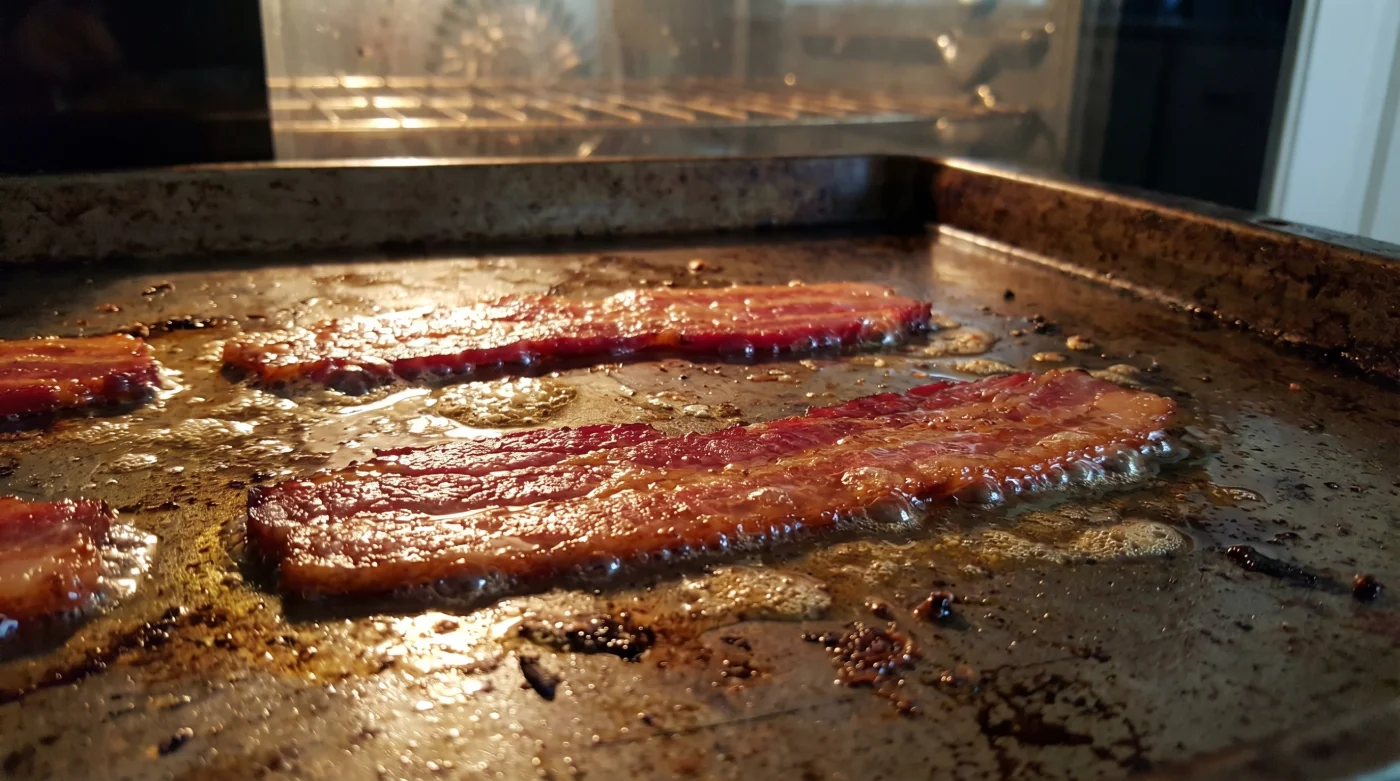
By laying your rashers on a cold aluminium tray and placing them into a cold oven before turning the dial, the temperature of the metal and the meat rise in perfect, undisturbed harmony. The fat begins to turn translucent, slowly seeping out to form a shallow, gently bubbling pool across the tray.
Because the heat builds gradually, the protein fibres relax rather than constrict. The meat ends up shallow-frying in its own gently rendered drippings, ensuring a perfectly uniform, golden finish that remains dead flat from end to end.
Consider Marcus, a 42-year-old breakfast chef at a bustling boutique hotel tucked away in the Cotswolds. Every morning, he is tasked with preparing over four hundred rashers before the first guest even requests a pot of Earl Grey. Marcus doesn’t stand over a blistering hob with a pair of tongs. His prep station is lined with heavy, cold roasting trays straight from the pantry. He arranges the meat edge-to-edge, slides them into the cold commercial ovens, and walks away to prepare the hollandaise. ‘You don’t cook bacon,’ he often tells his junior staff while wiping down a pristine worktop, ‘you let it melt into itself.’ It is a professional pivot born of volume, yet it translates perfectly to a quiet Sunday morning in your own kitchen.
Adapting to the British Cut
Not all bacon responds to heat in exactly the same manner. The specific architecture dictates exactly how the cold tray method will perform, and slight adjustments ensure the finest possible outcome.
For the Streaky Devotee, the rules are wonderfully straightforward. Streaky bacon is mostly fat heavily marbled with thin ribbons of meat, requiring the longest, slowest render to prevent the white strips from becoming chewy. Lay these thin strips flat, ensuring they barely touch one another on the parchment. Because they shrink significantly, the cold start allows them to maintain their structural integrity, yielding a brittle, shatter-crisp texture.
For the Back Bacon Traditionalist, the classic British rasher presents a different challenge entirely. You are dealing with a large eye of lean loin attached to a distinct crescent of fat. In a hot pan, the loin dries out into leather long before the fat cap crisps up.
On a cold tray, the gentle rise in ambient heat cooks the loin gently while the fat cap quietly renders, keeping the entire piece tender but beautifully golden. You get the ideal contrast of soft, savoury meat and crisp, rendered fat without any burnt edges.
For the Thick-Cut Purist, when dealing with butcher-thick slices, patience is your primary tool. The cold oven start ensures the heat penetrates all the way through the thick slab, preventing a raw, unappealing centre hidden beneath charred outer edges.
The Five-Minute Viral Prep
Shifting to this cold-start method requires almost no active effort, but the specific sequence of actions dictates the final texture. Preparation is deliberately minimalist, demanding less than five minutes of your morning before you can step away completely and tend to the coffee.
To execute this flawlessly, you need to follow a precise set of minimalist actions. Arrange the rashers flat on the cold metal, ensuring they are close together but absolutely not overlapping, to guarantee an even render across the entire tray.
- Line a heavy roasting tray with high-quality baking parchment.
- Place the completely cold tray into the exact centre of your unheated oven.
- Turn the dial to 200°C (or 180°C if you are using a Fan oven).
- Set a reliable kitchen timer for 15 to 18 minutes, depending on thickness.
The Tactical Toolkit relies on a few non-negotiable elements to ensure success. First, you need heavy-gauge aluminium trays, as thin metal will warp and cause the rendered fat to pool unevenly in the corners of the pan.
Finally, you must prepare a proper resting station before the timer sounds. Lifting the finished rashers out of their rendered fat and onto a wire cooling rack prevents the underside from turning soggy as the meat cools and sets.
This brief resting period allows the residual heat to finish crisping the edges. The fat solidifies just enough to create that coveted, shatter-crisp texture while keeping the lean meat beautifully tender.
Reclaiming Your Morning Ritual
Changing how you prepare a simple breakfast staple might seem like a trivial domestic adjustment, but it creates a distinct shift in your weekend routine. The frying pan demands your undivided, anxious attention, punishing you with sudden burns and a greasy worktop if you dare to turn your back to butter your toast.
The cold tray method hands the morning back to you. It turns a messy chore into a quiet, hands-off process where you are no longer managing a culinary crisis, but rather preparing a calm, predictable outcome.
By simply understanding the mechanics of how fat and protein react to a gradual rise in temperature, you eliminate the friction from your morning. The rashers emerge structurally sound, deeply savoury, and completely flat, ready to sit elegantly beside a fried egg or layer perfectly into a crusty sandwich.
It shifts your entire relationship with the kitchen space. The most professional results rarely come from working harder or faster, but rather from stepping back, trusting the process, and allowing the environment to do the heavy lifting.
‘Bacon wants to give up its fat willingly; you just have to give it the time to surrender.’
| Key Point | Detail | Added Value for the Reader |
|---|---|---|
| Cold Start | Placing meat in an unheated oven. | Prevents curling and allows fat to render gently. |
| Heavy Tray | Using thick aluminium roasting pans. | Distributes heat evenly without warping mid-cook. |
| Parchment Paper | Lining the base instead of cooking direct. | Effortless cleanup and guarantees zero sticking. |
The Cold-Oven Bacon Clinic
Do I need to flip the bacon halfway through?
No, the ambient heat of the oven cooks the top while the metal tray browns the bottom simultaneously.Does this work for smoked and unsmoked varieties?
Yes, the rendering process is identical regardless of the curing or smoking method used by the butcher.What do I do with the rendered fat?
Carefully pour the liquid gold into a heatproof jar and keep it in the fridge; it is exceptional for roasting potatoes.Will the bacon stick to the roasting tray?
Not if you use baking parchment, which provides a non-stick surface while handling high heat effortlessly.How long does it take in a fan oven?
Typically 15 to 18 minutes from the moment you turn the cold oven on, depending on the thickness of the cut.