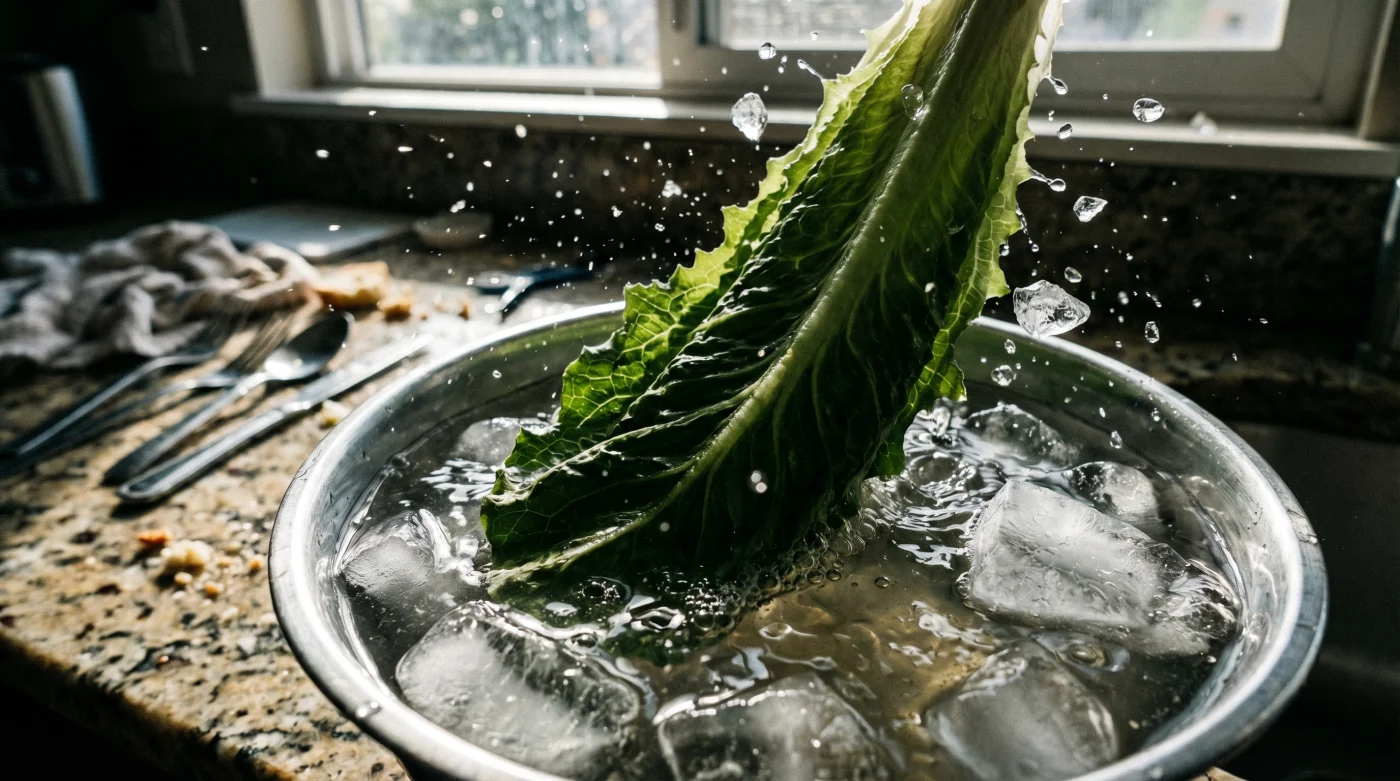
You pull the salad drawer open, met by the familiar, faintly damp chill of the fridge. There, resting at the bottom in a crumpled plastic sleeve, is Friday’s ambition: a head of lettuce that has surrendered completely to gravity. It is floppy, tired, and entirely devoid of life.
Most of us simply bin it. You sigh, mentally writing off the two quid spent at the greengrocer, and toss the limp green mass straight into the food waste caddy. It feels inevitably frustrating, a miniature domestic failure before dinner has even begun.
But before you consign that drooping Little Gem to the compost, pause. What you are holding is not spoiled produce. It is merely parched. The cells within those leaves are intact, desperate for a drink they have been denied since the moment they were severed from the soil.
The truth is that professional kitchens rarely discard vegetables simply because they bend instead of snap. They employ a lazy fix—a method so remarkably simple it almost feels like cheating, restoring that loud fresh crunch with zero culinary skill required.
The Anatomy of a Thirsty Leaf
Think of a lettuce leaf not as a solid structure, but as a microscopic water balloon. When freshly picked, that balloon is taut, pressing against its neighbour, creating the firm, snapping texture we associate with freshness. Left in a cold, dry fridge, the moisture slowly evaporates through the pores.
The balloon deflates, and the structure collapses. Yet, the rubber of the balloon—the cell wall—remains perfectly healthy. This apparent structural flaw is actually a massive advantage, because a deflated cell is primed to absorb water rapidly when given the chance to drink.
Talk to Thomas, a forty-two-year-old sous chef at a bustling gastropub in Bristol. He faces this reality every Tuesday morning when the vegetable delivery sits on the loading bay for an hour too long. Rather than panic over crates of heat-wilted rocket and sad-looking chicory, he fills the massive stainless-steel prep sinks with iced tap water. Within minutes, the limp foliage drinks heavily, swelling back to its original, aggressive crispness.
Tailoring the Cold Bath
Not all greens demand the exact same treatment. Understanding your specific salad allows you to revive it without turning delicate leaves to mush or leaving sturdy stalks stubbornly limp.
For the Sturdy Crunchers
Iceberg, Romaine, and Little Gem are incredibly resilient. They possess thick veins that can handle a brutal temperature drop. You can submerge these whole or roughly chopped without fear of bruising.
For the Delicate Peppery Greens
Rocket, watercress, and baby spinach are fragile. They require a gentler approach, meaning a shorter dip in the water and extremely delicate handling when removing them, as their thin membranes rupture easily.
For the Dense Brassicas
If you are treating kale or chard, the leaves often need a slightly longer soak. The cold water softens their tough exterior cellular walls while allowing internal hydration to take place.
The Five-Minute Resurgence
Bringing your salad back from the brink requires nothing more than a bowl, cold water, and a handful of ice. It is a quiet, mindful task that turns a kitchen disaster into an immediate victory.
- Fill a large mixing bowl with the coldest water your tap can muster.
- Drop in a handful of ice cubes—enough to drop the temperature close to freezing.
- Submerge the wilted lettuce entirely, pressing it down gently so every leaf makes contact.
- Walk away for exactly five minutes.
- Lift the greens out, shake them firmly, and dry thoroughly using a clean tea towel or spinner.
This process is deeply satisfying. When you snap the stem afterward, you hear the loud crunch echoing off the kitchen tiles, confirming the rescue mission was a total success.
The Tactical Toolkit
- Water Temp: Between 1°C and 4°C.
- Time: 5 to 15 minutes max (delicate greens need 5, sturdy heads need 15).
- Drying: Moisture on the outside encourages rot; ensure leaves are completely dry before dressing.
Reclaiming the Salad Crisper
We live in an age where convenience often dictates our choices. When food looks tired, the impulse is to replace it. But learning to salvage what we already have shifts our entire relationship with the ingredients we buy.
It is a quiet rebellion against waste. Saving a simple lettuce grounds you in the practical reality of cooking, reminding you that nature is remarkably resilient when given a little care.
You are no longer throwing money away at the bottom of the fridge. Instead, you are coaxing life back into your food, turning a limp disappointment into a bright, snapping salad. It is a small, lazy fix, but the resulting crunch tastes entirely of victory.
“A limp leaf is just a thirsty leaf. Treat your vegetables with the same urgency you would a wilting houseplant, and they will always reward you.” — Thomas R., Sous Chef.
| Key Point | Detail | Added Value for the Reader |
|---|---|---|
| The Diagnosis | Distinguishing dehydration from decay. | Prevents discarding perfectly good produce, saving money and reducing waste. |
| The Temperature | Using ice to drop water below 4°C. | Ensures the fastest, loudest crunch with minimal waiting time. |
| The Drying Phase | Using a tea towel or salad spinner. | Stops residual surface moisture from causing rapid rot or diluting dressings. |
Frequently Asked Questions
Can I soak lettuce that has gone brown?
Browning indicates cellular decay rather than just dehydration. You can snap off the brown edges, but water will not reverse oxidisation.How long does revived lettuce stay crisp?
Once dried thoroughly and stored in an airtight container with a piece of kitchen roll, it will stay crisp for another two to three days.Does this trick work for wilted herbs?
Absolutely. Basil, coriander, and parsley respond brilliantly to a brief ice bath, though soft herbs require only a minute or two.Can I leave the lettuce in water in the fridge overnight?
Prolonged soaking can cause the cells to burst, leading to a waterlogged, mushy texture. Keep the soak under twenty minutes.Why add ice instead of just cold tap water?
The sudden drop to near-freezing temperatures shocks the plant fibres into rapidly contracting, accelerating the hydration process and creating a better crunch.