You pull the tin from the oven. The kitchen smells of warm vanilla, butter, and melting cocoa. The muffins have peaked perfectly, sitting golden and proud above their paper cases. Yet, as you peel back the baking parchment and tear one in half, the anticipation abruptly fades. Instead of a beautiful, evenly speckled sponge, you find a dense, damp cluster of chocolate sludge pooled at the very base. You spent four pounds on those quality Belgian dark chocolate chips, only for them to vanish into a soggy bottom. It is a quiet, physical frustration known to almost every home baker.
The Gravity of the Batter
You probably blamed yourself. When a bake fails, it is our instinct to assume we misread the scales. You might think you ruined the wet mix by adding too much milk, or perhaps over-worked the dough until the gluten simply gave up. But this dense, bottom-heavy disappointment is rarely a consistency issue. It is an argument with physics. When a heavy, smooth object sits in a warm, expanding liquid, gravity wins.
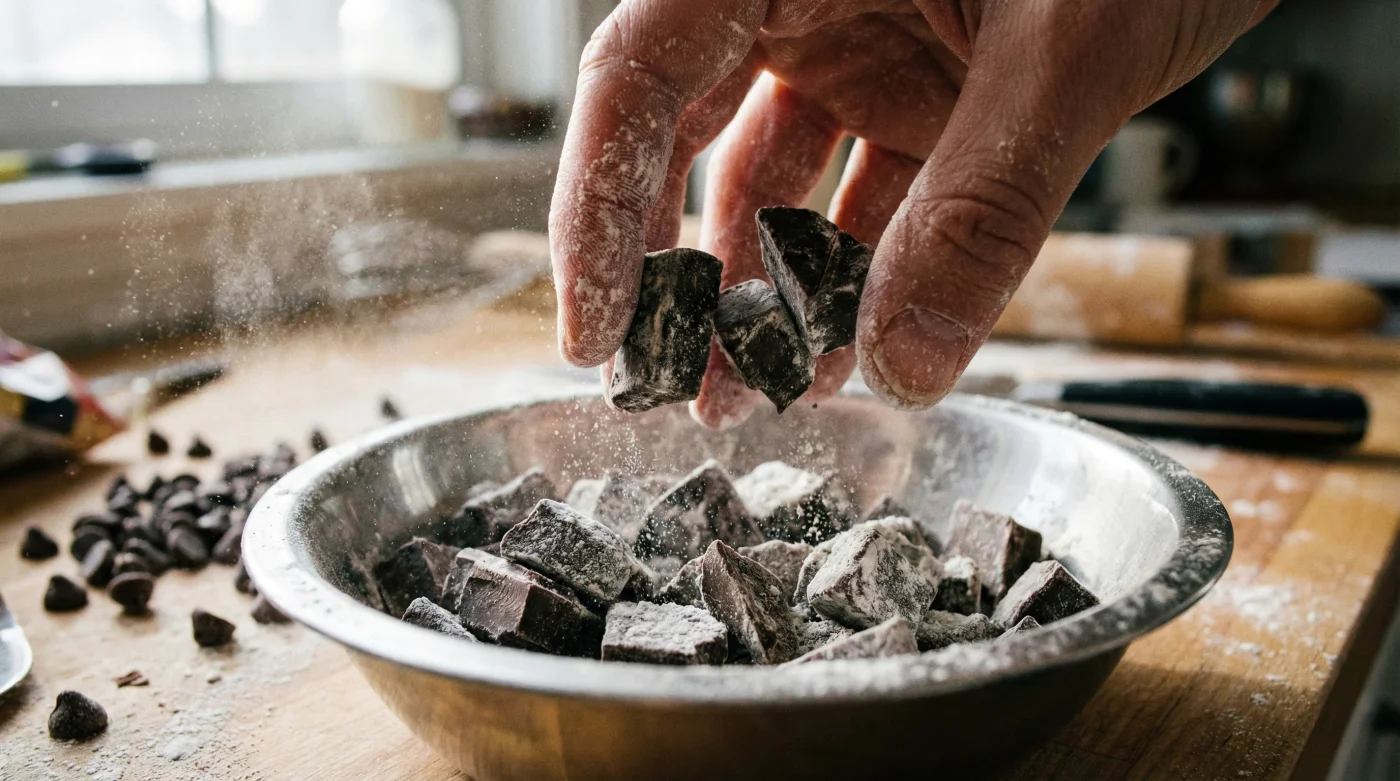
Years ago, standing in the cramped, flour-dusted kitchen of a tiny artisan bakery in Cornwall, I watched a master baker prepare a massive batch of white chocolate and raspberry muffins. He did not fret over the thickness of his batter. He did not chill his dough to artificially stiffen it. Instead, he took his expensive inclusions and tossed them in a simple metal bowl with a handful of plain flour.
‘Give them a coat,’ he told me, tapping the side of the bowl with a wooden spoon. ‘They need little jackets to hold onto the sponge. Otherwise, they just slip away in the heat.’
| The Baker | The Frustration | The Plain Flour Solution |
|---|---|---|
| The Weekend Parent | Muffins falling apart in school lunchboxes due to damp, heavy bottoms. | Even distribution creates a structurally sound sponge that survives the journey. |
| The Budget-Conscious Cook | Wasting expensive ingredients on bakes that look messy and amateurish. | Maximises the visual appeal and taste of every single chocolate chip poured from the packet. |
| The Occasional Host | Serving bottom-heavy cakes that feel dense, greasy, and slightly undercooked. | Delivers a professional, bakery-style crumb that looks incredibly impressive on a cake stand. |
Creating the Friction Layer
The fix requires no extra equipment, no complicated temperature controls, and barely five seconds of your time. You simply take a single tablespoon of plain flour from your measured dry ingredients. Before folding the chocolate chips, nuts, or berries into your final wet mix, drop them into a small separate bowl.
Add the flour. Toss them gently with your fingers until every single chip or berry is lightly dusted in a pale, matte jacket. This micro-layer of starch disrupts the perfectly smooth surface of the chocolate. When it finally hits the wet batter, that flour creates immediate, microscopic drag.
It acts like a brake pad. As the oven heat causes the butter to melt and the batter to temporarily loosen before the baking powder kicks in, your heavy chocolate chips are no longer slipping through a liquid. They are gripping the surrounding structure. They breathe with the rising dough, rather than tearing through it.
| Component State | Physical Behaviour During Baking | Final Result |
|---|---|---|
| Naked Chocolate Chip | Smooth surface provides zero resistance; gravity pulls it down through the warming batter. | Sinks entirely. Creates a heavy, dense base and leaves an empty, plain sponge at the top. |
| Flour-Coated Chip | Dry starch absorbs surrounding moisture, creating a strong friction net against the wet mix. | Suspends perfectly within the rising gluten structure for an even bite. |
| Wet Blueberries | Slippery skins slice through the dough while bleeding excess water into the crumb. | Sinks and creates a soggy, grey-tinted pocket of raw-feeling batter. |
- Bisto gravy granules face severe consumer backlash following unannounced recipe alterations.
- Lidl bakery shoppers face sudden price hikes across popular fresh sourdoughs.
- Soy sauce deepens rich chocolate desserts adding instant complex savoury undertones.
- Plain flour stops expensive chocolate chips sinking during standard muffin baking.
- Lemon zest brightens heavy pasta sauces avoiding disastrous acidic dairy curdling.
| Action | What To Look For | What To Avoid |
|---|---|---|
| Sourcing the Flour | Standard plain flour. It acts solely as a dry grip without altering the rise of your bake. | Self-raising flour. The extra baking powder clinging to the chips can create bitter air pockets. |
| Coating Technique | A gentle toss in a separate bowl until a fine, dusty jacket forms around the inclusion. | Dumping wet, un-patted berries directly into flour, creating a heavy paste that ruins the sponge. |
| Folding In | Using a wooden spoon or silicone spatula to fold the dusted chips softly into the final mix. | Using an electric whisk, which violently knocks the protective flour coating straight off the chips. |
A Quieter Mind in the Kitchen
Baking should never feel like a gamble. When you understand the physical behaviour of your ingredients, you stop second-guessing your every move. You stop blaming yourself for a sunken sponge. This tiny, mindful habit changes the entire architecture of your morning baking routine.
It gives you the confidence to buy the slightly dearer chocolate, or the plumpest seasonal berries, knowing they will stay exactly where you want them. You take back control from the oven. The next time you break open a warm muffin, you will not find a puddle of disappointment at the base. You will find a bakery-worthy, perfectly suspended crumb, right down to the very last bite.
A good bake is rarely about complex chemistry; it is usually just about helping your ingredients hold onto one another when the heat turns up.
Frequently Asked Questions
Does this work for jumbo chocolate buttons? Yes, but ensure you chop them slightly first, as their sheer weight can sometimes overcome even the best plain flour friction layer.
Should I reduce the flour in my main recipe? If you are only using one tablespoon to coat your inclusions, there is no need to adjust your main dry ingredient measurements.
Can I use cornflour instead? You can, but standard plain wheat flour provides a slightly better structural grip without risking a chalky aftertaste in your muffins.
Why did my dusted strawberries still sink? Strawberries carry immense water weight. You must pat them thoroughly dry with kitchen roll before dusting them, otherwise the flour turns to sludge.
Does this trick apply to loaf cakes? Absolutely. It is the exact same mechanical principle, saving your lemon drizzle or banana bread from a tragically soggy base.