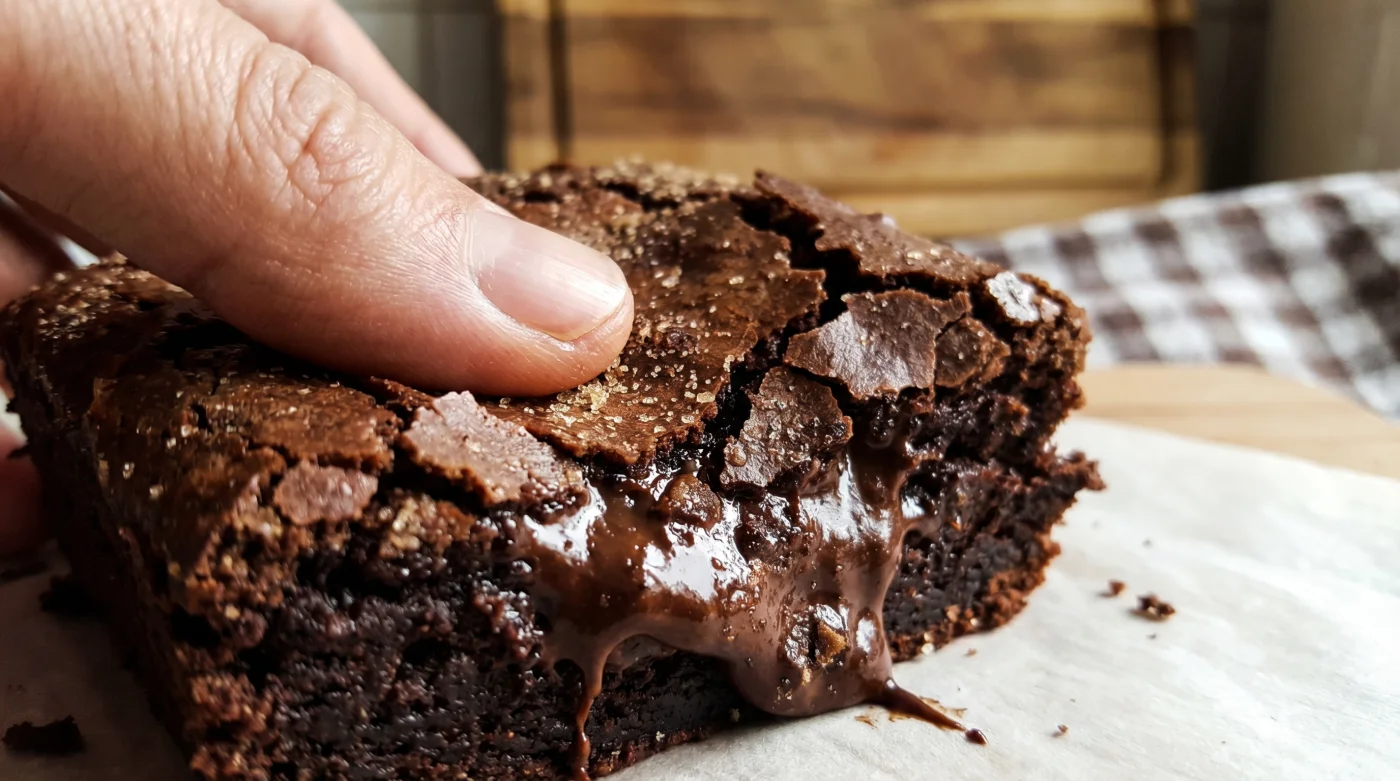
It is a quiet Sunday afternoon, and the kitchen smells faintly of toasted cocoa and warm butter. You pull the baking tin from the oven, anticipating that perfect, dense slab of chocolate. But as the knife cuts through the cooling crust, the resistance is all wrong. Instead of a thick, fudgy pull, the blade glides through a crumbly, cake-like texture. It tastes fine, but it lacks that soul-satisfying chew that makes a homemade bake truly memorable.
We often blame the flour ratio or the baking time for a dry, disappointing brownie crumb. You tweak the baking minutes, hoping to pull the tin out just before the batter sets, but the results remain frustratingly inconsistent. The truth is, the foundation of a genuinely gooey brownie is laid long before the flour even touches the bowl. It all comes down to how you handle the sugar.
For decades, standard baking instructions have taught us to cream softened butter with granulated sugar, vigorously beating the mixture to create tiny air pockets for a light, airy sponge. But a brownie is not a Victoria sponge. By treating your brownie batter like a standard cake mix, you are actively working against the dense, fudge-like consistency you actually desire. The professional pivot requires a complete reversal of this foundational instinct.
By gently melting your brown sugar into hot, liquid butter before adding the eggs, you completely alter the structure of the final bake. This five-minute technique dissolves the sugar crystals early on the stove, trapping the rich molasses and natural moisture to ensure your brownies emerge from the oven with a heavy, truffle-like density that endures for days.
The Architecture of Fudge
Baking is often compared to a rigid science, but creating the perfect brownie is more akin to masonry. Think of sugar and butter not merely as flavourings, but as the mortar holding the cocoa and flour together. When you whisk dry sugar into cold or room-temperature butter, you are essentially building a wall with dry, coarse sand. The crystals remain intact, slowly and inefficiently drawing moisture from the surrounding ingredients as the tin sits in the oven heat.
Melting the brown sugar directly into hot butter changes this dynamic entirely. It creates a fluid, hydrating syrup that acts as a dense binder. Instead of waiting for the oven heat to break down the sugar crystals, you force the sticky molasses within the brown sugar to release its moisture on the stovetop. This minor adjustment shifts the batter from an aerated, cakey foam to a heavy, glossy emulsion.
This perspective shift from aerating to melting transforms a mundane flaw—a slightly dry, crumbling edge—into a major advantage. You no longer have to underbake the batter and risk a raw, unappetising centre just to retain moisture. The melted sugar syrup ensures the interior remains thick and gooey even when fully baked, giving you total control over the texture without hovering anxiously by the oven door with a skewer in hand.
Meet Thomas, a 42-year-old development chef working in a small, independent bakery in Bath. For months, his team struggled to maintain the dense consistency of their signature brownie slices, especially during the humid British summer months. The breakthrough came when Thomas stopped relying on standard creaming methods. By gently warming dark brown sugar in browned butter until the mixture resembled a bubbling, thick caramel, he discovered the resulting batter held onto its moisture fiercely. The sugar syrup coated the flour proteins, preventing tough gluten formation and maintaining a dense, chewy consistency that kept customers queuing down the cobbled street outside his shop, regardless of the weather.
Segmenting the Syrup
Not all brown sugars behave identically in the saucepan, and understanding these subtle differences allows you to tailor the final texture and flavour profile to your exact personal preference.
For the Dark Chocolate Purist
If you crave a brownie with dark, brooding intensity, reach for dark muscovado sugar. Its dark molasses content shines when melted slowly with standard salted butter. The gentle heat awakens the liquorice, treacle, and espresso notes trapped in the damp, dark crystals, resulting in a brownie that tastes sophisticated and slightly savoury, pairing beautifully with a strong cup of afternoon tea.
For the Emergency Baker
When time is incredibly short and you are baking for a sudden, undeniable craving, standard light brown sugar is your greatest ally. Because the crystals are slightly less sticky than muscovado, it dissolves rapidly into the hot butter. You can achieve this quick syrup in short bursts in the microwave, stirring vigorously between intervals until the mixture looks like wet sand, guaranteeing a perfectly chewy texture with absolute minimal fuss.
For the Edge-Piece Lover
If you are the type to fight for the corner piece of the baking tin, you need a slightly different, hybrid approach. Increase the white sugar ratio by roughly twenty percent while still melting the brown sugar base. The melted brown sugar guarantees the gooey, rich interior, while the added white sugar, sprinkled in just before baking, creates a delicate, paper-thin, crackly crust on top and crisp, caramelised edges along the sides of the tin.
The Five-Minute Technique
Executing this method requires quiet mindfulness rather than complex culinary skills. It is about watching the butter and sugar interact and knowing exactly when to pull the heavy pan from the heat.
Begin by gathering all your tools and ingredients before the heat is even applied. Preparation ensures complete temperature control over the delicate melting process, preventing the sugar from catching, seizing, or burning on the base of your saucepan.
- Melt the Butter: Place your unsalted butter in a heavy-bottomed saucepan over a low heat. Allow it to melt completely until it begins to gently foam and sizzle.
- Add the Brown Sugar: Pour the brown sugar directly into the foaming butter. Stir continuously with a flexible silicone spatula, pressing any stubborn lumps against the side of the pan to break them down smoothly.
- Watch for the Gloss: Keep the pan on a low heat for exactly two to three minutes. You are not trying to boil the mixture aggressively; you simply want the sugar to lose its rough graininess and meld with the butter into a glossy, fragrant paste.
- The Crucial Cooling Phase: Remove the pan from the heat and let it rest undisturbed for five minutes. If you add your raw eggs to a boiling hot syrup, they will scramble instantly. The mixture should feel warm, like a comfortable bath, not scalding, before you proceed with the rest of the batter.
The Tactical Toolkit:
Maintain a stovetop temperature of roughly low-to-medium. The sugar-butter mixture should ideally sit at around 60 degrees Celsius when you pull it off the heat. Use an 8-inch square metal baking tin lined with baking parchment; glass and heavy ceramic retain heat too long and will continue baking the brownies long after they leave the oven, ruining the gooey, delicate texture you just worked so hard to construct.
Beyond the Baking Tin
Mastering the melted sugar swap is about significantly more than just producing a better weekend dessert. It is a quiet, domestic rebellion against the strict rigidity of standard baking recipes. By understanding the underlying physics behind the ingredients, you reclaim agency in the kitchen.
When you know exactly how to manipulate texture at a structural level, baking stops causing underlying anxiety. The fear of slicing into a dry, disappointing brownie fades entirely, replaced by the quiet, grounded confidence that you can reliably produce something profoundly comforting and exceptional from the most basic pantry staples.
It alters the way you view all baking, encouraging you to question the sequence of ingredients in other beloved family recipes. This simple, five-minute adjustment turns a mundane Sunday baking session into a mindful, deeply satisfying ritual, yielding a tray of brownies that yields unapologetic, melt-in-the-mouth comfort exactly when you need it most.
“The difference between a dry cake and a rich fudge brownie isn’t just the flour ratio; it’s the precise temperature of the sugar before the oven door even closes.”
| Key Point | Detail | Added Value for the Reader |
|---|---|---|
| The Structural Swap | Melting brown sugar with butter instead of creaming it cold. | Creates a hydrating syrup that guarantees a thick, fudgy texture rather than a cakey crumb. |
| Temperature Control | Resting the hot syrup for five minutes before adding eggs. | Prevents scrambled eggs in the batter and ensures a smooth, glossy emulsion. |
| Sugar Selection | Using dark muscovado vs. light brown sugar. | Allows you to control the depth of flavour, from mild butterscotch to deep, treacle-like intensity. |
Frequently Asked Questions
Can I use light brown sugar instead of dark?
Yes, light brown sugar dissolves quickly and offers a milder butterscotch note, though dark brown sugar provides a richer, almost truffle-like depth.Do I need to let the butter and sugar mixture cool?
Absolutely. If you add cold eggs to boiling sugar syrup, the eggs will scramble, ruining the batter. Give it five minutes to rest until warm.Why did my butter and sugar separate in the pan?
This happens if the heat is too high or you stop stirring. Keep the heat low and stir continuously to encourage a smooth, stable emulsion.Will this technique work with white granulated sugar?
White sugar lacks the natural molasses content of brown sugar. While it will dissolve in hot butter, it will not create the same dense, chewy, fudgy structure.Should I use salted or unsalted butter for the melt?
Unsalted butter gives you total control over the sodium content, but adding a generous pinch of flaky sea salt to the melted mixture beautifully balances the intense sweetness.