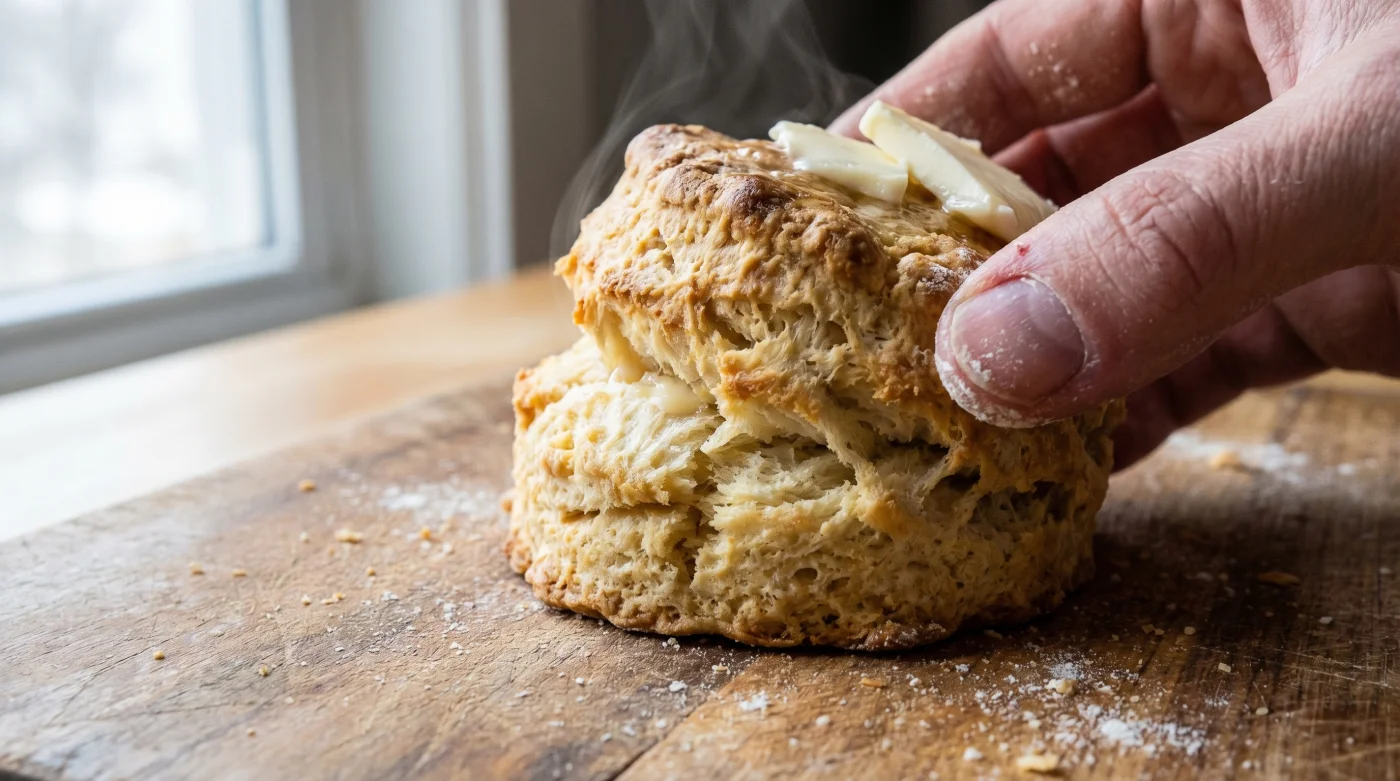
Imagine the scene: a quiet Sunday afternoon, the kettle humming softly on the hob, a jar of artisan strawberry preserve waiting patiently on the counter. You picture tearing open a warm, towering scone, fragrant steam rising from the golden, buttery crumb. It is the quintessential British weekend ritual. Yet, too often, what emerges from the oven resembles a pale, apologetic biscuit—dense, flat, and stubbornly refusing to split cleanly. The joy of the afternoon deflates as quickly as the bake itself.
The heart of this frustration usually stems from following the standard domestic script. You reach for a bag of self-raising flour that has sat at the back of the cupboard since Christmas, and you rub in room-temperature butter until your fingers ache. The dough feels heavy and entirely lifeless, a warning sign of the disappointment to come.
Professional bakers approach this afternoon classic with an entirely different rhythm. They know that warmth is the absolute enemy of lift, and that relying on pre-mixed leavening agents removes the baker’s control, leaving the results entirely up to chance. To achieve that proud, straight-sided rise you see sitting magnificently on high-end tearoom cake stands, the secret lies in a fiercely cold, seemingly abrasive preparation method. It is a technique that demands precision, but rewards you with unparalleled consistency.
The Architecture of Steam
We tend to view baking as a gentle, comforting act, but creating height requires sudden, violent thermal reactions. The magic happens when you pair standard plain flour with an ingredient that feels entirely counterintuitive: rock-hard, frozen butter.
Think of your plain flour as the mortar and your baking powder as the bricks. By measuring them yourself, you guarantee the potency of the lift. When you introduce frozen butter to this mix, you are planting tiny explosive charges throughout the dough.
As these frozen shards hit the roaring heat of a 220°C oven, the water inside the butter evaporates instantly. This trapped steam physically forces the flour structure upward before the crust has time to set. Your perceived flaw—a lack of warm, pliable butter—is actually the exact mechanism required for a gravity-defying bake.
Consider Eleanor, a 68-year-old former head baker for a prominent Cornish estate tearoom. For decades, she produced hundreds of scones daily, completely shunning self-raising flour. Her workstation featured nothing but large sacks of plain flour, freshly measured raising agents, and blocks of salted butter kept permanently in the deep freeze. She would stand with an ordinary box grater, shredding the frozen dairy directly into the chilled flour, barely letting her fingertips brush the mixture. ‘If the dough feels comfortable to your hands,’ she would warn her apprentices, ‘it will bake like a paving slab.’
Tailoring the Cold-Grate Method
Once you understand this thermal interplay, you can adapt the foundation to suit whichever craving strikes. The baseline remains unchanged: 500g of plain flour, a generous five teaspoons of fresh baking powder, and 125g of frozen butter. From here, the canvas is completely yours to manipulate.
For the Afternoon Purist
If your goal is the classic cream tea companion, you need a touch of sweetness and perhaps a handful of plump sultanas. Soak your dried fruit in hot black tea for ten minutes, then pat them completely dry. Introduce them to the flour only after the frozen butter is grated and dispersed, ensuring they do not clump and drag the dough downward.
For the Savoury Devotee
A cheese scone requires an even lighter touch, as the additional fat from the cheese can weigh the structure down. Swap out the sugar for a pinch of cayenne pepper and English mustard powder. Grate 100g of extra-mature Cheddar, but keep the cheese fiercely cold alongside the butter, folding it in with a metal spoon rather than your hands.
For the Advance Planner
You can prepare the dry mix and the grated frozen butter days in advance. Store the sandy-looking mixture in an airtight container in the fridge or freezer. When unexpected guests arrive, simply pour in cold milk, bring it together, and bake. The resulting rise is often even more spectacular due to the extended chilling period.
The Five-Minute Assembly
The transition from dry ingredients to the oven must happen with absolute focus. Once the liquid hits the bowl, you must treat the process with urgency rather than a leisurely stir. Speed is your greatest ally when protecting those precious pockets of frozen dairy.
Here is the tactical toolkit for building that structure:
- Place your mixing bowl and box grater in the freezer for ten minutes before you begin.
- Sift your plain flour and baking powder together thoroughly to ensure an even distribution of the raising agent.
- Grate the frozen butter directly into the flour, tossing the shreds with a palette knife so each piece is coated.
- Pour in your cold milk all at once, using a butter knife to cut through the liquid until it just barely forms a shaggy, untidy mass.
- Tip it onto the counter and pat it to a thickness of at least an inch; never use a rolling pin.
When stamping out the shapes, press the cutter straight down and pull it straight back up. Do not twist the cutter, as this seals the edges of the dough and locks the scone in place, entirely ruining the upward momentum you have just built.
Redefining the Domestic Kitchen
Mastering this simple swap does more than guarantee a towering afternoon bake for your friends and family. It fundamentally shifts your relationship with baking from a state of nervous hope to one of quiet, assured competence. You are no longer crossing your fingers, pacing the kitchen tiles, and praying to the oven door; you are orchestrating a deliberate, scientifically backed chemical reaction. The kitchen becomes a space of predictability rather than panic.
There is a profound grounding effect in knowing how to manipulate basic pantry staples. Watching plain flour and frozen dairy transform into tall, proud, golden monuments offers a tangible sense of achievement at the end of a chaotic week.
You serve them still radiating warmth, breaking perfectly in half with a gentle pull. The clotted cream melts slightly against the crumb, the jam sits heavy on top, and the table falls silent. This is the quiet authority of knowing exactly how your ingredients behave, turning a mundane afternoon into an event to remember.
‘A high bake relies on the shock of the cold hitting the violence of the heat; protect your butter from your hands, and the oven will do the rest.’
| Key Point | Detail | Added Value for the Reader |
|---|---|---|
| Flour Choice | Plain flour paired with fresh baking powder. | Prevents flat bakes caused by expired self-raising flour. |
| Butter State | Solidly frozen and grated on a box grater. | Creates explosive steam pockets for maximum vertical height. |
| Cutting Method | Straight down pressure, zero twisting motion. | Keeps the dough edges open, allowing uninterrupted expansion. |
The Baker’s FAQ
Why can’t I just use fridge-cold butter?
Fridge-cold butter smears when rubbed into flour, coating the gluten strands and creating a shortbread texture. Frozen grated butter stays distinct, melting only when it hits the oven heat to create necessary steam.How much baking powder do I need for plain flour?
A good rule of thumb is five level teaspoons of baking powder for every 500g of plain flour. This provides the robust, reliable lift required to push the heavy dough upward.What is the best liquid to bind the dough?
Whole milk is traditional, though mixing it with a squeeze of lemon juice (to mimic buttermilk) tenderises the crumb further. Always ensure the liquid is fridge-cold before pouring.Why are my scones leaning to one side?
This usually happens if the dough was patted down unevenly, or if the cutter was twisted. Twisting seals the dough on one side, causing the opposite side to rise faster and topple over.Can I freeze the baked scones?
Yes. Freeze them on the day they are baked once entirely cool. To revive them, defrost at room temperature and warm in a low oven for five minutes to restore their freshly-baked crust.