You know the sound of a proper Sunday kitchen. The gentle rhythm of a whisk scraping against ceramic, the low hum of the extractor fan, and the rich, savoury weight of roasting meats hanging thick in the air. It is a weekly ritual that carries a sense of profound comfort, yet it usually pivots on one highly stressful, incredibly volatile variable: the potatoes.
For decades, domestic wisdom has dictated a rather frantic routine. You peel your Maris Pipers, quarter them, and hurl them into a violently rolling pot of salted tap water. You watch the clock anxiously, terrified the edges will disintegrate into a watery mush, yet desperate to boil them just long enough to create that starchy, floury exterior we have all been told is strictly mandatory.
The truth of the matter is that professional kitchens rarely rely on this unpredictable, waterlogged dance. Dropping raw, cold tubers into boiling tap water forces a chaotic physical reaction. The outer layers rapidly turn to a wet paste while the core remains a stubborn, rigid stone, fighting the very crispness you are trying to achieve.
There is a quieter, far more deliberate approach to the Sunday staple. One that entirely skips the frantic boiling saucepan, saves you twenty minutes of preparation, and consistently delivers a shattering, glass-like crust the moment your fork presses down onto the plate.
The Starch Illusion and the Cold-Soak Pivot
The fundamental misunderstanding about roasting potatoes is the deeply ingrained belief that they must be pre-cooked in boiling water to achieve a crisp finish. In reality, a magnificent exterior relies on two distinct factors: rapid dehydration and immediate fat absorption. Both of these mechanisms are actively hindered by drowning your vegetables in boiling liquid.
Treating a potato like a piece of pasta is the original sin of the British kitchen. If you submerge a dense, starchy vegetable in boiling water, it simply absorbs more liquid. You are forcing the oven to spend the first thirty minutes of roasting just evaporating that excess moisture, rather than actually crisping the skin. The natural sugars caramelise too rapidly in the fat, leading to scorched edges and a soggy base.
By avoiding the boiling tap water entirely, we fundamentally shift the physical state of the potato. A brief, intensely cold saltwater soak draws out those excess surface sugars without cooking the starch. When you finally introduce these thoroughly dried potatoes to the hot oil, they immediately begin to fry and crisp, rather than sweating out a puddle of steam.
A Masterclass in Volume and Simplicity
Thomas, a 48-year-old head chef at a bustling sixteenth-century pub in rural Gloucestershire, serves upwards of three hundred roasts every single Sunday. When you are managing that sheer volume of food, a bubbling vat of unpredictable, disintegrating starch is a profound liability. He simply does not have the time to baby-sit a boiling pot.
His method feels like a quiet revelation passed through the serving hatch. He abandons the boiling water completely. Instead, he aggressively scores the raw, peeled potatoes with a fork, submerges them in heavily salted, ice-cold water for exactly five minutes, drains them bone-dry, and tosses them straight into smoking hot beef dripping. The results are flawless, every single time.
Adapting the Technique to Your Table
This cold-prep method is remarkably forgiving, but different cooking fats and personal schedules require slight, mindful adjustments to the overarching philosophy. The true beauty of this technique lies in the adaptability of the method to suit whatever time you have available.
For the Sunday Purist: If you are committing to traditional beef dripping or goose fat, you need serious heat. These animal fats have a high smoke point and a heavy, rich flavour profile. Drain your cold-soaked potatoes thoroughly, patting them dry with a clean tea towel. The fat in your heavy roasting tin must be visibly shimmering before the cold potatoes make contact.
For the Midweek Scrambler: Perhaps it is a damp Tuesday evening, you have just walked through the door, and you only have fifty minutes to pull a meal together. Olive oil and a bruised clove of garlic will serve you beautifully here, offering a lighter, fragrant crunch.
Because olive oil possesses a lower smoke point, you should avoid pre-heating the oil to the same aggressive, smoking temperatures, lest it turn acrid and bitter. Instead, toss your bone-dry, cold-soaked potatoes in a generous glug of oil, fine sea salt, and a dusting of semolina, then arrange them onto a cold aluminium tray before pushing them into a hot oven.
The Five-Minute Preparation Protocol
Putting this into practice requires minimal physical effort, but it does demand absolute mindfulness regarding moisture. The enemy of a perfect crunch is dampness. You must treat the drying phase with the same respect you give the roasting phase.
Follow these precise, deliberate steps to construct the perfect foundation for your roast without ever switching on the kettle or watching a pot boil over.
- Peel your Maris Pipers or King Edwards and chop them into jagged, uneven chunks. Sharp angles catch the roasting fat far better than smooth, uniform curves.
- Take a standard dinner fork and drag the tines aggressively down the sides of each raw potato. You want to deeply scar the surface, artificially creating the ‘fluffed’ edges you would normally get from boiling.
- Submerge these scarred potatoes in a large bowl of ice-cold tap water mixed with two tablespoons of table salt. Leave them completely untouched for exactly five minutes.
- Drain the bowl completely. Spread the potatoes out across a clean, dry tea towel and pat them firmly until they are completely dry to the touch.
- Dust the pieces lightly with a teaspoon of fine semolina, toss vigorously to coat, and carefully lower them into your chosen roasting fat.
Tactical Toolkit for the Perfect Crunch: Your oven should be set to 220°C (Fan 200°C or Gas Mark 7). The total roasting time will be between 45 and 55 minutes, turning them only once at the 30-minute mark.
Always favour a heavy-gauge, shallow aluminium or steel roasting tin. You must avoid high-sided glass roasting dishes, as the tall walls trap the evaporating moisture, suffocating the ambient heat and creating a steaming chamber rather than a crisping environment.
Reclaiming the Weekend Kitchen
Stepping away from the saucepan alters the entire rhythm of cooking a large meal. When you stop worrying about a pot boiling over, or a batch of carefully selected potatoes turning into a watery soup, the kitchen suddenly becomes a significantly calmer, more enjoyable space.
Cooking a roast should not feel like a frantic race against physics and boiling water. By making this simple, quiet adjustment to your routine, you regain control of your timing. You are no longer managing a rolling culinary crisis; you are simply guiding excellent ingredients toward their natural, most delicious conclusion.
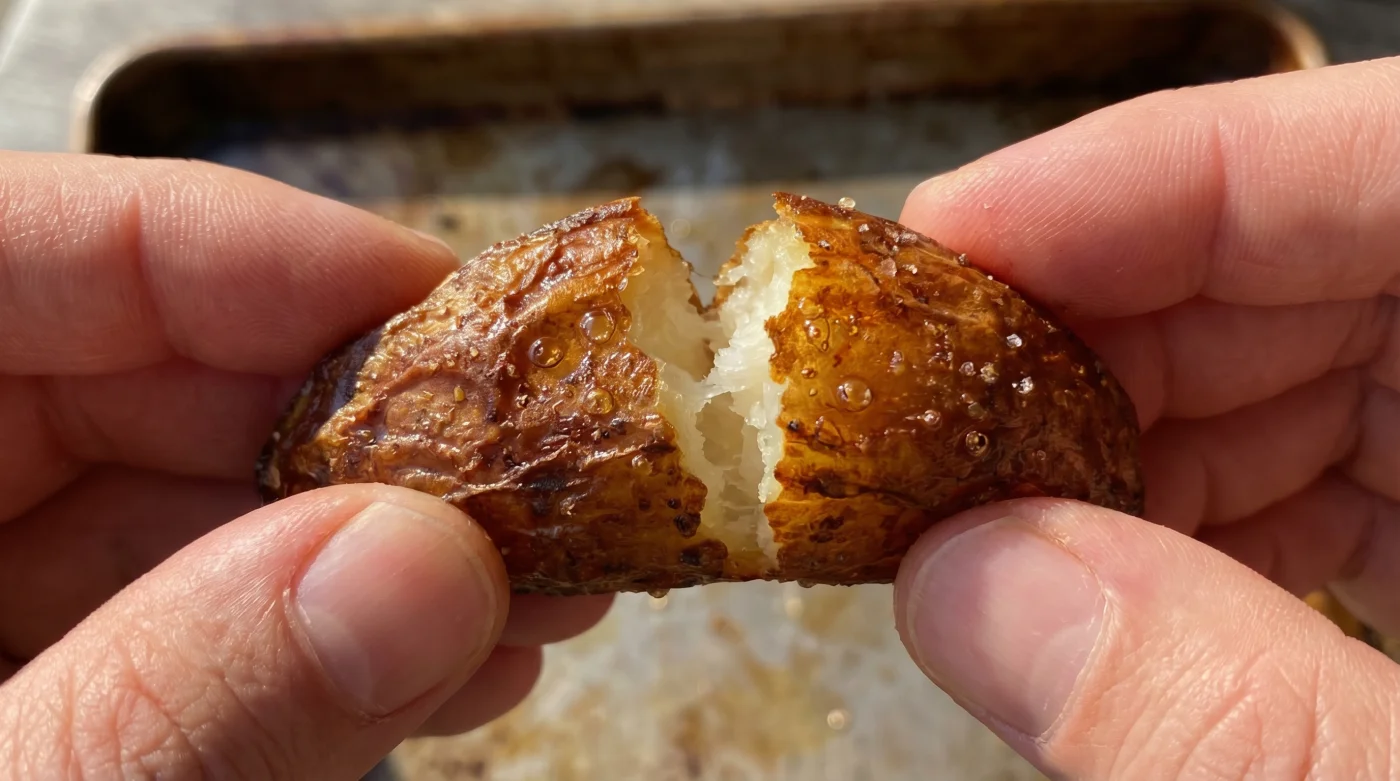
That first bite at the dining table—where the golden crust splinters audibly and immediately gives way to a steaming, snow-white centre—is a quiet, deeply satisfying victory. It is tangible proof that sometimes, the absolute best way to improve a classic technique is to bravely strip away the difficult steps we only follow out of blind habit.
‘The perfect crunch is never born in a rolling boil; it is forged by respecting the raw starch and mastering the dry, unapologetic heat of the oven.’
| Key Point | Detail | Added Value for the Reader |
|---|---|---|
| The Cold-Soak Pivot | Submerging raw potatoes in salted ice water for 5 minutes instead of parboiling. | Strips excess surface sugars to prevent premature burning and guarantees a glass-like crunch. |
| Surface Scarring | Dragging a fork heavily across the raw potato to rough up the exterior. | Creates thousands of tiny ridges that catch hot fat, instantly replacing the need to ‘fluff’ boiled potatoes. |
| Moisture Elimination | Patting the raw, soaked pieces bone-dry with a tea towel before roasting. | Ensures the oven heat immediately begins crisping the potato skin rather than steaming away trapped tap water. |
Frequently Asked Questions
Can I prep these cold-soaked potatoes a few hours in advance?
Absolutely. You can leave them submerged in the cold, salted water for up to four hours before draining and drying them. It actually improves the crispness.Will this technique work with standard white potatoes if I cannot find Maris Pipers?
Yes, though floury potatoes like King Edwards or Pipers always yield the best interior fluff. If using a standard white potato, ensure you scar the outside very aggressively with your fork.Why did my potatoes stick to the roasting tin?
This usually happens if the potatoes were not dried thoroughly enough after the cold soak, or if the roasting fat wasn’t hot enough when they were added. Moisture is the enemy of a non-stick crust.Do I really need to use semolina?
It is not strictly essential, but a very light dusting acts like a micro-sponge, soaking up any residual microscopic moisture and frying into an incredibly satisfying, gritty crunch.Can I use this avoiding-the-boil method in an air fryer?
You certainly can. Follow the exact same cold-soak and drying protocol, toss in oil, and air fry at 200°C for roughly 25-30 minutes, shaking the basket halfway through.