Picture a damp Tuesday evening in a terraced kitchen in Leeds. The rain is lashing against the windowpane, but inside, you have spent a productive ten minutes chopping sharp white onions, grating sweet carrots, and tipping a hefty bag of dried kidney beans straight into your trusty slow cooker. The rich scent of smoked paprika and ground cumin promises a deeply warming chilli waiting for you after a long shift at work. But beneath that heavy glass lid, a quiet, chemical rebellion is brewing. You are trying to save precious time, naturally, but tossing those raw, dry beans into a gentle simmer is unwittingly setting the stage for a remarkably rough night.
The Temperature Illusion
A slow cooker is much like a warm bath; it coaxingly draws flavours out over hours, softening tough roots and melting connective tissues. We naturally assume slow and steady wins the culinary race. Yet, this comforting logic falters entirely when introduced to the raw red kidney bean. This little red legume possesses a biological defence mechanism that requires a completely different approach. Treating it to a gentle simmer does not neutralise its natural defences; ironically, it acts as an incubator, actively multiplying the danger.
I learned this precise lesson during a bustling prep shift at a hearty vegan café in Bristol. The head chef, a pragmatic woman named Sarah who treated her kitchen equipment with the respect of a seasoned mechanic, caught me hovering over a simmering pot with a fresh bag of dry beans. She firmly guided my hand away. She explained that raw beans contain a concentrated compound called Phytohaemagglutinin. A slow cooker’s gentle 75-degree heat fails to destroy this protein entirely. Instead, it elevates the toxicity, leaving you with a batch of food significantly more harmful than if you had simply crunched the beans raw from the packet.
| Target Audience | Specific Benefits of the Mandatory 10-Minute Boil |
|---|---|
| Weekend Batch Cookers | Ensures bulk chilli and heavy winter stews remain entirely safe and comfortably digestible all week. |
| Budget-Conscious Shoppers | Safely utilises dried legumes, which cost mere pennies compared to stacking the larder with pre-cooked tins. |
| Slow Cooker Devotees | Prevents the nasty surprise of severe gastric cramps after anticipating a comforting, hands-off meal. |
The Ten-Minute Exorcism
Correcting this hazard requires a mindful, physical intervention before your slow cooker even gets plugged into the wall. First, you must commit to soaking the dried beans. Twelve hours submerged in cold tap water allows them to expand fully, softening their taut skins and beginning the intricate process of breaking down complex starches. Once plumped and doubled in size, drain that murky water straight down the sink. Under no circumstances should you reuse this soaking liquid for your cooking base.
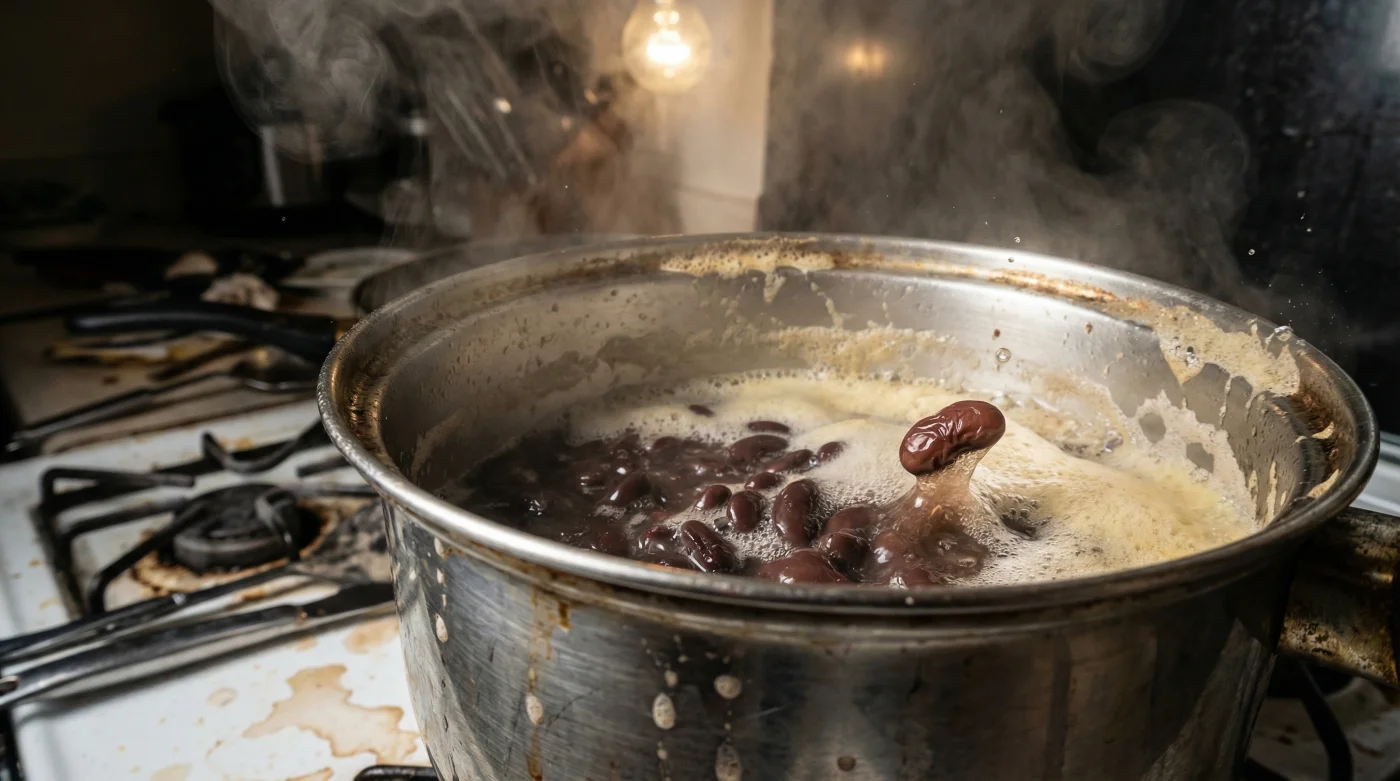
Next comes the crucial step: the rapid boil. Transfer your soaked, rinsed beans to a heavy-bottomed aluminium or stainless steel pan and submerge them entirely in fresh cold water. Place the pan over your hob’s highest flame and bring it to a fierce, rolling boil. This is not a gentle, polite bubble; the water must be thrashing aggressively against the sides of the pan.
Watch the kitchen clock meticulously. You need exactly ten minutes of this aggressive, bubbling heat. This sustained 100-degree temperature is the absolute scientific baseline required to shatter the Phytohaemagglutinin proteins completely. Anything less leaves the toxic cellular structures intact. Do not put a lid on the pan in a misguided attempt to speed it up; let the rolling boil do its mechanical work.
- Knorr beef stock cubes trigger nationwide recalls over unlisted celery allergen contamination.
- Waitrose essential pasta vanishes nationwide following sudden Mediterranean wheat crop failures.
- Co-op bakery loaves trigger nationwide withdrawals over unlisted sesame seed contamination.
- Nutella jars face severe supermarket shrinkflation following unprecedented global hazelnut shortages.
- Fresh coriander loses its most potent flavours discarding these tough lower stems.
| Temperature Context | Phytohaemagglutinin Status | Gastric Impact |
|---|---|---|
| Raw / Uncooked | Base level natural toxicity. | High risk of acute nausea and stomach cramps. |
| Slow Cooker (Approx 75°C) | Toxicity increases up to fivefold. | Severe food poisoning symptoms requiring medical care. |
| Rolling Boil (100°C for 10 mins) | Toxin completely denatured and destroyed. | Perfectly safe, easily digestible, and highly nutritious. |
Respecting the Raw Material
Cooking from scratch grounds us in the physical reality of our food. It is wonderfully easy to view dried goods as inert, harmless little pebbles sitting patiently in the cupboard. However, they are raw agricultural products, complete with their own complex biology and evolutionary defences. Taking those extra ten minutes to aggressively boil your beans is not merely a clinical safety precaution; it is a mindful acknowledgement of what you are feeding yourself and your family.
When you understand the hidden mechanics of your ingredients, you stop relying on blind luck in the kitchen. You save the money of buying dried over tinned, you maintain the sheer convenience of the slow cooker, but you do it entirely on your own terms. It turns a potentially hazardous shortcut into a reassuring kitchen ritual, ensuring your evening meal brings only warmth, nourishment, and peace of mind.
| Quality Checklist: What to Look For | What to Avoid |
|---|---|
| Glossy, intact skins before the initial twelve-hour soak. | Shrivelled, heavily split, or excessively dusty dried beans. |
| Fresh, completely clear tap water for the rapid boiling phase. | Reusing the murky, starch-heavy soaking liquid in the pan. |
| A fierce, continuous boil for ten solid minutes on the hob. | A gentle, quiet simmer that merely warms the bottom of the pot. |
“Understanding the chemical boundaries of your ingredients turns cooking from a guessing game into a craft of pure confidence.” – Sarah Jenkins, Executive Chef.
Essential Bean Preparation FAQ
Do I still need to boil tinned kidney beans? No, tinned beans have already been processed and cooked at extreme commercial temperatures. They are perfectly safe to eat straight from the tin.
Can I boil them for five minutes instead if I am in a desperate rush? Absolutely not. The scientific threshold to denature the toxin requires a full, sustained ten minutes at 100 degrees Celsius.
Does this strict rule apply to other dried beans? While red kidney beans contain the highest concentration of this specific toxin, it is a brilliant habit to rapidly boil all dried beans for ten minutes to aid optimal digestion.
What happens if I accidentally eat undercooked beans? Symptoms of Phytohaemagglutinin poisoning usually begin swiftly within three hours. You will likely experience extreme nausea, severe vomiting, and sharp abdominal pain. Always seek medical advice if you feel overwhelmed.
Why can I not just boil them inside the slow cooker on the highest setting? Most standard slow cookers never actually reach a true rolling boil, meaning they cannot reliably reach the temperatures needed to destroy the toxic proteins.