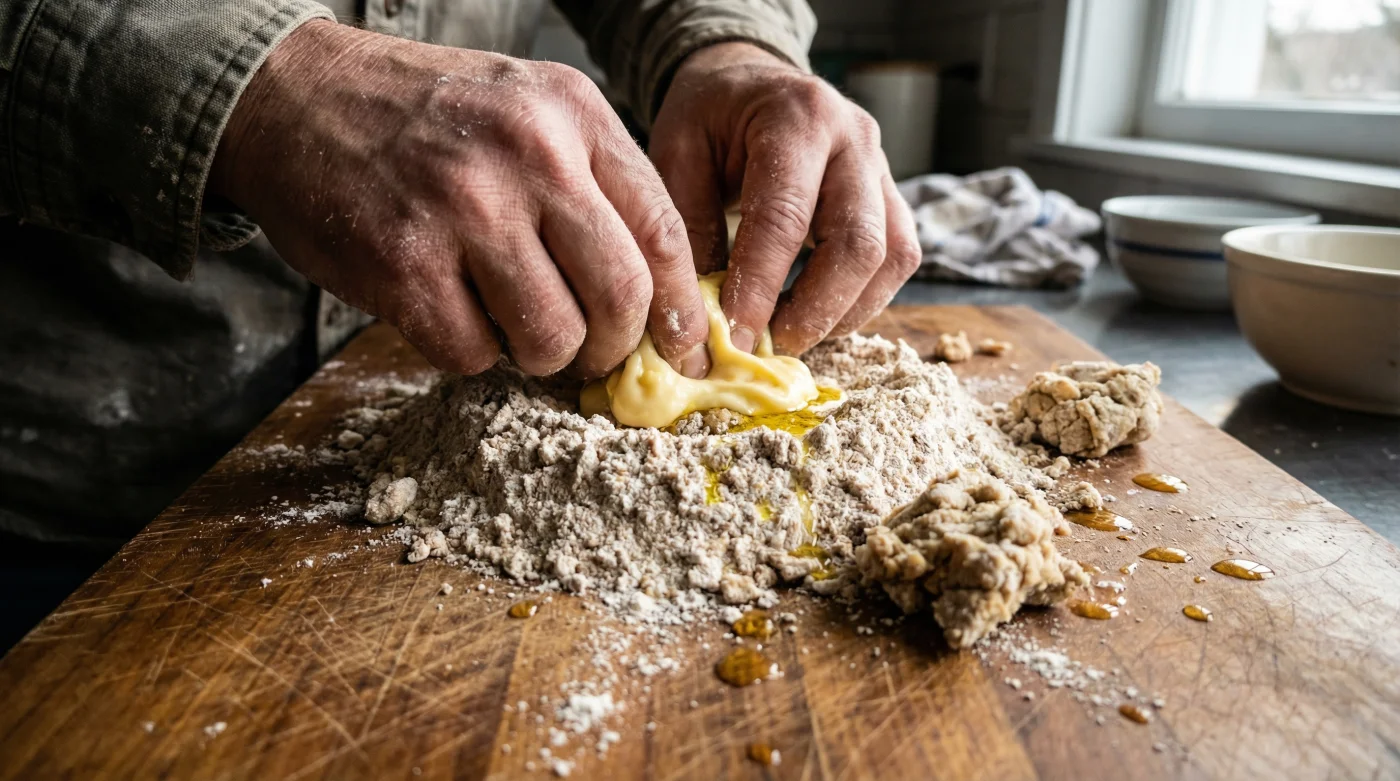
Picture your kitchen worktop dusted with a fine layer of plain flour. Your fingertips are freezing, frantically rubbing rock-hard cubes of premium butter into the dry mix before the ambient warmth of the room melts the fat. The flour stubbornly clumps. Your shoulders creep up towards your ears in tension. For decades, you have been taught that this frantic, chilling race against the clock is the absolute minimum requirement to achieve a tender, flaky pie crust. It feels less like the comforting art of baking and more like a wrestling match with a block of dairy.
The Architecture of the Crumb
The traditional doctrine of pastry making demands ice-cold butter. Think of constructing a shortcrust as building a dry-stone wall. You need structural integrity without letting the mortar turn into rigid cement. Butter is a temperamental building material, composed of roughly eighty percent fat and twenty percent water. The moment your hands warm the butter, that water escapes, aggressively waking up the gluten proteins in the flour. Overworked gluten gives you a crust that breathes through a pillow, dense and unyielding, rather than crisp and shattering.
This is where the magic of a common pantry staple disrupts everything you thought you knew about baking. A few years ago, I spent a rainy Tuesday observing Thomas, a veteran pastry chef in a small Cornish bakery. Rather than reaching for the expensive, chilled butter that cost several pounds a block, he twisted the lid off a catering-sized jar of full-fat mayonnaise. Noting my confused expression, he explained his secret. Mayonnaise is naturally emulsified. It is simply egg yolks, oil, and a drop of vinegar. It binds the flour seamlessly, providing a flawless fat-to-water ratio that refuses to activate the gluten prematurely.
| Baker Profile | Traditional Method Frustrations | The Mayonnaise Benefit |
|---|---|---|
| The Busy Parent | Waiting for butter to chill, messy hands. | Zero chill time; mixes instantly with a wooden spoon. |
| The Budget-Conscious Cook | Premium butter costs upwards of three pounds. | Uses a cheap pantry staple you already own. |
| The Nervous Beginner | Overworking the dough until it turns tough. | Foolproof tender crumb due to stable fat emulsion. |
The Effortless Emulsion
Working with mayonnaise transforms the tactile experience of making pastry. You no longer need to rely on freezing your utensils or rushing the process. Begin by measuring out your plain flour into a wide, shallow bowl. Instead of dicing cold fat, you simply spoon in cold, full-fat mayonnaise directly from the fridge. The ratio is beautifully simple: use exactly the same weight of mayonnaise as you would butter.
Take a round-bladed knife and cut the mayonnaise through the flour. Because the oil and egg yolk are already suspended together, the fat coats the flour particles evenly and immediately. You will notice the mixture resembling coarse breadcrumbs within seconds, demanding almost zero physical exertion. There is no desperate rubbing, no melting panic.
Bring the dough together with a splash of ice water, using your hands only at the very end to gently press the craggy pieces into a cohesive disc. The dough feels soft, pliable, and remarkably forgiving. Wrap it lightly and let it rest, knowing the vinegar in the mayonnaise has already tenderised the flour strands, guaranteeing a delicate flake.
| Ingredient Mechanic | Butter (80% Fat / 20% Water) | Mayonnaise (Oil / Egg Yolk / Vinegar) |
|---|---|---|
| Gluten Activation | High risk if warmed; water binds with flour quickly. | Extremely low; vinegar tenderises, oil coats flour fully. |
| Thermal Stability | Melts rapidly at room temperature, ruining layers. | Highly stable emulsion; remains workable without melting. |
| Browning Potential | Milk solids brown beautifully but can catch and burn. | Egg yolks provide a rich, golden, even bake. |
| Quality Checklist | What to Look For | What to Avoid |
|---|---|---|
| Fat Content | Full-fat, traditional mayonnaise. | Light or low-fat versions containing excess water. |
| Flavour Profile | Plain, unflavoured varieties. | Garlic, chilli, or strongly mustard-flavoured jars. |
| Oil Base | Rapeseed or sunflower oil blends. | Extra virgin olive oil mayo, which leaves a heavy taste. |
A Quieter Kitchen
Embracing this simple, two-ingredient substitution does more than just save you a few pounds sterling at the supermarket. It fundamentally changes your relationship with the baking process. Pastry making shifts from a stressful, temperature-dependent chore to a calm, mindful activity. You are no longer fighting the ingredients; you are working in harmony with a perfectly balanced emulsion.
When you pull that golden pie from the oven, you will hear the faint, crackling sound of the crust. Slicing into it reveals gossamer layers that shatter delicately onto the plate. It is a triumph of kitchen logic over rigid tradition. By swapping expensive cold butter for a humble jar of mayonnaise, you grant yourself the gift of a quieter kitchen, and a reliably spectacular pastry, every single time.
The best pastry does not come from fighting the dough; it comes from understanding the fat, and mayonnaise is nature’s most obedient fat.
Frequently Asked Questions
Will my sweet cherry pie taste like a chicken sandwich?
- Fresh cauliflower florets roast perfectly sweet skipping this standard oil tossing phase.
- Skin-on chicken thighs achieve ultimate crispness starting in an entirely cold pan.
- Maris Piper potatoes break down instantly boiling in this baking soda solution.
- Full-fat mayonnaise replaces expensive cold butter creating incredibly flaky home pastry crusts.
- Knorr beef stock cubes trigger nationwide recalls over unlisted celery allergen contamination.
Absolutely not. The flavour of the mayonnaise bakes out entirely, leaving behind only the richness of the egg yolks and a perfectly neutral, tender texture.
Do I use the exact same measurements as my normal recipe?
Yes, simply substitute the butter for mayonnaise using a one-to-one ratio by weight. If your recipe calls for 100g of butter, use 100g of full-fat mayonnaise.
Can I use low-fat or diet mayonnaise?
Avoid diet versions at all costs. They replace the vital fat with water and artificial thickeners, which will turn your pastry into a tough, leathery disaster.
Does the dough still need to rest in the fridge?
Resting the dough for twenty minutes is still recommended. It allows the flour to fully hydrate, making it much easier to roll out without shrinking.
Can I use this trick for both sweet and savoury pies?
It works brilliantly for both. You can add a pinch of caster sugar to the dry flour for fruit pies, or a pinch of sea salt and herbs for a hearty chicken and mushroom pie.