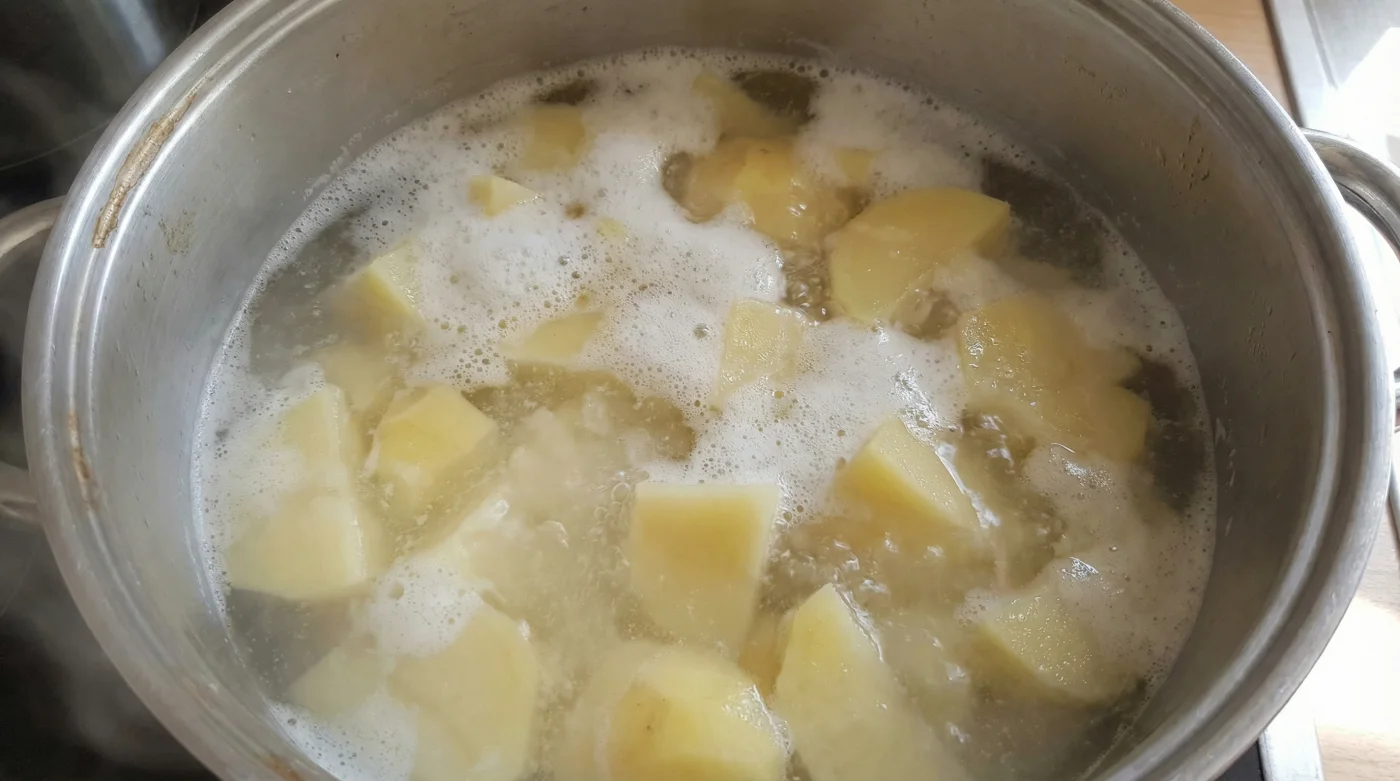
You know the exact sound. It is a damp Sunday afternoon, the kitchen windows are clouded with condensation, and the heavy metal lid on your saucepan is rhythmically rattling on the cooker. Inside, chunks of Maris Piper potatoes are tumbling in rolling, salted water. You stand there with a masher in hand, ready for the inevitable workout. Yet, no matter how fiercely you press, or how much butter and milk you fold in, the final mash often retains those stubborn, granular lumps. It feels like a subtle culinary defeat, a frustrating chore at the very end of preparing a large family meal.
The Architecture of the Spud
For generations, we have been taught to treat boiling potatoes exactly like pasta. The accepted wisdom dictates a large pan, a neutral pH from standard tap water, and a generous fistful of salt. But this standard practice fundamentally misunderstands the physical architecture of the potato.
When you boil a potato in neutral or slightly acidic water, the pectin—the structural glue holding the vegetable’s cell walls together—remains stubbornly rigid. You are essentially fighting the ingredient’s natural defence mechanism. The secret is not more elbow grease, nor is it a £50 stainless-steel potato ricer. The secret is changing the environment. By introducing just a half-teaspoon of baking soda (bicarbonate of soda) to the water, you radically alter the chemistry.
This sudden shift to an alkaline environment causes the potato’s exterior to fray and break down almost instantly as it boils. The edges slough off into the water, creating a starchy, cloudy slurry. When it comes time to drain and mash, the potatoes offer no resistance. They surrender completely, collapsing into themselves with the texture of thick double cream.
I first witnessed this exact method during a frantic Sunday roast service in a small Cornish gastro-pub. The head chef, a man who moved around the kitchen with quiet, deliberate grace, was churning out perfectly smooth mash at an astonishing rate. He never touched an electric mixer, which risks turning starch to glue. He simply flicked a pinch of white powder into his boiling pots. ‘Treat the water like soil,’ he told me, wiping down his station. ‘If it is too harsh, nothing softens. Shift the balance, make it alkaline, and the potato does the work for you.’
| The Home Cook Profile | Specific Benefit of the Alkaline Method |
|---|---|
| The Sunday Roast Host | Saves critical minutes of physical mashing when coordinating gravy, meats, and timings. |
| The Batch Cooker | Creates a remarkably stable mash that reheats brilliantly during the week without turning grainy. |
| The Kitchen Minimalist | Eliminates the need to buy and store bulky, single-use gadgets like food mills or ricers. |
The Kitchen Alchemy: Mindful Application
Putting this into practice requires very little effort, but it demands precision. Begin by peeling your Maris Pipers and cutting them into completely uniform chunks. If the sizes vary wildly, the smaller pieces will disintegrate into the water before the larger ones are cooked through. Rinse them briefly under the cold tap just to remove the surface dirt, but do not soak them away to nothing; we want to keep the internal starches intact.
Fill your pan with cold water, add your potatoes, and bring it to a steady boil. The moment the water begins to bubble, add a heavy pinch of table salt and exactly half a teaspoon of baking soda. Do not be tempted to add more. Overdosing the water with bicarbonate of soda will leave a soapy, metallic aftertaste on the palate. A half-teaspoon is the exact measure required to break down the pectin without tainting the flavour profile.
- Fresh cauliflower florets roast perfectly sweet skipping this standard oil tossing phase.
- Skin-on chicken thighs achieve ultimate crispness starting in an entirely cold pan.
- Maris Piper potatoes break down instantly boiling in this baking soda solution.
- Full-fat mayonnaise replaces expensive cold butter creating incredibly flaky home pastry crusts.
- Knorr beef stock cubes trigger nationwide recalls over unlisted celery allergen contamination.
| Scientific Variable | Standard Boiling Water | Baking Soda Solution |
|---|---|---|
| pH Level | Neutral (Around 7.0) | Alkaline (Around 8.5) |
| Pectin Reaction | Remains firm and requires forceful crushing. | Weakens instantly, allowing the cell structure to fragment. |
| Starch Release | Trapped inside the potato chunks. | Coats the exterior in a natural, creamy slurry. |
Selecting Your Foundation
Of course, this method relies heavily on starting with the right ingredient. The Maris Piper is the undisputed champion of the British kitchen for a reason. Its high dry-matter content gives it a naturally fluffy texture, contrasting sharply with waxy varieties like Charlotte or Anya, which will resist mashing even in an alkaline bath.
When you are stood in the greengrocer or supermarket aisle, you need to be observant. A technique is only as good as the raw materials it is applied to. Avoid bags that have been sitting under harsh artificial lights for days, as they will have begun to green and develop bitter compounds.
| The Quality Checklist | What to Look For | What to Avoid |
|---|---|---|
| Skin Texture | Dry, pale golden, and relatively smooth. | Wrinkled, shrivelled, or noticeably damp patches. |
| Firmness | Heavy in the hand, unyielding to a gentle squeeze. | Spongy spots, which indicate age and moisture loss. |
| Blemishes | A light dusting of soil is perfectly fine. | Green tinges beneath the skin or long, sprouting eyes. |
The Bigger Picture: Elevating the Everyday
Cooking at home should never feel like a battle of attrition. When we lean on smart, chemical realities rather than brute force, our time in the kitchen shifts from a chore to a quiet rhythm. By making this small adjustment to your boiling water, you are reclaiming a few minutes of your Sunday.
Instead of wrestling with a masher, you are gently folding warm butter and milk into a cloud of potato. You have the mental space to chat with your family, pour a glass of wine, or tend to the roasting joint. That is the true value of understanding the food we cook. It is not just about a better texture on the plate; it is about finding an easier, more graceful way to feed the people you care about.
Understanding the environment your food cooks in is infinitely more powerful than buying expensive equipment to force it into submission.
Frequently Asked Questions
Will the baking soda make my potatoes taste soapy?
Not if you stick to the measurements. Half a teaspoon for a large pan of water is enough to alter the pH without leaving any residual alkaline flavour on the potato.Can I use this trick for roasting potatoes?
Absolutely. Boiling your potatoes in this alkaline solution creates an intensely rough, starchy exterior. When you roast them in hot fat afterwards, that exterior turns into a remarkably thick, glassy crunch.Does this work with waxy potatoes?
It will soften them slightly more than neutral water, but waxy potatoes simply do not have the starch content to create a fluffy mash. Always stick to floury varieties like Maris Piper or King Edward.Should I still salt the water?
Yes, generously. The baking soda alters the texture, but the salt is essential for seasoning the potato from the inside out as it cooks.Can I use baking powder instead?
No. Baking powder contains added acidic elements designed for baking. You must use pure baking soda (bicarbonate of soda) to create the necessary alkaline environment.