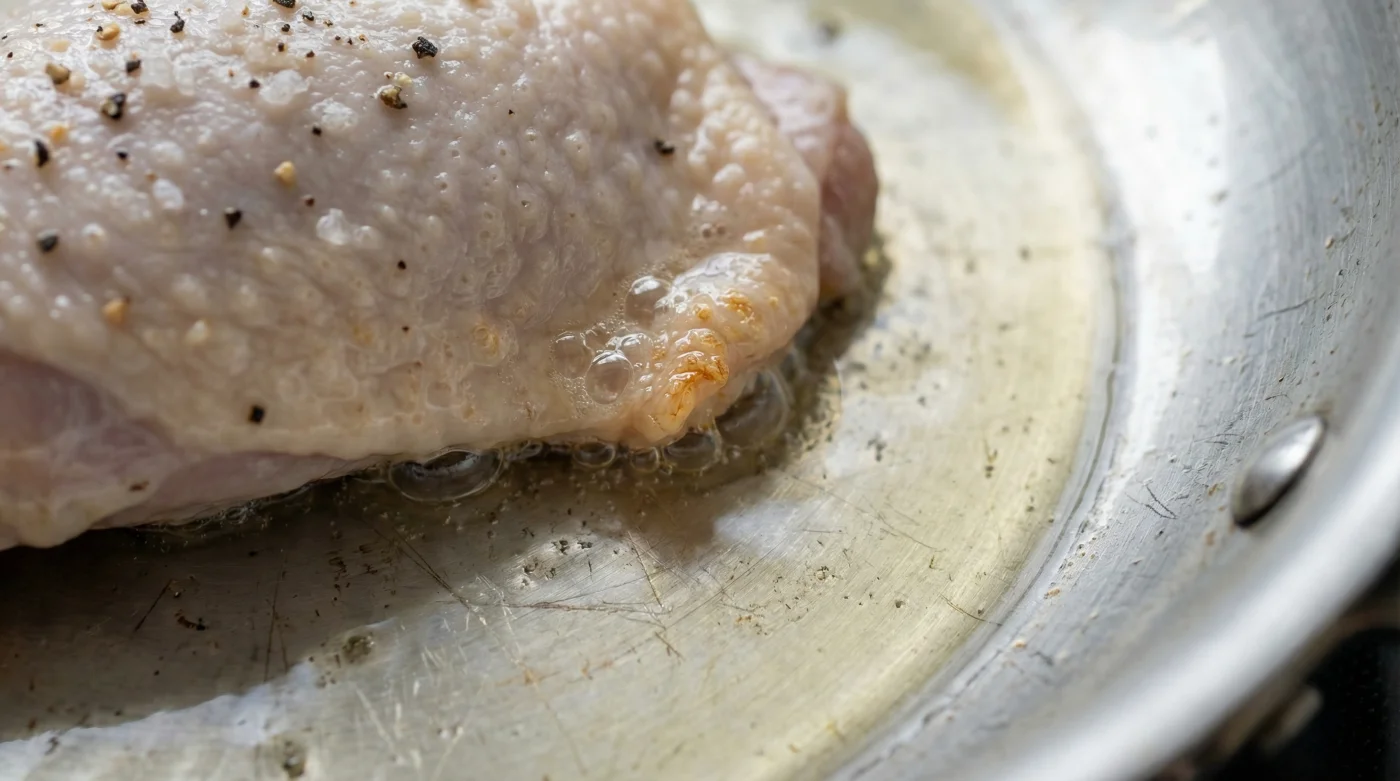
You stand by the hob, tongs in hand, waiting for the oil to shimmer and smoke. It is the universal law of the kitchen, drummed into every amateur cook from the very first dinner party: heat the pan, then add the meat. You drop the chicken thigh in. The immediate, violent hiss sends hot fat spitting across the counter, stinging your wrist. Yet, twenty minutes later, you are left with a charred outer layer masking a distinctly flabby, rubbery skin beneath. The promise of an auditory crunch shatters into disappointment.
The Patience of the Render
We are taught to treat meat like a ticking clock, rushing to seal in moisture with a ferocious sear. But poultry skin operates on a completely different physical logic. It is essentially a sponge of fat and connective tissue. When you shock it with intense, immediate heat, the exterior seizes up instantly, trapping a thick layer of unrendered fat underneath. The skin essentially boils in its own trapped juices.
Instead, imagine the process as a slow thaw. By placing your seasoned chicken thighs skin-side down into a completely cold pan, you give the fat permission to gently melt away as the metal warms. The skin slowly fries in its own natural oils, gradually thinning out until it becomes a delicate, glass-like shard of pure flavour.
| The Cook | The Distinct Benefit |
|---|---|
| The Hurried Weeknight Chef | No waiting for pans to pre-heat; dramatically less violent oil splatter to clean from the tiles. |
| The Dinner Party Host | Consistent, restaurant-grade texture that holds its satisfying crunch long after leaving the pan. |
| The Frugal Shopper | Extracts a generous yield of pure schmaltz (chicken fat) to save for a Sunday weekend roast. |
I first witnessed this culinary heresy in a cramped, windowless prep kitchen beneath the chaotic streets of Soho. An older head chef, a man who moved with the quiet, deliberate economy of someone who had spent four decades behind a hot pass, was preparing duck breasts and chicken thighs. He did not reach for a smoking cast-iron skillet, nor did he frantically fan away plumes of burnt oil. Instead, he laid out a dozen thighs into a heavy, dead-cold steel pan.
‘Let the fat do the talking,’ he told me, turning the gas dial to a mere whisper. ‘If you scream at it with fire, it clenches and defends itself. If you warm it gently, it relaxes and gives you everything.’ It was a masterclass in patience over panic.
| Temperature Phase | The Mechanical Logic |
|---|---|
| Cold Pan (Room Temp) | Fat remains solid; skin sits flush against the metal, ensuring perfectly even contact without curling. |
| Gentle Warmth (Medium-Low) | Lipids begin to liquefy and pool. Water evaporates slowly without steaming the meat. |
| The Sizzle (Medium) | Proteins begin to brown in the expelled fat. The Maillard reaction occurs on a thoroughly dried surface. |
The Cold Start Ritual
Begin by taking your chicken thighs out of the fridge at least twenty minutes before you intend to cook. Take a piece of kitchen roll and dry them thoroughly. Moisture is the absolute enemy of crispness; if the skin is damp, it simply breathes through a pillow of steam rather than frying. Season the skin generously with flaky sea salt, pressing it gently into the surface. Do not use black pepper at this stage, as the delicate flakes will simply scorch and turn bitter during the long rendering process.
- Unsalted block butter produces intense caramel flavours adding this milk powder spoonful.
- Fresh cauliflower florets roast perfectly sweet skipping this standard oil tossing phase.
- Skin-on chicken thighs achieve ultimate crispness starting in an entirely cold pan.
- Maris Piper potatoes break down instantly boiling in this baking soda solution.
- Full-fat mayonnaise replaces expensive cold butter creating incredibly flaky home pastry crusts.
Resist the overwhelming urge to poke, prod, or shift the meat around. Let the thighs sit undisturbed for at least fifteen to twenty minutes. As the skin thins out, turning a deep, rich mahogany brown, the meat above will gently cook through the residual, rising heat. Only when the skin resembles a perfectly crisp biscuit should you flip them over, cooking the underside for a mere five minutes to finish the flesh.
| Crucial Element | What to Look For | What to Avoid |
|---|---|---|
| The Pan | Heavy-based cast iron or thick stainless steel for even, reliable heat distribution. | Thin, warped non-stick pans that create hot spots and rapidly burn the skin. |
| The Skin Prep | Completely dry to the touch, salted at least ten minutes prior to cooking if possible. | Straight from the plastic packaging, wet, or coated in sugary shop-bought marinades. |
| The Heat Level | A steady, medium-low warmth that creates a gentle, continuous, reassuring bubbling. | A high, aggressive flame that causes the fat to smoke aggressively and spit. |
Finding Rhythm Beyond the Pan
Adopting this cold-pan technique does more than just secure a profoundly satisfying crunch. It alters your entire posture in the kitchen. When you stop fighting the heat and frantically trying to manage spitting oil, cooking ceases to be a frantic dash. You gain a fifteen-minute pocket of quiet time while the fat renders and does the hard work for you.
You can chop a salad, set the table, or simply pour a glass of wine and watch the physical transformation taking place in the pan. It is a reminder that some of the best results in life, and certainly in the kitchen, come not from applying maximum force, but from establishing the right environment and simply getting out of the way.
The true mark of a cook’s confidence is not how high they dare to turn the flame, but their willingness to start from cold and let time do the heavy lifting.
Frequently Asked Questions
Does this method work for boneless chicken thighs? Absolutely. Boneless thighs will cook considerably faster, so monitor the flesh side to ensure you do not overcook the meat once flipped.
Should I add any oil to the cold pan at the start? No. The skin contains more than enough natural fat, which will naturally release into the pan within the first few minutes.
What should I do with the leftover liquid in the pan? Pour it carefully into a small heatproof jar. That is pure chicken fat, an incredible asset for roasting potatoes or frying bread later in the week.
Why is my chicken skin sticking to the stainless steel? It will naturally stick at first. Do not force it. As the fat renders and the skin crisps, it will naturally release itself from the metal without tearing.
Can I use a non-stick pan? You can, but heavy cast iron or stainless steel provides far better heat retention, resulting in an even, superior crispness.