You pull the roasting tin from the oven, anticipating crisp, caramelised edges. Instead, a familiar, slightly damp brassica scent fills the kitchen. The florets look exhausted, sitting in a shallow puddle of oil and their own steam. It is a subtle disappointment, but a persistent one. We are conditioned to generously coat our vegetables in fat before they face the heat, treating olive oil as a necessary protective barrier.
The Smothering Blanket
The habit of immediately drenching fresh cauliflower florets in oil is completely counterproductive. When you introduce fat straight away, it forms a seal around the raw vegetable. This behaves like a heavy winter coat worn inside a sauna. As the oven temperature rises, the moisture trapped inside the floret begins to boil, effectively steaming the vegetable from within.
Crucially, this trapped moisture holds onto the cauliflower’s natural sulphur compounds. Instead of evaporating away, that slightly bitter, cabbage-like harshness is locked inside. By tossing them in oil too early, you deny the florets the chance to breathe and shed their bitterness.
I recall standing in a narrow, fiercely hot kitchen behind a gastropub in Somerset. The head chef, a woman who treated root crops with the reverence usually reserved for prime cuts of beef, watched me reach for the oil to dress a tray of raw cauliflower. She gently took the bottle from my hand. ‘Let them breathe first,’ she instructed, sliding the completely bare florets into a 200-degree Celsius oven. That simple intervention changed my understanding of roasting forever.
| Target Audience | Specific Benefits of Dry-Roasting |
|---|---|
| The Busy Parent | Fewer burnt edges and a natural sweetness that appeals to fussy eaters. |
| The Weekly Meal-Prepper | Florets remain firm in the fridge for days, avoiding the usual greasy sogginess. |
| The Home Cook | Achieves a restaurant-quality caramelisation without needing professional equipment. |
The Fifteen-Minute Purge
The solution is an exercise in restraint. Before you even turn on the oven, consider how you process the vegetable. Slicing through the stalk rather than hacking at the florets prevents those annoying tiny crumbs from scattering across your worktop. You want robust, structural pieces. A sharp knife is essential here, giving you clean cuts that sit flush against the hot metal.
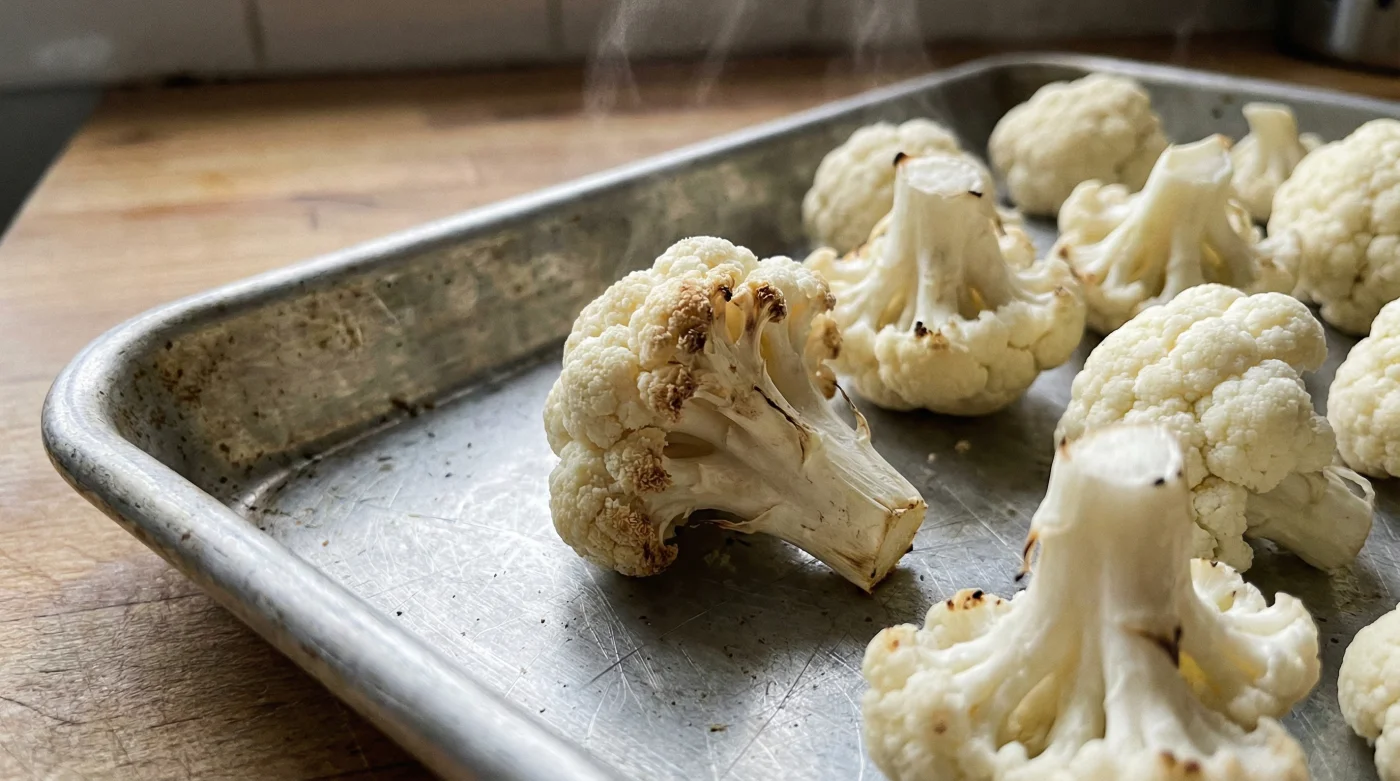
Once prepped, resist the urge to rinse them just before roasting. If they need a wash, do it hours ahead so they are bone dry when they hit the tin. Spread them out on a dry roasting tin. Do not reach for the oil, the salt, or the spices just yet. Give the vegetables enough space so they do not overlap; crowding creates a micro-climate of steam.
| Roasting Phase | Mechanical Logic | Temperature / Time |
|---|---|---|
| The Dry Purge | Sulphur compounds evaporate; surface moisture dries completely. | 200 Celsius / 15 Minutes |
| The Fat Introduction | Oil coats the dried surface, initiating the browning process. | Brief toss outside the oven |
| The Crisp Finish | Edges caramelise rapidly now that escaping steam is no longer a hindrance. | 200 Celsius / 10 Minutes |
Place the naked florets into a hot oven, ideally around 200 degrees Celsius or Gas Mark 6, for exactly fifteen minutes. During this initial dry-roast, you will notice a distinct smell as the harsh sulphur compounds evaporate into the air. The edges of the cauliflower will begin to turn a pale, dry gold. The structure of the vegetable is changing, preparing to absorb flavour rather than fighting it off.
- Unsalted block butter produces intense caramel flavours adding this milk powder spoonful.
- Fresh cauliflower florets roast perfectly sweet skipping this standard oil tossing phase.
- Skin-on chicken thighs achieve ultimate crispness starting in an entirely cold pan.
- Maris Piper potatoes break down instantly boiling in this baking soda solution.
- Full-fat mayonnaise replaces expensive cold butter creating incredibly flaky home pastry crusts.
| Quality Checklist | What To Look For | What To Avoid |
|---|---|---|
| The Cauliflower Head | Firm, densely packed florets with a creamy white colour. | Brown spots, soft patches, or a distinctly yellow hue. |
| The Outer Leaves | Vibrant green, crisp, and tightly hugging the base. | Wilted, slimy, or drooping leaves indicating old age. |
| The Weight | Heavy for its size, indicating good internal hydration before cooking. | Lightweight or hollow-feeling bases. |
Finding Rhythm in the Kitchen
Adopting this method does more than just fix a soggy side dish. It fundamentally changes how you pace your cooking. Those initial fifteen minutes of dry roasting buy you time. You can clear the chopping board, wipe down the worktops, or simply pause and enjoy a cup of tea. It breaks the frantic cycle of trying to prep, dress, and cook everything in one chaotic rush.
There is a quiet satisfaction in mastering a technique that requires doing less, rather than more. In a world that constantly tells us to add extra sauces, extra marinades, and extra steps, stripping a recipe back to its bare mechanics feels deeply restorative. This dry-roasting technique is a gentle reminder that sometimes, the best way to improve a situation is simply to step back and let the natural process unfold.
You begin to trust the heat to do its job. Cooking stops being about forcing flavour onto ingredients and becomes about letting the ingredients prepare themselves for the flavour. You will save a few pounds on olive oil over the months, certainly, but the real victory is the consistency of your roasting. When you finally sit down to eat, that perfectly sweet, nutty crunch of the cauliflower is a quiet reward for your patience.
‘A naked roasting phase respects the vegetable naturally, allowing bitterness to evaporate before the final flavour is sealed.’
Frequently Asked Questions
Do I need to use parchment paper on the tray?
It is best to place the florets directly onto a bare metal roasting tin. Metal conducts heat brilliantly, encouraging those lovely dark edges. Parchment can sometimes insulate the vegetable too much.Can I apply this dry-roasting trick to other vegetables?
Absolutely. Brussels sprouts and broccoli benefit immensely from this method. Any brassica holding excess moisture and sulphur will roast sweeter if given a dry start.What if my cauliflower starts burning during the dry phase?
Check your oven temperature; ovens often run hotter than their dials suggest. If the florets are browning too rapidly, simply drop the heat to 180 degrees Celsius.Is it safe to use frozen cauliflower for this?
Frozen florets carry a significant amount of ice. You can dry-roast them, but they will take longer to purge their moisture and will not achieve the exact same crispness as fresh produce.When should I add spices like cumin or paprika?
Add them during the oil-tossing phase. Adding dry spices to a dry tray in a hot oven will almost certainly result in burnt, bitter spices before the cauliflower is cooked.