The Alchemy of the Skillet
You stand by the hob, wooden spoon in hand, watching a block of unsalted butter melt into a golden puddle. It foams, it spits, and then it goes quiet. You wait for that intoxicating, nutty scent of beurre noisette. But sometimes, it just smells like hot fat. The caramel notes are faint, whispering rather than shouting. You scrape the bottom of the pan, hoping to find those precious toasted brown specks, only to find a meagre scattering.
The myth of brown butter is that a standard block holds all the potential you need. You rely entirely on the natural milk solids already present in the fat. But this is like trying to build a roaring fire with just two twigs. Butter is mostly fat and water. The solids—the proteins and sugars that actually toast and create that rich caramel flavour—make up a tiny fraction of the block. If you want a deeper, more profound flavour, you simply need more kindling.
The Baker’s Hidden Pigment
I learned the reality of this on a rainy Tuesday in a cramped bakery kitchen in York. Head baker Thomas was browning fifty batches of butter for his famous shortbread. As the butter melted and began to sing in the pan, he reached for a generic plastic tub and tipped in a heaped spoonful of fine white powder. “Skimmed milk powder,” he said, tapping the edge of the whisk against the rim. “You cannot toast what isn’t there. We give the butter more solids to brown, and it pays us back in pure caramel.”
| Target Audience | Specific Benefits |
|---|---|
| The Weekend Baker | Elevates standard chocolate chip cookies and blondies with a profound toffee depth. |
| The Savoury Cook | Creates a robust, nutty sauce for sage and butternut squash ravioli or pan-fried trout. |
| The Budget Cook | Achieves artisan-bakery flavour profiles using standard, inexpensive supermarket butter blocks. |
| Component | Technical Logic |
|---|---|
| Unsalted Butter | Provides the fat medium (around 80 percent) necessary to heat the solids well past the boiling point of water. |
| Water Content | Cooks off first. You hear this as the initial vigorous bubbling and spitting in the pan. |
| Added Milk Powder | Skimmed milk powder offers concentrated lactose and casein without altering the fat ratio, supercharging the Maillard reaction. |
| Visual Cue | What it Means in the Pan |
|---|---|
| Loud, aggressive bubbling | Water is evaporating rapidly. Keep the heat steady and do not walk away. |
| Fine, dense foam | The water is gone. The temperature is rising, and the extra solids are beginning to toast. |
| Deep amber specks | Perfection. Take the pan off the heat immediately and pour the butter into a cool bowl to stop the cooking process. |
The Ritual of the Extra Spoonful
Start with a cold, light-coloured pan. A silver or stainless steel base is vital, as a dark non-stick pan will hide the colour of the toasting solids, blinding your judgment. Cut your unsalted block butter into even chunks so they melt at the exact same pace. Place the pan over a medium heat and let the butter dissolve gently.
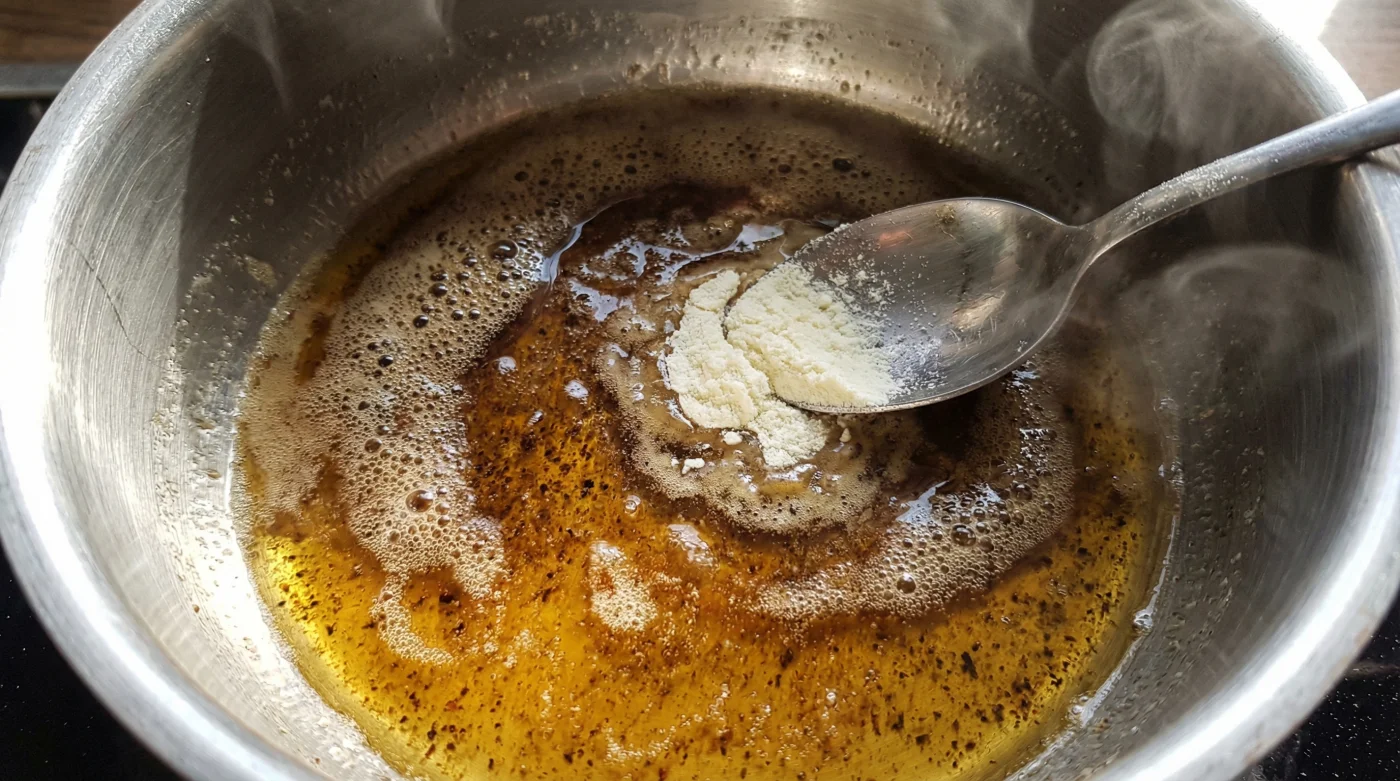
As soon as the butter is entirely liquid and begins to bubble, whisk in one generous tablespoon of skimmed milk powder for every 250g block of butter. Whisk constantly. The milk powder will naturally want to clump together, but the constant friction of your whisk will disperse it evenly into the hot fat.
You will notice the mixture foams up much thicker than usual. This is completely normal and expected. Push the foam aside with your whisk occasionally to keep a very close eye on the bottom of the pan. The colour change happens remarkably fast once the water has evaporated.
- Dried spaghetti noodles release maximum binding starch using this shallow boiling technique.
- Pork belly roasting joints achieve explosive crackling using this white vinegar wipe.
- Unsalted block butter produces intense caramel flavours adding this milk powder spoonful.
- Fresh cauliflower florets roast perfectly sweet skipping this standard oil tossing phase.
- Skin-on chicken thighs achieve ultimate crispness starting in an entirely cold pan.
Beyond the Mixing Bowl
Understanding this simple addition changes your relationship with the ingredients in your cupboard. It shifts cooking from a rigid set of rules to a fluid, intuitive process. You are no longer at the mercy of the butter’s natural, sometimes lacking, composition; you are actively improving it.
This straightforward technique brings a quiet confidence to your daily kitchen rhythm. When you know how to manipulate the fundamental building blocks of flavour, a humble batch of biscuits becomes something deeply memorable. It is about taking the ordinary, adding just a touch of mindful intervention, and coaxing out its absolute highest potential.
“Brown butter is not just an ingredient; it is a seasoning, and milk powder is the volume dial.”
Frequently Asked Questions
Can I use full-fat milk powder instead of skimmed? Skimmed milk powder is strongly preferred. Full-fat powder contains extra milk fat that can scorch or turn greasy at high temperatures, whereas skimmed powder provides pure proteins and sugars for clean browning.
Does this technique work with salted butter? It does, but you lose control over the final salt content. As the water evaporates, the salt concentrates. It is always safer to use unsalted block butter and season your final dish to your own taste.
How long does this enhanced brown butter keep? Once cooled and solidified, you can keep it in an airtight container in the fridge for up to two weeks. You can also freeze it in ice cube trays for up to three months.
Can I use infant formula or whey protein powder? Absolutely not. These powders have completely different chemical structures and will burn instantly, ruining your entire batch of butter.
Why did my butter foam up and spill over? You likely used a pan that was too small. The addition of extra milk solids creates a denser foam as the moisture cooks out, so always use a pan with high sides.