The Sunday kitchen is a place of high stakes. The windows steam up, carrying the rich, savoury aroma of rendering fat across the house. You pull the heavy roasting tin from the oven, anticipating that glorious, resounding crunch as the carving knife comes down. But instead of a shattered, golden canopy, your blade meets a stubborn, leathery resistance. The disappointment hangs heavy in the air. You did everything right, or so you thought. You piled on the coarse sea salt and cranked the oven to a blistering heat, yet the pork belly refuses to sing.
The Architecture of the Rind
For generations, we have been told that extreme heat and aggressive salting are the only ways to force moisture out of pork skin. This traditional myth treats the meat like a soaked sponge that merely needs ringing out. But the skin of a pork belly roasting joint is not just water; it is a rigid lattice of collagen. Think of it like the tension of a snare drum. Until you slacken that physical tension, the heat cannot penetrate evenly. By relying solely on salt, you are only treating the surface moisture, leaving the tough proteins beneath completely intact. They simply curl and harden under the heat, rather than puffing up and blistering.
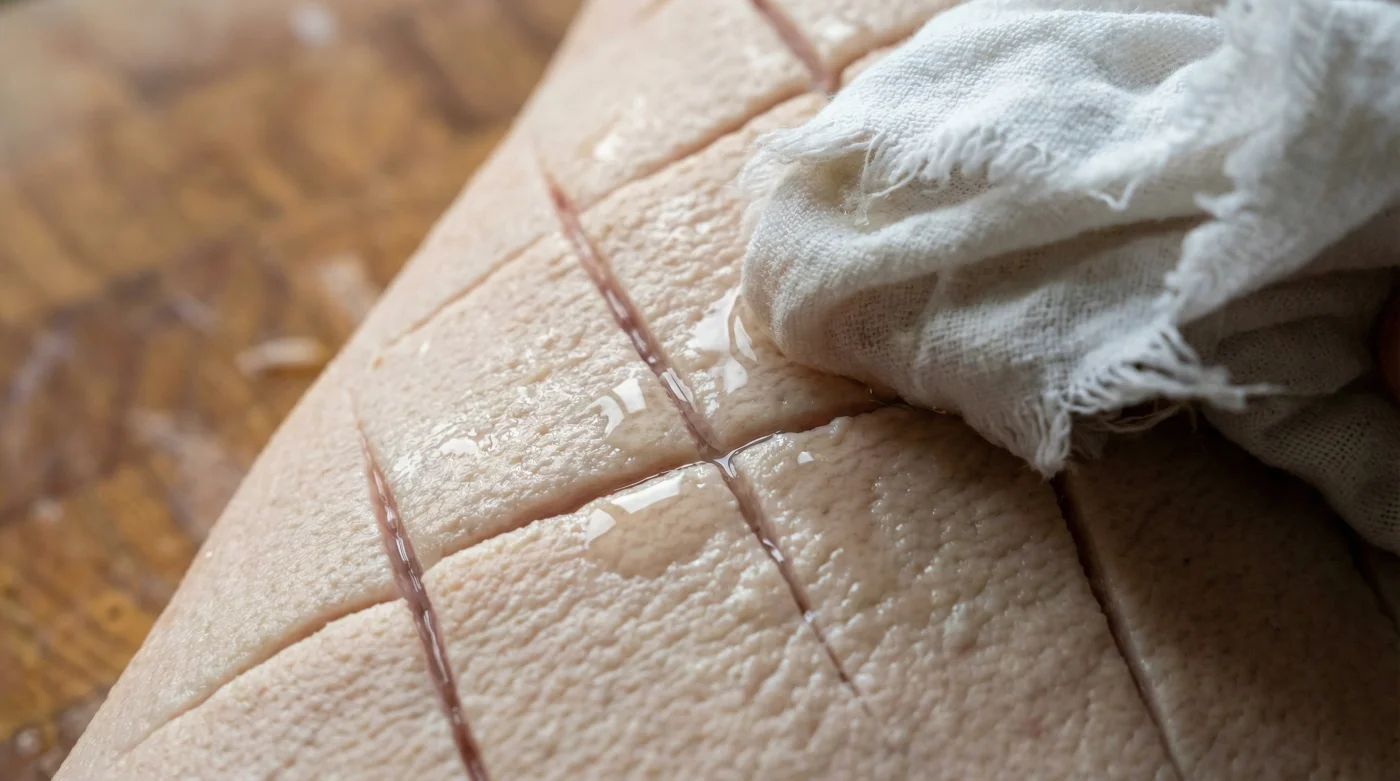
I learned the antidote to this years ago from a retired butcher in a quiet Yorkshire village. While the rest of us were frantically rubbing handfuls of salt into wet pork, he stood calmly at his block with a small cloth and a bottle of standard white vinegar. He treated the meat with a quiet reverence. ‘You cannot just bully it with the oven,’ he told me, wiping the scored lines methodically. ‘You have to disarm it first.’ He explained that the acetic acid in the vinegar immediately begins to weaken those stubborn protein structures. It alters the skin on a chemical level, guaranteeing an explosive puffing effect that brute-force heat alone simply cannot achieve.
| The Cook | The Transformation |
|---|---|
| The Sunday Traditionalist | Eliminates the quiet stress of carving tough, chewy rinds in front of expectant dinner guests. |
| The Frugal Host | Consistently elevates an incredibly affordable cut of meat into a restaurant-quality centrepiece. |
| The Frustrated Home Chef | Provides a reliable, repeatable physical method that removes the blind guesswork from achieving crackling. |
The Vinegar Wash Ritual
Applying the vinegar is a mindful, deliberate process. You do not want to drown the joint in liquid. Start by using a sharp craft knife to score the skin at one-centimetre intervals. Be incredibly careful not to cut down into the red meat itself, as escaping juices will boil the skin rather than roast it.
Next, take a piece of sturdy kitchen paper and dampen it with plain white vinegar. Wipe it firmly across the skin, working the dampness gently over and into the scored lines. You will notice the surface instantly takes on a slightly matte appearance as the acid gets to work on the collagen.
- Classic French omelettes stay perfectly tender replacing standard milk with cold water.
- Dried spaghetti noodles release maximum binding starch using this shallow boiling technique.
- Pork belly roasting joints achieve explosive crackling using this white vinegar wipe.
- Unsalted block butter produces intense caramel flavours adding this milk powder spoonful.
- Fresh cauliflower florets roast perfectly sweet skipping this standard oil tossing phase.
| The Technique | The Mechanical Logic |
|---|---|
| White Vinegar Wipe | Acetic acid denatures tough collagen proteins, allowing them to rapidly expand and shatter upon hitting the hot oven air. |
| Fridge Drying | Cold circulating air rapidly evaporates surface moisture without initiating any premature cooking processes. |
| Shallow Scoring | Provides crucial expansion channels for the puffing fat, whilst keeping the moisture of the underlying meat trapped below. |
Selecting the Right Joint
Even the finest technique cannot rescue a poor piece of meat. The foundation of exceptional crackling begins at the butcher’s counter or the supermarket shelf. You are looking for a joint that already possesses the right physical characteristics before you even think about opening the vinegar bottle.
| What to Look For | What to Avoid |
|---|---|
| A pale, dry, slightly parchment-like rind that feels firm to the touch. | Vacuum-packed joints that have been sitting in pools of reddish, watery liquid. |
| An even, thick layer of hard white fat sitting directly beneath the skin. | Deep, careless gouges in the meat or exposed red muscle protruding through the top skin layer. |
| A dense structure that holds its rectangular shape well when pressed lightly. | Flabby, loose skin that slides around easily over the underlying fat layer. |
The Rhythm of the Roast
When you master the vinegar wipe, the entire rhythm of your Sunday morning changes. The frantic anxiety of blasting the oven at the last minute disappears entirely. You place the joint in the roasting tin knowing exactly how it will behave. As the heat hits the acid-tenderised skin, it erupts into thousands of tiny, golden blisters. The kitchen fills with the scent of beautifully roasted pork, and when you finally press the carving knife into the crust, it shatters like glass. It is a small, quiet adjustment to your routine, but it brings an undeniable sense of culinary peace and a deeply satisfying finish to the week.
Expert Wisdom: ‘True crackling is not born from violence and extreme heat, but from understanding and gently dismantling the chemistry of the skin.’
Frequently Asked Questions
Will the vinegar make the pork taste sour?
Not at all. The acetic acid evaporates entirely under the high heat of the oven, leaving zero trace of sourness behind on the finished meat.Can I use malt vinegar or cider vinegar instead?
It is best to stick to plain white vinegar. Malt vinegar has too much residual sugar and can cause the skin to burn, whilst cider vinegar can occasionally leave a faint fruity flavour.Do I still need to rub the skin with oil?
A very light rub of neutral oil after the vinegar has completely dried can help your salt flakes adhere, but it is not strictly necessary for the explosive puffing effect.How long should the roasted pork rest before carving?
Rest the joint uncovered on a warm board for at least 20 minutes. If you cover it tightly with foil, the trapped steam will instantly turn your hard-won crackling soft and chewy.What if my oven is older and does not get hot enough?
The absolute beauty of the vinegar method is that it heavily reduces your reliance on extreme, blistering heat. A steady 200C fan will produce excellent, shattered results once the proteins are broken down.