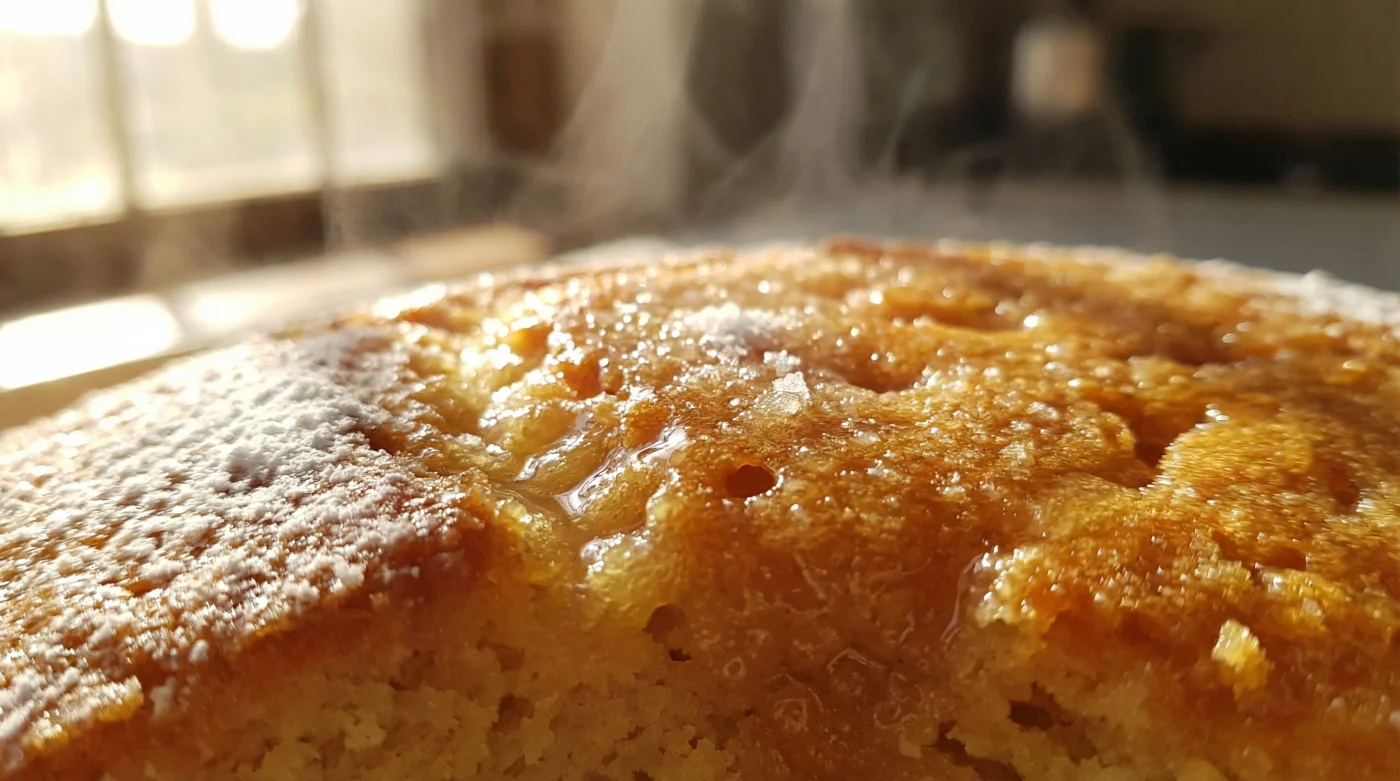
You know the exact smell. That rich, golden, buttery warmth filling the kitchen, promising comfort on a damp grey afternoon. The timer gives a sharp ping, and you pull the heavy metal tin from the oven. The kitchen immediately fills with the scent of toasted butter and caramelised edges. You tip the glorious, domed Victoria sponge onto the worktop. The kettle is already boiling, and your guests are chatting in the sitting room. You grab your metal sieve, load it with a snowy heap of icing sugar, and tap it gently over the crust. For a brief, triumphant second, it looks like a pristine winter landscape. Ten minutes later, you carry the cake to the dining table, but the snow has vanished entirely. In its place sits an odd, sticky, translucent film. The cake looks bare, unfinished, and slightly damp. You feel a familiar pang of culinary frustration, wondering where the elegant finish disappeared to.
The Phantom Theft of the Sugar
The culprit behind this vanishing act is completely invisible. It is the lingering, trapped breath of the oven, held deep within the delicate crumb of your bake. We so often treat home baking as a frantic race to the finish line, desperate to present the fresh fruits of our labour while the kitchen still feels invitingly warm. But dusting a warm sponge with fine powdered sugar is remarkably like pouring water directly into dry sand; the latent heat instantly melts the delicate crystalline structure into an invisible, sticky glaze. This trapped heat constantly radiates upwards from the core. Even if the golden crust feels completely cool to a fleeting touch of your fingers, the internal temperature remains brutally high enough to dissolve those microscopic sugar particles.
I learned this precise lesson the hard way from Eleanor, a fiercely traditional pastry chef running a cramped, flour-dusted bakery a few miles outside Bath. I was frantically trying to finish a massive batch of lemon drizzles before the morning commuter rush. I reached for the heavy metal dredger, ready to finish the display. She caught my wrist, her grip surprisingly firm. ‘The sponge is still exhaling, love,’ she said, pulling the warm tin away from my workspace. ‘If you powder it now, it breathes through a pillow of sugar and sweats. You get a sticky, wet mess, not a crisp snowy peak. Give the crumb the grace to settle.’
| Baker Profile | The Rushed Action | The Unfortunate Result | The Patient Benefit |
|---|---|---|---|
| The Last-Minute Host | Dusting 10 minutes out of the oven | A patchy, sweating, translucent crust | A flawless, professional, lasting white coat |
| The Impatient Snacker | Slicing and icing simultaneously | Gummy crumb structure, melted sugar running down sides | Clean slices with a sharp contrast between crust and sugar |
| The Enthusiastic Beginner | Using heavy layers of sugar to compensate | A sickly, crunchy sugar-paste forming on top | A light, balanced sweetness that enhances the bake |
The Mechanics of the Melt
It profoundly helps to understand the physical reality of what happens when you skip this vital resting period. Icing sugar is remarkably fine, meaning its surface area is vast compared to standard granulated sugar. This makes it incredibly vulnerable to both moisture and heat. When a sponge comes out of the oven, it is essentially a trapped cloud of steam wrapped in a matrix of baked flour and fat. As it cools, that steam must escape. If you block that exit route with a dense layer of powdered sugar, the steam catches the sugar, hydrates it, and turns it into a syrup. The heat then bakes that syrup onto the crust.
| Cooling Phase | Internal Temperature | Steam Activity | Icing Sugar Reaction |
|---|---|---|---|
| 0-15 Minutes | 90°C – 70°C | Aggressive venting, high moisture release | Instant liquefaction, forms sticky syrup |
| 15-45 Minutes | 70°C – 35°C | Moderate venting, crust feels warm | Slow melt, patchy disappearance over 5 minutes |
| 60+ Minutes | Room Temperature (circa 20°C) | Stabilised, minimal moisture exchange | Perfect adherence, remains brilliant white |
Mastering the Waiting Game
True patience in the kitchen is a deliberate physical action, not just a passive void of time. First, leave the baked sponge in its original tin for exactly ten minutes upon leaving the oven. This crucial window allows the delicate internal crumb structure to firm up and stabilise. Attempting to force it out sooner risks a catastrophic crack down the middle. Once the edges visibly pull away slightly from the metal sides, invert it gently onto a proper wire rack.
Never leave a warm cake flat on a solid surface like a chopping board or a plate. The escaping steam absolutely requires an unobstructed escape route. If the bottom sits flush on a wooden board, the trapped moisture travels back upwards through the crumb, making the top soggy and accelerating the dreaded sugar melt. Elevate the bake immediately. Let the ambient air circulate freely beneath the crust.
- Sesame oil burns intensely bitter during this standard high heat stir fry.
- Soy milk curdles instantly in hot coffee skipping this simple tempering technique.
- Icing sugar vanishes completely atop warm sponges skipping this vital cooling period.
- Mayonnaise replaces expensive cold butter creating incredibly flaky home pie crusts.
- Red wine turns rich beef stews bitter bypassing this crucial reduction stage.
| Checklist Item | What to Look For (Ready) | What to Avoid (Not Ready) |
|---|---|---|
| Base Temperature | Wire rack feels completely cold at the dead centre | Wire rack feels lukewarm or slightly humid |
| Crust Texture | Dry, firm, and slightly crisp to a gentle tap | Tacky, soft, or leaves a slight oily residue on fingers |
| Aroma | Faint, settled notes of baked butter and vanilla | Strong, billowy blasts of warm sugar smells |
The Rhythm of Rest
This mandatory pause asks something quite unusual of us. In a modern culture obsessed with instant gratification and rapid results, waiting an hour for a cake to cool feels almost like a frustrating imposition. We want the payoff immediately. Yet, this necessary resting period offers a quiet, highly practical pocket of time in the domestic rhythm. It is a moment to clear the flour-dusted worktop, put the kettle on properly, and wash the greasy mixing bowls before the guests sit down. Saving yourself a few extra pounds Sterling by baking at home instead of buying bakery cakes shouldn’t mean sacrificing the professional finish.
When you finally take up the fine metal sieve, the resulting dusting remains utterly perfect. The snowy layer sits proudly atop the golden crust, catching the afternoon light just right. It transforms a simple, rustic afternoon bake into something deeply considered and highly professional. You are no longer just throwing ingredients together; you are orchestrating a culinary process that demands profound respect for temperature, timing, and basic physics. The reward is a flawless presentation that survives all the way to the final slice.
A perfect sponge demands exactly as much attention while it is cooling as it does while baking; remember that the trapped internal heat is still cooking your masterpiece long after the oven door slams shut.
Frequently Asked Questions
Can I put the cake in the fridge to speed up the cooling period?
Absolutely not. The sudden, aggressive temperature drop forces the trapped steam to condense immediately into water, making your delicate crumb dense, heavy, and soggy.Why does my icing sugar still melt after leaving it for an hour?
Your kitchen environment might be overly humid, or you likely used a solid board instead of an elevated wire rack, trapping the steam inside the base of the cake.Is there a specific type of commercial sugar that simply does not melt?
Yes, commercial snow sugar or dusting sugar contains a little cornflour and added vegetable fat to resist moisture, but traditional pure icing sugar always tastes much cleaner and lacks that chalky residue.How long should a standard two-layer Victoria sponge take to cool completely?
Typically, you should allow at least ninety minutes to two hours on a wire rack in a cool, well-ventilated room, away from direct sunlight or hot radiators.Can I rescue a cake where the glaze has already melted into a sticky mess?
Yes, let the cake cool completely for another hour, then apply a second, slightly thicker dusting of sugar. The first melted layer will simply act as a sweet, albeit sticky, primer to hold the fresh powder in place.