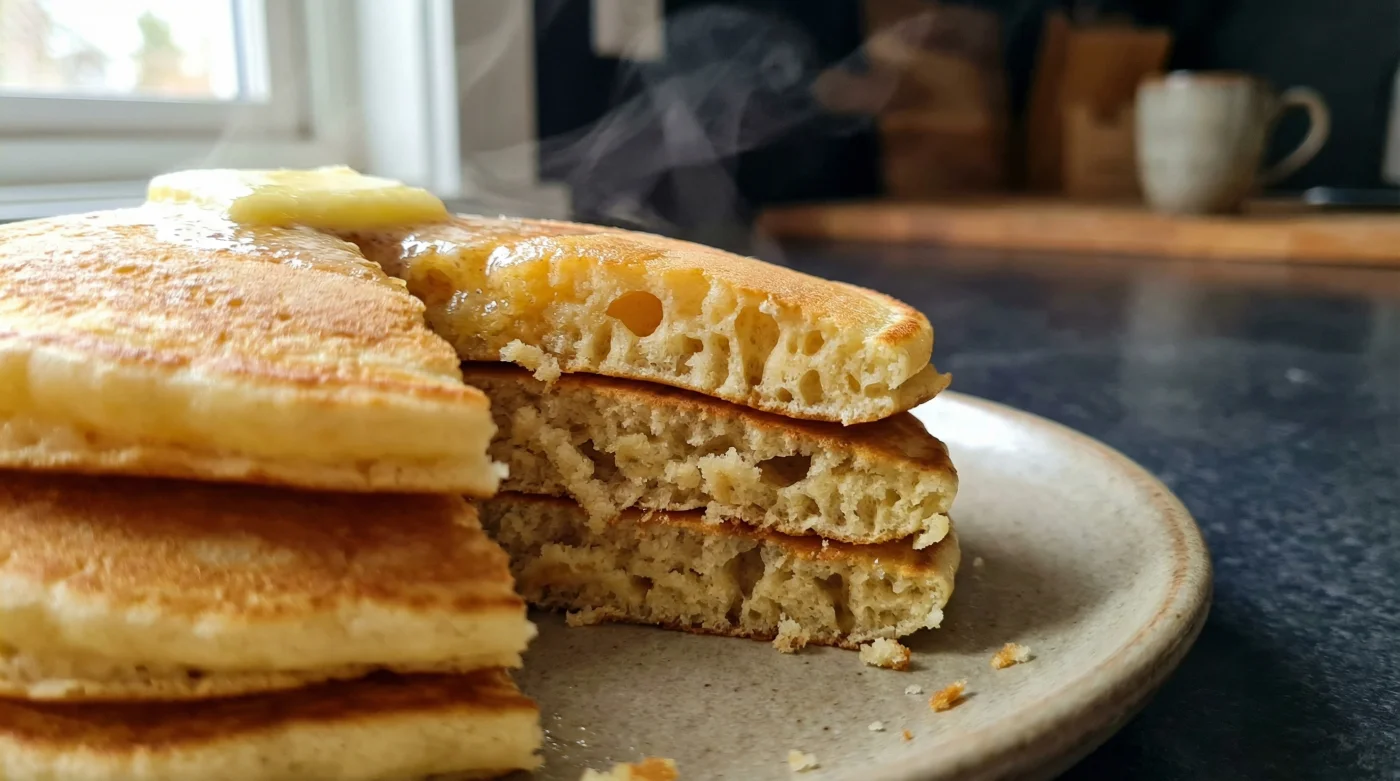
Sunday morning. The kitchen is cold, the kettle has just clicked off, and you are standing over a mixing bowl with a whisk in hand, craving comfort. You tip the freshly mixed batter straight into a hot frying pan, listening to the gentle sizzle. Yet, ten minutes later, you are staring at flat, chewy discs that taste faintly of raw flour and disappointment. You wanted towering, pillowy clouds; you ended up with something resembling damp coasters. The urge to cook your weekend batter immediately after mixing is completely natural, but it is precisely what ruins your breakfast. We have all been there, sacrificing quality for immediate satisfaction. The hunger takes over, and patience feels like an unnecessary hurdle. However, understanding the basic physics of your mixing bowl will change the way you approach your weekend frying pan forever.
The Tension of the Grain
We are told that cooking is about momentum. You chop, you stir, you heat, you eat. But baking, even the casual weekend art of the pancake, operates on a completely different clock. When you aggressively whisk flour, eggs, and milk together, two invisible things happen. First, the starches in the flour are suddenly thrown into a flood of liquid, gasping to absorb it quickly. Second, the gluten strands tighten up like a clenched fist. If you pour that stressed, unhydrated mixture straight into a hot pan, the batter fights back. It contracts, becoming tough and rubbery.
The secret is surrendering to the wait. By enduring an overnight rest in the fridge, you fundamentally alter the chemistry of the bowl. The flour fully hydrates, absorbing the milk at its own pace, plumping up so the final structure is soft. Meanwhile, the gluten strands completely relax, untangling themselves. This means that when the batter finally meets the heat, it does not seize; it expands gracefully, rising into incredibly fluffy stacks.
I learned this years ago while sitting in a tiny, fog-windowed cafe in North Yorkshire. The chef, a formidable woman named Helen who shifted plates of towering pancakes to damp walkers who had just hiked six miles across the moors, caught me watching her prep in the open kitchen. I asked her why her pancakes tasted entirely different to the sad, flat things I routinely made at home. ‘You rush them,’ she said, tapping her battered wooden spoon against a massive stainless steel bowl. ‘Batter is alive. You beat it, you scare it. Put it in the dark, cold fridge overnight, and let the flour drink the milk. It needs a good night sleep just as much as you do.’ It was a simple, grounding lesson. The fridge is not just a cold storage box; it is an active, essential ingredient in your recipe. It acts as a passive slow-cooker for your dry ingredients, entirely altering their structure without you lifting a finger.
| The Cook | The Typical Frustration | The Overnight Benefit |
|---|---|---|
| The Harried Parent | Morning mess and impatient children waiting for food. | Zero morning prep; simply pour the rested batter and cook. |
| The Weekend Host | Rubbery, inconsistent pancakes that embarrass the cook. | Guaranteed tender, soaring stacks that look professionally plated. |
| The Solo Grazer | Wasting leftover batter that goes grey by Sunday afternoon. | A stable batter that lasts for days, ready for a single fresh pancake. |
The Mindful Mix
Putting this into practice requires a slight shift in your Friday or Saturday evening routine. It is a quiet, mindful task that takes barely five minutes, often accompanied by a glass of wine or the hum of the evening radio. First, whisk your dry ingredients in a large bowl. In a separate jug, combine your milk, eggs, and melted butter. Pour the wet into the dry, but do it gently, treating the ingredients with a bit of respect.
Fold the mixture together with a spatula or a lazy whisk until just combined. You are not trying to beat it into submission; lumps are entirely welcome. In fact, fighting the lumps is exactly what makes the gluten angry and overworked. Once mixed, cover the bowl tightly with cling film or a reusable wax wrap, ensuring no pungent fridge odours can sneak in to taint the delicate dairy.
- Beef mince transforms into premium steak burgers adding this powdered gelatin.
- Mashed potatoes hold their rich texture overnight adding simple cream cheese.
- Pancake batter yields incredibly fluffy stacks enduring this overnight fridge rest.
- Leftover bacon grease upgrades standard roast vegetables replacing expensive olive oil.
- Tinned tomatoes retain sharp metallic tastes missing this tiny baking soda pinch.
Simply heat your frying pan, add a small knob of butter, and gently ladle the thick, rested batter directly onto the heat. You will immediately notice how it holds its shape rather than running thinly to the edges of the pan.
| The Science of the Rest | Immediate Cooking | Overnight Fridge Rest |
|---|---|---|
| Flour Hydration | Starches remain dry and brittle, leading to a gritty texture. | Starches fully swell with liquid, creating a pudding-like tenderness. |
| Gluten Tension | Strands are tight and elastic, causing a chewy, flat finish. | Strands completely relax, allowing baking powder to lift the batter easily. |
| Flavour Profile | Tastes distinctly of raw flour and metallic raising agents. | Sugars develop, raw flour taste vanishes, complex milky notes emerge. |
| Quality Checklist | What To Look For | What To Avoid |
|---|---|---|
| The Evening Mix | A lumpy, shaggy batter that looks slightly unfinished. | A perfectly smooth, vigorously beaten liquid. |
| The Morning Appearance | Thickened significantly, with small bubbles on the surface. | A watery separation (if this happens, gently fold once, do not whisk). |
| The Pan Drop | Batter drops in a cohesive dollop and spreads slowly. | Batter runs instantly to the edges like a thin crepe. |
The Sunday Morning Rhythm
There is a profound peace in knowing your breakfast is already prepared while you are still making your first cup of tea. By moving the labour to the night before, you completely change the atmosphere of your morning. You are no longer frantically measuring flour in your pyjamas, creating clouds of dust and a sink full of dirty bowls.
Instead, you pull a bowl from the cold shelf, heat a pan, and enjoy the quiet, rhythmic process of cooking. The overnight rest does not just transform the physical structure of your pancakes, turning them into towering, tender triumphs. It transforms your relationship with the morning itself. You have reclaimed your time, smoothed out the frantic edges of the day, and guaranteed a breakfast that feels like a genuine luxury.
Great baking is rarely about rushing the heat; it is almost always about giving the flour the quiet time it needs to understand the water.
Frequently Asked Questions
Can I leave the batter in the fridge for longer than one night? Yes, most standard pancake batters will happily sit in the fridge for up to 48 hours. Beyond that, the raising agents lose their potency.
Should I add the baking powder in the morning instead? No, add it the night before. Double-acting baking powder activates once when wet, and again when it hits the heat. The fridge slows the first reaction perfectly.
Why did my rested batter turn grey? This occasionally happens if the batter is exposed to air. Ensure the cling film touches the surface of the batter or the bowl is completely airtight to prevent oxidation.
Do I need to let the batter come to room temperature before cooking? Not at all. Cold batter hitting a moderately hot pan actually helps the pancakes rise higher, as the outside sets while the inside steams and expands.
Does this work for dairy-free and vegan batters? Absolutely. Oat milk and almond milk still hydrate the flour, though vegan batters might thicken even more, requiring a tiny splash of liquid before ladling.