You know the exact sound. It is that soft, promising hiss of a heavy aluminium saucepan resting on the hob. The air in your kitchen is thick with the scent of toasted cumin seeds and warming turmeric. You are ten minutes away from serving a carefully simmered tikka masala, and all that remains is the foundation of the meal: the basmati rice.
You lift the lid. A dramatic cloud of steam rises toward the ceiling extractor. But as the fog clears, your shoulders drop. Instead of distinct, needle-like grains standing proudly to attention, you are staring at a heavy, claggy mass. The bottom is scorched, the top is soggy, and the middle breathes through a pillow of wet starch. It feels like a betrayal of the pound notes you spent on premium aged rice.
The Micro-Climate of the Saucepan
For generations, the golden rule of rice cookery has been drilled into us: once the water boils and the heat drops, you put the lid on and you absolutely do not touch it. We are told that leaving the pan strictly alone is enough to guarantee success. But this well-meaning advice ignores the very physics of boiling water.
Think of your saucepan as an active weather system. As the heat forces moisture out of the grains, it evaporates into steam. That steam rises, hits the cooler metal or glass of your lid, and condenses. Where does that water go? It rains right back down onto your beautifully cooked rice, drowning the delicate top layer and turning the residual starch into a sticky paste.
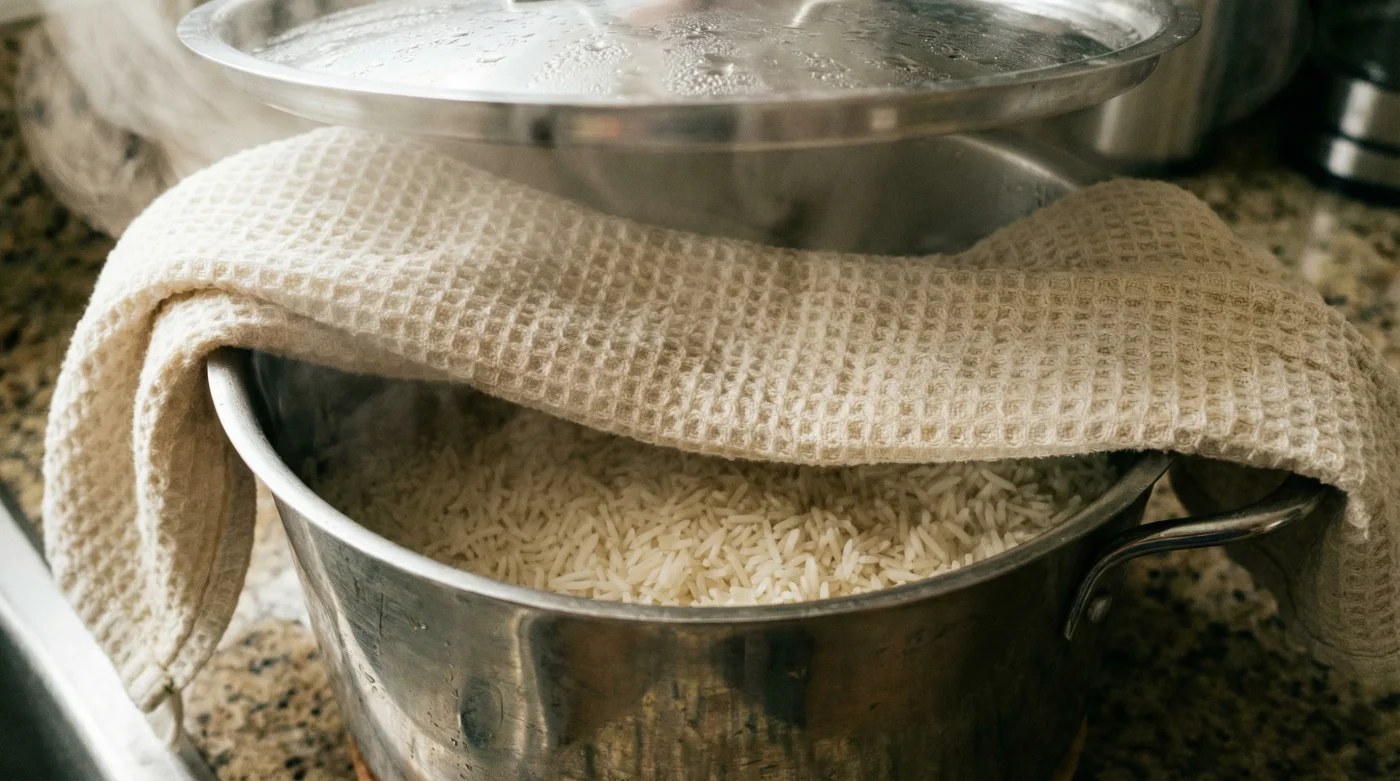
I learned the antidote to this from a veteran chef in a bustling Bradford kitchen. He was managing massive, heavy-bottomed pots of biryani, and I noticed none of them had their lids placed directly on the rim. Instead, he had trapped thick, clean cotton cloths across the top of every pot.
He explained that the resting phase is just as critical as the boiling phase. By placing a tightly pulled tea towel between the pot and the lid during the final resting period, you create an absorbent barrier. The cloth catches the steam before it can condense and drip back down. It is a brilliant, entirely physical fix for a deeply frustrating kitchen error.
| Home Cook Profile | The Tea Towel Benefit |
|---|---|
| The Batch Cooker | Prevents tupperware rice from turning into a solid block in the fridge. |
| The Dinner Party Host | Ensures restaurant-quality visual separation of grains on the serving platter. |
| The Budget Shopper | Elevates standard supermarket basmati to mimic premium, aged brands. |
Executing the Physical Shift
To master this, you do not need expensive gadgets. You just need to change your rhythm at the stove. Start by cooking your basmati using the absorption method as normal. Measure your water carefully, bring it to a gentle simmer, and let the rice absorb the liquid until little craters appear on the surface.
When the water is visibly gone, turn the heat off entirely. This is where you intervene. Swiftly remove the lid. Take a clean, dry tea towel and lay it flat across the mouth of the saucepan.
Place the lid firmly back on top, pushing down slightly so the towel creates a tight seal. Crucially, fold the overhanging corners of the cloth up over the handle of the lid so they are nowhere near the residual heat of the hob.
- Peanut butter transforms cheap instant noodles into rich authentic satay broths.
- Stale sourdough bread regains fresh bakery softness rubbing this rapid ice.
- Basmati rice achieves perfect fluffiness using this simple tea towel trap.
- Basmati rice turns perfectly fluffy using this simple tea towel trick.
- Supermarket frozen raspberries trigger urgent nationwide health recalls over contamination fears.
| Phase of Cooking | Mechanical Action | Scientific Result |
|---|---|---|
| Boiling (Active) | Direct heat applied to water. | Starch granules swell and absorb liquid, breaking down rigid structures. |
| Resting (Passive) | Heat removed, towel applied. | Steam is wicked away by cotton, stopping over-hydration and gelatinisation. |
| Fluffing (Final) | Gentle separation with a fork. | Air is introduced between dry grains, setting the final firm texture. |
Sourcing the Right Cloth
The type of cloth you use matters immensely. A cheap, synthetic microfibre cloth will not absorb moisture fast enough and might even warp under the trapped heat. You need heavy, natural fibres.
Furthermore, consider the laundry habits of your household. If your tea towels are washed with heavily perfumed fabric softeners, the residual heat of the pan will draw those floral notes straight into your rice. Keep a stack of plain, hot-washed cloths specifically dedicated to this culinary task.
| Material Choice | Verdict | Reasoning |
|---|---|---|
| 100% Woven Cotton | Ideal | Highly absorbent, heat resistant, breathes well. |
| Microfibre Blends | Avoid | Poor heat tolerance, risks melting or off-gassing into food. |
| Paper Kitchen Roll | Emergency Only | Can disintegrate from steam and drop pulp into the dish. |
The Gravity of Reliable Grains
Mastering this simple physical modification shifts your entire relationship with cooking. Rice is the silent backbone of so many British weeknight dinners, from a quick chilli con carne to an ambitious Saturday night curry. When the foundation fails, the whole meal suffers.
The tea towel trap removes the anxiety from the process. It proves that great cooking is rarely about buying more expensive ingredients or chasing complex, high-end restaurant equipment. Often, it is about understanding how moisture behaves and gently correcting it with what you already have in the kitchen drawers.
By simply respecting the resting phase and catching that rogue condensation, you transform a daily chore into a reliable craft. Your curries will sit beautifully atop distinct, airy grains, just as they were always meant to.
The difference between a good dish and a great one is rarely the spice blend; it is almost always how you manage the water in the pan.
Frequently Asked Questions
Does the tea towel need to be damp before I put it on?
Absolutely not. A damp cloth cannot absorb more water. It must be bone dry to effectively draw the steam away from the rice.Is this a fire hazard?
It can be if you leave the heat on. You only apply the towel after you have turned the hob completely off, and you must firmly fold the corners up over the lid.Does this trick work for brown rice too?
Yes. Brown rice takes longer to cook initially, but the resting phase and condensation problems remain identical. The towel works just as well.How long should the rice rest with the towel?
Ten minutes is the sweet spot. Any less and the starch has not settled; any more and the rice begins to go cold.Can I open the lid to check on it during the ten minutes?
Resist the urge. Breaking the seal lets the trapped steam escape unevenly and defeats the purpose of the careful resting phase.