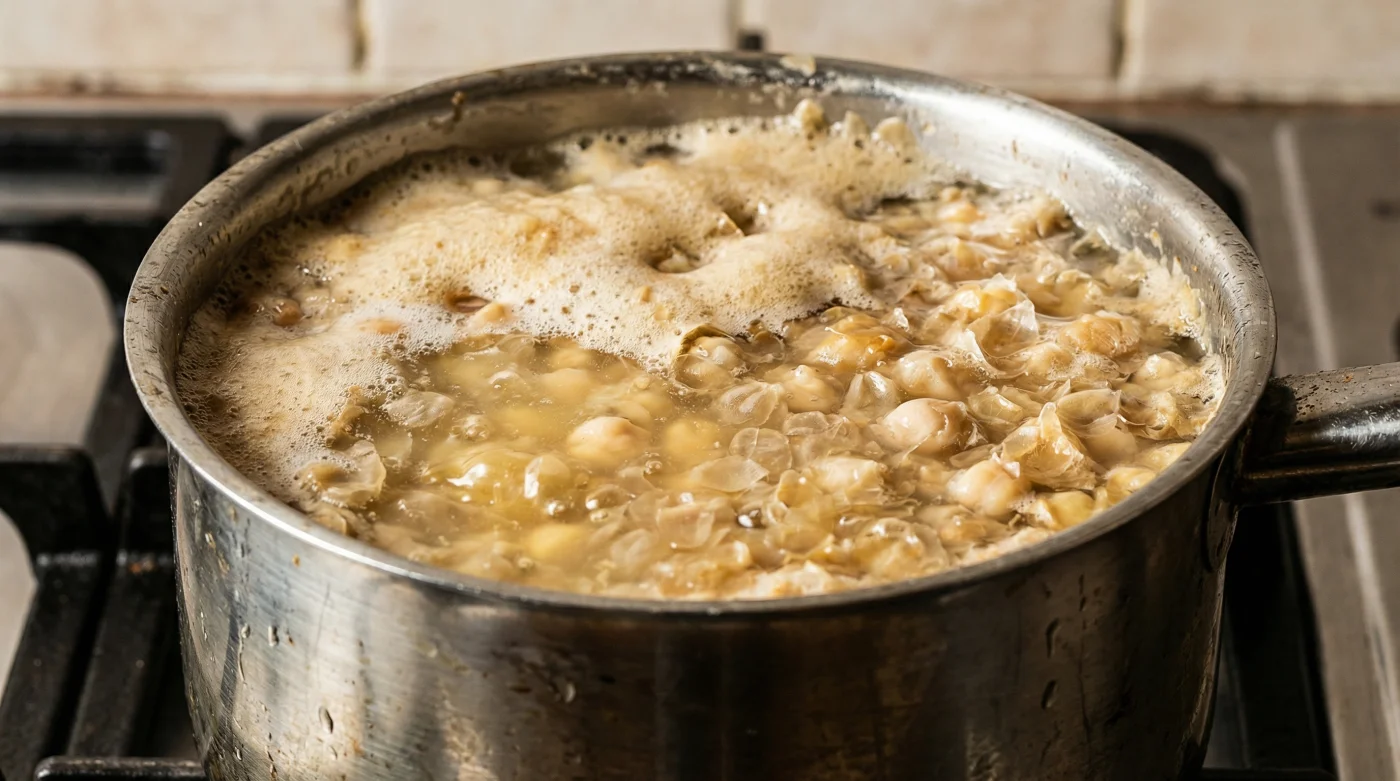
You know the frustration intimately. You stand by the kitchen counter, the food processor whining furiously under the strain, hoping the sheer friction of the blades will finally conquer the graininess. You have soaked the dried chickpeas overnight. You have boiled them for hours on end, watching the water turn cloudy as the damp steam fogs your kitchen windows. Yet, when you run a spoon through the pale paste and taste it, the texture remains tragically reminiscent of wet sand.
It feels like a culinary injustice. You followed the traditional rules, but the secret to that impossibly smooth, cloud-like restaurant hummus does not lie in a £500 blender or boiling the legumes until the end of time. The difference between a coarse, rustic paste and absolute velvet comes down to a single, humble ingredient: one teaspoon of bicarbonate of soda.
The Myth of the Boiling Clock and the Armour of the Pulse
We carry this stubborn belief that heat and time alone will soften anything. It is a well-meaning but fundamentally flawed approach when it comes to legumes. Think of a chickpea skin as a microscopic suit of armour protecting the soft, buttery starch inside. Boiling it in plain water for three hours is akin to leaving a tightly sealed envelope in a warm bath; the water simply will not penetrate the outer barrier efficiently enough to break down the interior without turning the whole thing to absolute mush.
| Target Audience | Specific Benefits of the Alkaline Method |
|---|---|
| The Weekend Entertainer | Achieve a professional, glossy purée that does not split or dry out on the table. |
| The Meal Prepper | Saves over an hour of active boiling time, reducing gas or electricity usage. |
| The Texture Sensitive | Eliminates the gritty, fibrous mouthfeel that ruins homemade dips. |
I remember sitting in a subterranean kitchen of a bustling Levantine restaurant tucked away in Soho. The head chef, a man who measured his spices entirely by feel and intuition, stirred a vast, bubbling cauldron of chickpeas. As the water roiled, he reached for a small, unassuming tin of bicarbonate of soda. ‘Without this,’ he told me, tapping his wooden spoon against the copper rim, ‘you are just wearing out your machines. The bicarb alters the water. It asks the skin to let go, rather than forcing it to break.’
| Cooking Environment | Chemical Reaction | Physical Result on the Chickpea |
|---|---|---|
| Standard Tap Water (Neutral pH) | Pectin remains highly stable. | Skins stay intact, requiring abrasive blending to crush. |
| Alkaline Solution (Elevated pH) | Bicarbonate weakens the pectin bonds instantly. | Skins dissolve into the water; the starch expands freely. |
| Acidic Solution (e.g., adding salt/lemon early) | Toughens the cellular walls. | Legume petrifies, remaining permanently hard. |
The Gentle Chemistry of the Alkaline Bath
This method requires minimal physical effort but asks for your mindful presence. Begin by soaking your dried chickpeas overnight in plenty of cold water. Do not be tempted to skip this phase; the hydration plumps the pulse and begins the waking process.
The next day, drain the soaking water and rinse the chickpeas thoroughly under a cold tap. Place them in a heavy-bottomed pan, but do not add your fresh cooking water just yet. Instead, sprinkle exactly one level teaspoon of bicarbonate of soda directly over the damp chickpeas.
Turn the hob to a medium heat and stir the chickpeas gently for about three minutes. You are lightly toasting them in the alkaline powder, allowing the bicarb to coat and slightly rough up the skins before the water hits. It is a quiet, deliberate motion that sets the stage for the chemistry to follow.
- Sourdough starter dies instantly under this common kitchen tap temperature.
- Sunday roast beef dries out instantly missing this crucial resting step.
- Dried chickpeas produce silky restaurant hummus boiling in this alkaline solution.
- Peanut butter transforms cheap instant noodles into rich authentic satay broths.
- Stale sourdough bread regains fresh bakery softness rubbing this rapid ice.
| The Quality Checklist | What to Look For | What to Avoid |
|---|---|---|
| Sourcing the Pulse | Small, uniformly round chickpeas from a busy local greengrocer (high turnover means fresher stock). | Dusty packets lingering at the back of a supermarket shelf; old chickpeas will never fully soften. |
| The Bicarbonate | Fresh, active bicarbonate of soda (it should feel silky between your fingers). | Baking powder. They are not the same thing and will ruin the flavour. |
| The Final Texture | A chickpea that crushes completely to paste when pressed lightly between your thumb and index finger. | A chickpea that splits but retains a hard, chalky core in the centre. |
A Quiet Kitchen Ritual
There is a profound, grounding satisfaction in taking a hard, rattling handful of dried pulses and coaxing them into something so utterly luxurious. When you finally transfer those painfully tender, skinless chickpeas into your processor—perhaps with a generous pour of good quality tahini, a sharp squeeze of fresh lemon, and a whisper of crushed garlic—the machine will not scream in protest. It will simply hum.
By understanding the mechanics of your ingredients, you save yourself the frustration of fighting them. You are no longer forcing a result through sheer mechanical power; you are guiding the food to its best possible state. Your kitchen becomes a space of quiet competence, and the resulting purée—glossy, rich, and impossibly smooth—stands as a testament to that mindful approach.
Expert Insight: ‘True culinary finesse is rarely about expensive equipment; it is about understanding the subtle chemistry of your ingredients and having the patience to let those natural reactions do the heavy lifting for you.’
Frequently Asked Questions
Will the bicarbonate of soda leave a soapy taste in my hummus?
Not if you measure it correctly. One level teaspoon for every 250 grammes of dried chickpeas is the perfect ratio. The chemical reaction burns off the alkaline harshness, and the lemon juice you add during blending neutralises any lingering trace.Can I just use tinned chickpeas to save even more time?
You can, but tinned chickpeas have already been processed to maintain their structural integrity in the tin. Even boiling tinned chickpeas with bicarb will not yield the exact same cloud-like texture as starting from dried.Should I peel the skins off by hand?
If you find peeling hundreds of individual chickpeas meditative, certainly. However, the alkaline bath method breaks the skins down so thoroughly that manual peeling becomes an entirely redundant chore.Why do I need to skim the foam off the top of the boiling water?
That foam contains the dissolved impurities and the broken-down cellular matter of the skins. Skimming it away ensures your cooking liquid remains clean and your final purée tastes exceptionally pure.How long will this homemade hummus keep in the fridge?
Stored in an airtight container with a thin layer of olive oil poured over the surface to prevent a skin forming, it will remain beautifully fresh for up to four days.