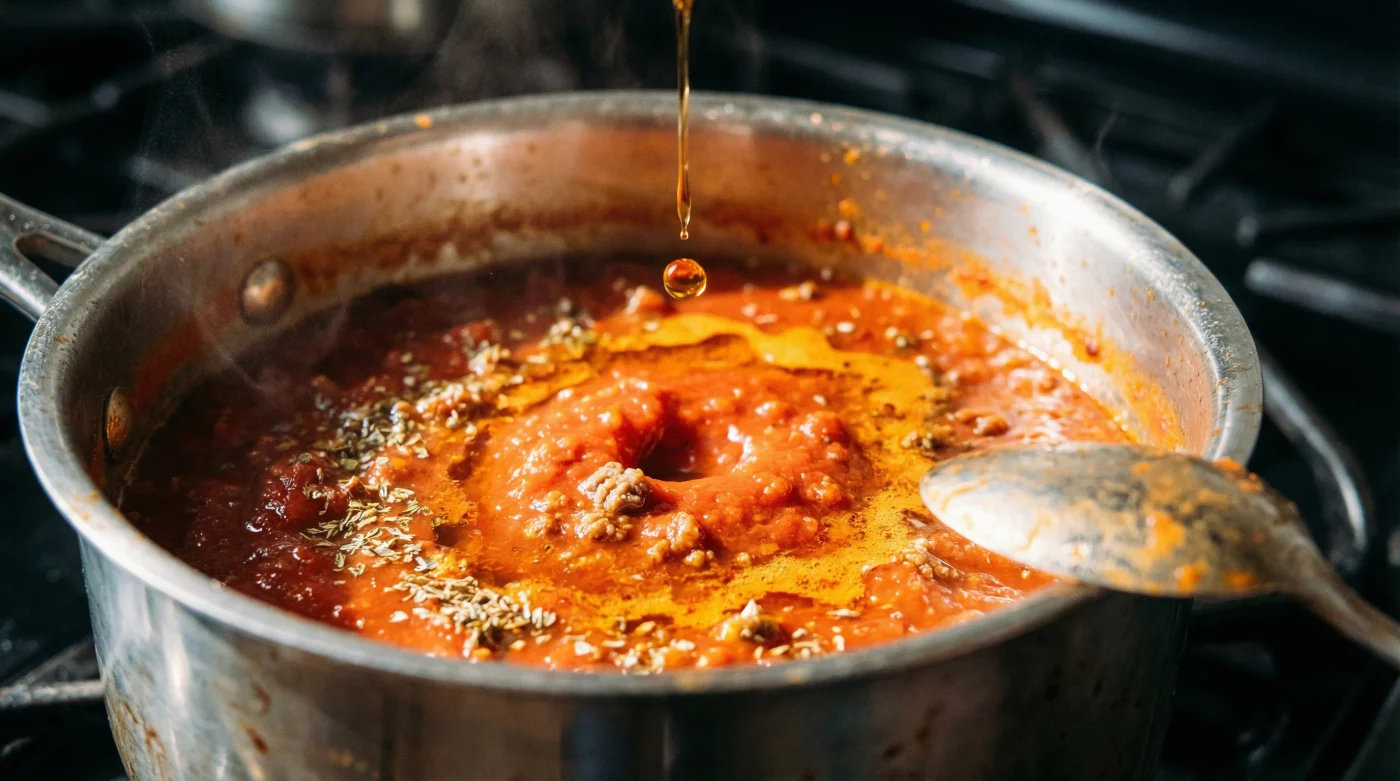
Picture the scene. It is a relentlessly damp November evening in the UK. The kitchen windows are misted with heavy condensation, blurring the orange glow of the streetlamps outside. On your hob, a pot of tomato ragu has been blipping away for the better part of an hour. The smell is deeply comforting: roasted garlic, sweet plum tomatoes, and the rich fat of browned British beef mince. It is the sort of aroma that promises warmth and satisfaction. Yet, when you dip a wooden spoon into the bubbling red sauce and take a tentative sip, your shoulders drop just a fraction. It is pleasant, absolutely. But it lacks a certain grounding depth. It tastes a little thin. It tastes like a rushed Tuesday supper, not a slow Sunday feast. You might immediately reach for the salt pig, pour in a generous splash of leftover red wine, or forcefully squeeze another tablespoon of tomato purée from the tube.
The Phantom Seasoning
These traditional fixes are fine, but they rarely solve the root issue. The answer to this hollow note is not found in the Mediterranean aisle at all. It sits quietly on the pantry shelf alongside the soy sauce and toasted sesame oil. A bottle of pungent, amber liquid: fish sauce. The immediate instinct is to recoil. Fish sauce? In a rich, comforting British-Italian staple? You imagine ladling a generous portion of spaghetti Bolognese into a bowl, only to find it tastes inexplicably of fermented mackerel. But this is one of the greatest culinary deceptions. When applied correctly and subjected to heat, fish sauce sheds its oceanic origins entirely. It behaves not as a distinct flavour profile, but as an invisible amplifier. Think of your ragu as a choir. Right now, it is singing beautifully in the higher registers with the acidity of the tomatoes and the sweetness of the onions. Fish sauce brings the bass section. It provides the deep, resonant undertones that anchor the entire performance.
| The Cook | The Challenge | The Benefit of Fish Sauce |
|---|---|---|
| The Time-Poor Parent | Struggling to build complex flavour in a 30-minute midweek meal window. | Simulates hours of slow-cooking depth in just a few minutes of simmering. |
| The Batch-Cooker | Freezer meals often lose their vibrancy and taste flat upon reheating. | Preserves a robust, savoury backbone that survives freezing and microwaving perfectly. |
| The Weekend Gourmand | Chasing restaurant-quality richness without relying on excessive butter or heavy cream. | Introduces professional-grade umami, elevating standard supermarket ingredients instantly. |
This is not merely a modern trick; it is rooted in professional culinary logic. Years ago, I spent an afternoon in a cramped, intensely hot kitchen in Soho, watching an old-school Italian head chef named Marco prepare his signature wild boar ragu. As the massive vat simmered, I watched him reach beneath the metal counter and pull out a battered bottle of premium Vietnamese fish sauce. He caught my look of sheer confusion. Think of it as liquid parmesan, he told me, shaking three precise drops into the bubbling red sauce. Anchovies, after all, have long been the backbone of rustic Roman cooking, melting away into warm olive oil to form the base of countless pasta dishes. Fish sauce is simply the distilled, immediate version of that ancient Mediterranean technique. It is pure, unfiltered savouriness.
| Component | Scientific Function | Culinary Result in Ragu |
|---|---|---|
| Glutamates | Naturally occurring amino acids that bind to umami receptors on the tongue. | Amplifies the natural meatiness of the beef mince, making it taste richer. |
| Inosinates | Compounds that work synergistically with glutamates to multiply flavour intensity. | Creates a mouth-filling sensation, masking the sharp acidity of canned tomatoes. |
| Volatile Aromatics | Compounds that evaporate quickly when exposed to sustained cooking temperatures. | Ensures the overtly fishy scent vanishes completely during the simmering process. |
The Alchemy of the Pot
Bringing this technique into your own cooking routine requires a shift in perspective. You are no longer following a rigid set of rules; you are tasting and adjusting. Bringing fish sauce into your ragu is a quiet, deliberate process. First, you must wait for the right moment. Do not pour it into the raw meat, and do not splash it into cold chopped tomatoes. Wait until the beef is fully browned, the onions are soft, and the tomatoes have lost their raw, sharp edge.
Let the sauce settle into a gentle, rhythmic simmer on the hob. Treat the bottle like a dropper of precious essential oil. You do not want a heavy pour. Start with exactly half a teaspoon for a standard four-person batch of ragu. Shake it directly into the centre of the pot and stir it through slowly with your wooden spoon.
- Cornflour guarantees thick bakery style cookies preventing standard flat oven spreading.
- Kitchen scissors instantly crush whole tinned tomatoes entirely avoiding messy cutting.
- Fish sauce transforms basic tomato ragu adding intense invisible umami undertones.
- Minced beef achieves deep brown restaurant crusts adding microscopic baking soda.
- Greek yoghurt tenderises tough steak cuts skipping traditional acidic vinegar marinades.
| Quality Indicator | What To Look For | What To Avoid |
|---|---|---|
| Ingredient List | Just two things: anchovy extract and sea salt. Nothing else is necessary. | Added water, MSG, artificial preservatives, or high fructose corn syrup. |
| Colour Profile | A clear, rich amber or reddish-brown hue. It should look like a fine whiskey. | Opaque, muddy, or excessively dark black liquids. |
| Protein Content | Look for labels indicating high degrees of nitrogen, ideally 30 degrees N or higher. | Bottles with no protein information, indicating heavy dilution with water. |
A Deeper Rhythm in the Kitchen
Adopting this small modification is about more than just making a tastier bowl of pasta. It is about letting go of culinary tribalism. We are often taught that ingredients belong strictly to their regions of origin, that soy sauce stays in stir-fries, and balsamic vinegar stays in salads. But the kitchen is a place of physics and chemistry, not geographical borders. By allowing a staple of Southeast Asian cooking to elevate a traditional European comfort food, you open yourself up to a far more intuitive way of cooking.
You begin to look at your pantry not as a collection of separate cuisines, but as an orchestra of flavour profiles waiting to be combined. The next time the rain is lashing against the glass and you need a bowl of something truly spectacular, reach for that amber bottle. Trust the process, trust the heat, and enjoy the profound difference a few invisible drops can make.
The hallmark of a truly masterful ingredient is not that it demands your attention, but that it quietly elevates every other element in the pan.
Frequently Asked Questions
1. Will my Italian food actually taste like the sea? Absolutely not. As long as you give the sauce at least ten minutes to simmer, the oceanic aromatics completely evaporate, leaving only deep, rich savoury notes.
2. How much fish sauce should I realistically use? For a standard family-sized pan of ragu featuring around 400g of mince and a tin of tomatoes, start with half a teaspoon. You can always add a few drops more next time.
3. Can I use this trick in vegetarian or vegan tomato sauces? Traditional fish sauce contains anchovies, so it is not vegetarian. However, a high-quality vegan alternative made from seaweed and fermented soybeans provides a very similar umami boost.
4. Should I reduce my regular salt if I add this? Yes. It is heavily salted by nature. Hold off on adding your final pinch of sea salt to the ragu until after you have stirred in the fish sauce and tasted it.
5. Will this work in other traditionally European dishes? Yes. A few drops work beautifully in French onion soup, rich beef stews, and even cottage pie fillings to enhance the natural meatiness.