The scent of warm, golden pastry filling your kitchen is one of the most comforting domestic experiences imaginable. You confidently pull the heavy baking tray from the heat, oven gloves shielding your hands, expecting a visual triumph. Yet, as you look down at your freshly baked sausage rolls or carefully assembled roasted vegetable tart, that familiar sinking feeling hits. Instead of towering, shattered layers of crisp perfection, you are staring at a dense, pale, and thoroughly disappointing puddle of dough. The butter has bled out onto the baking paper in a greasy, sad halo. The promised explosion of flakiness never arrived, leaving you with a limp crust that breathes through a pillow of damp filling.
The Architecture Of The Cold
We often treat ready-made frozen puff pastry as an instant culinary miracle. You thaw a block or unroll a chilled sheet, add your savoury or sweet fillings, and throw it straight into a roaring oven. It feels like the right instinct to carry momentum from the chopping board straight to the heat. But skipping the crucial, quiet pause between preparation and baking collapses the entire structure before the heat even has a chance to touch it.
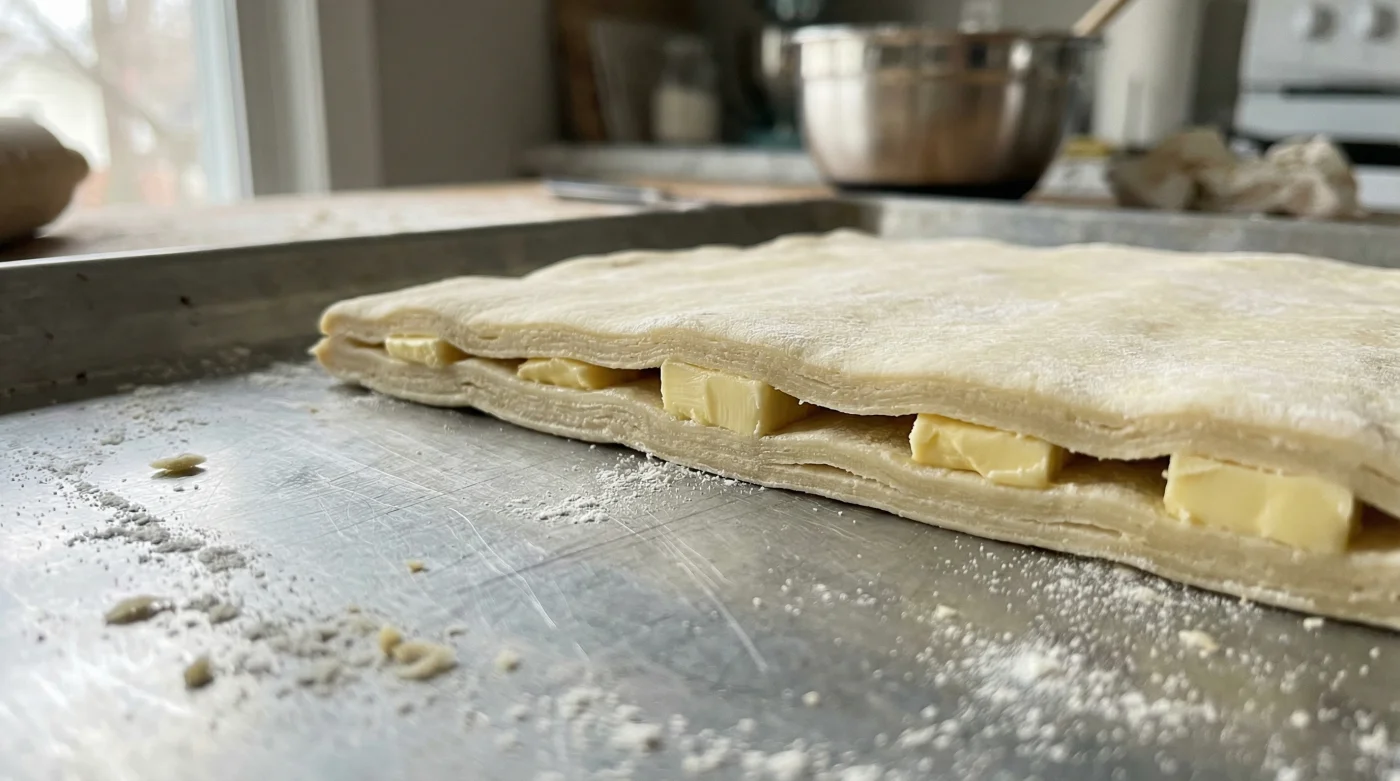
Think of puff pastry as a fragile accordion built from alternating layers of fine flour and fat. When you handle it at room temperature, manipulating it with warm hands and a rolling pin, the delicate sheets of butter begin to soften. They smear and melt into the raw dough. If you introduce your assembled pie to the oven in this tired, warm state, the butter simply weeps out. It cannot perform its primary physical job: to evaporate violently and push the dough skyward.
I learned this lesson years ago, standing in a painfully cold, flour-dusted bakery in Cornwall. The morning air was sharp, and the marble counters were freezing. A master baker watched me frantically trying to assemble goat’s cheese tarts before the breakfast rush. As I turned towards the massive deck ovens, he gently pulled the baking tray from my hands and slid it directly into the chiller. ‘You are fighting the dough,’ he told me, wiping flour from his apron. ‘Let the butter remember it is solid. Only cold fat can create sudden steam, and only sudden steam creates the lift.’ It was a masterclass in pausing, a profound shift in my understanding of pastry.
| Your Kitchen Role | The Baking Frustration | The 20-Minute Benefit |
|---|---|---|
| The Midweek Cook | Soggy bottoms on quick chicken and mushroom pies. | A structural lid that shatters beautifully upon impact with a fork. |
| The Dinner Party Host | A Beef Wellington base turning into a damp, unappealing sponge. | A crisp, protective casing that holds resting juices perfectly. |
| The Weekend Baker | Flat, uninspiring cheese straws that lack any satisfying crunch. | Towering, golden twists that look entirely professional and delicate. |
The Secondary Chill Phase
The solution requires absolutely zero extra physical effort, merely a slight, mindful shift in your timing. Once you have shaped, filled, and egg-washed your pastry creations on their lined baking tray, do not walk towards the oven. Instead, make a clear space in your fridge. Slide the entire tray onto a shelf and leave it completely undisturbed for a minimum of twenty minutes.
During this brief resting period, the smeared butter layers re-solidify into distinct barriers. Furthermore, the gluten in the flour, which you have stretched and agitated by rolling and folding, finally gets a chance to relax. This crucial resting phase prevents the pastry from stubbornly shrinking away from the edges of your pie dish while baking. When this thoroughly chilled pastry eventually meets the fierce heat of a 220-degree Celsius oven, the environmental contrast is absolute.
- Fresh mozzarella ruins homemade pizza dough entirely ignoring this paper towel press.
- Hard brown sugar turns bakery soft overnight trapping this fresh apple slice.
- Basmati rice turns perfectly fluffy using this simple tea towel trick.
- Frozen puff pastry bakes completely flat missing this essential secondary chilling phase.
- White vinegar guarantees perfectly bound poached eggs replacing traditional rapid vortex swirling.
| Pastry Temperature | State of Butter Layers | Oven Reaction |
|---|---|---|
| Room Temperature (20°C) | Soft, weeping, and blending into the raw flour. | Melts out immediately onto the tray; results in a flat, dense bake. |
| Properly Chilled (4°C) | Firm, solid, with distinct structural boundaries held intact. | Instant steam evaporation; achieves maximum height and crispness. |
| Over-warm / Sweating (25°C+) | Greasy, structurally collapsed, entirely compromised. | Massive grease pool on tray; tough, chewy, and unpalatable texture. |
Before you commit your carefully prepared tray to the heat, take a moment to check the physical condition of your dough. It will tell you exactly how it is going to behave behind the oven door. Use your senses to evaluate the pastry’s readiness.
| Visual Marker | What To Look For (Ready to Bake) | What To Avoid (Needs Chilling) |
|---|---|---|
| Surface Texture | Matte, dry appearance, and noticeably cool to the touch. | A shiny, greasy sheen reflecting light on top of the dough. |
| Edge Integrity | Sharp, rigid corners and cuts that hold their shape proudly. | Limp, drooping edges that feel sticky and cling to your fingers. |
| Temperature Contrast | The pastry feels significantly colder than the ambient room air. | It feels soft, overly pliable, and matches the room temperature. |
Finding Rhythm In The Pause
Adopting this secondary chilling phase changes more than just the structural integrity of your baked goods. It forces a moment of welcome, quiet organisation into an otherwise chaotic meal preparation process. Those twenty minutes give you the perfect window to wash the mixing bowls, wipe down the floury surfaces, and perhaps pour yourself a cup of tea before the final, frenetic rush of serving.
Cooking at home is too often a rushed affair, driven by the pressure of hungry mouths and ticking clocks. By respecting the physical needs of your ingredients, you step away from panic and into a calmer, more deliberate rhythm. The pastry does all the hard, architectural work in the dark cold of the fridge, leaving you to claim all the glory when it emerges from the oven golden, towering, and spectacular.
Great baking is rarely about working harder or moving faster; it is entirely about manipulating temperature with intention and respect.
Frequently Asked Questions
Does this chilling rule apply to all shop-bought puff pastry?
Absolutely. Whether it is a premium all-butter block or a standard supermarket pre-rolled sheet, the mechanical reliance on cold fat and rapid steam remains exactly the same.Can I leave the prepared pastry in the fridge for longer than twenty minutes?
Yes, you certainly can. You can leave it covered loosely with cling film in the fridge for several hours. This makes preparing a meal in advance incredibly straightforward and stress-free.Should I apply my egg-wash before or after the chill?
Apply your egg-wash right before the tray goes into the fridge. The chill actually helps to set the wash onto the dough, giving you a significantly deeper, more even golden crust.What if my kitchen is very cold already during the winter months?
Even in a chilly kitchen, the friction generated from your hands, the rolling pin, and the ambient temperature of your fillings will soften the butter. The fridge guarantees the necessary, uniform temperature drop.Can I put the tray in the freezer if I am in a desperate hurry?
You can, but you must limit it to a maximum of ten minutes. Freezing the pastry entirely solid can drastically alter your required baking time and cause the outer layers to burn long before the centre filling is safely cooked.