The kitchen smells of toasted semolina and fermented yeast. You have spent hours coaxing your dough into a perfect, airy circle. You open a £4 tub of premium buffalo mozzarella, admiring its porcelain-white sheen. You slice it, arrange the pristine discs over your rich tomato base, and slide it into the blistering oven.
Ten minutes later, the anticipation shatters. You pull out a tragic, soupy swamp. The dough in the centre breathes through a puddle of milky water, pale and entirely undercooked. That beautiful, wet cheese has wept its moisture all over your canvas, turning what should have been a crisp, restaurant-quality masterpiece into a soggy disappointment.
The Gravity of the Dough and the Weeping Cheese
We are taught to worship freshness. The instinct is to take wet, premium cheese from its brine and immediately marry it to the raw dough. But this ignores the physical reality of a domestic kitchen. In a commercial setting, a wood-fired oven roaring at 450 degrees vaporises excess liquid in seconds. Your conventional oven, straining to reach 240 degrees, simply lacks the aggressive heat to evaporate that moisture.
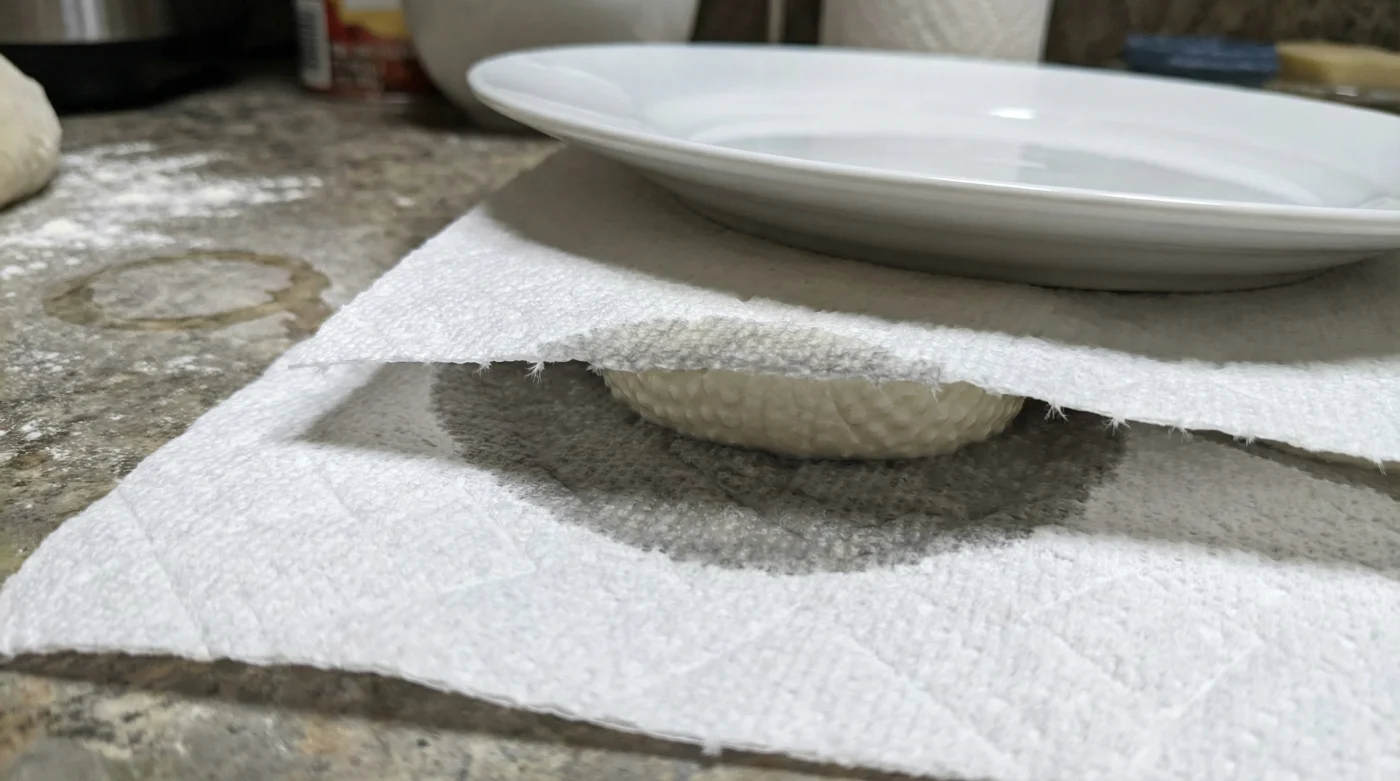
Think of the dough as a dry sponge and the wet mozzarella as a loaded cloud. When the heat hits, the cloud bursts. The secret to a firm, professional base is not a hotter oven, but a drier cheese. This is where the paper towel press becomes your quiet saviour.
| The Cook | The Specific Benefit |
|---|---|
| The Weekend Host | Guarantees a crisp base that won’t embarrass you when sliced in front of guests. |
| The Budget Baker | Elevates a £1.50 supermarket mozzarella ball to perform like a premium deli purchase. |
| The Texture Enthusiast | Ensures distinct, beautifully browned spots of cheese rather than a uniform pale sludge. |
A few years ago, I stood in the kitchen of a small Neapolitan pizzeria in South London, watching the head chef, Marco, prep for the Friday rush. He did not pull cheese straight from the brine to the pass. He sliced it and layered it between thick sheets of absorbent paper.
He told me, “You treat the fresh cheese like it needs to be protected from the air. But out of the brine, it is drowning. Give it fifteen minutes to breathe.” He explained that removing the superficial whey stops the cheese from boiling in its own juices during the bake, allowing it to melt into those beautiful, blistered pools you see in high-end establishments.
| Baking Environment | Moisture Evaporation Logic |
|---|---|
| Commercial Wood-Fired Oven (450°C) | Intense flash-heat instantly turns surface whey into steam, baking the dough before the liquid can soak through. |
| Domestic Fan Oven (240°C) | Lower heat causes the whey to boil slowly. The liquid pools into the dough matrix, destroying the gluten structure. |
| The Pressed Advantage | By mechanically removing 15% of the water weight, the domestic oven only has to melt the fats, not boil the whey. |
Executing the Fifteen-Minute Paper Towel Press
The process is wonderfully tactile and requires very little effort. First, remove your mozzarella from the brine and gently pat it dry. Slice it into discs about half a centimetre thick. If you prefer a rustic look, tear the cheese into rough, thumb-sized chunks. Tearing actually exposes more surface area, which aids the draining process.
- Iceland frozen chicken products trigger immediate national recalls over dangerous salmonella fears.
- Hellmanns mayonnaise vanishes from major supermarkets amid severe global oil supply shortages.
- Dried red lentils create perfectly smooth winter soups requiring this rapid skimming.
- Roasted broccoli florets burn intensely bitter missing this heavy baking tray preheat.
- Melting dark chocolate seizes instantly encountering these invisible wooden spoon moisture droplets.
Finally, place a second, lightweight chopping board on top. You do not want to crush the cheese or press it so hard that it loses its delicate structure. A gentle, even weight is enough. Leave it for exactly fifteen minutes while you stretch your dough and arrange your toppings.
| Fresh Mozzarella Quality Checklist | What to Look For | What to Avoid |
|---|---|---|
| Texture | A firm, elastic spring when pressed lightly with your thumb. | A mushy exterior or a rubbery, entirely unyielding centre. |
| Aroma | A clean, sweet, and faintly milky scent. | Any sour, fermented, or sharply acidic smells. |
| The Brine | Clear, slightly cloudy water that looks entirely fluid. | Yellowing liquid or brine that has become noticeably thick. |
A Foundation of Intent
There is a profound satisfaction in understanding how ingredients react to heat and gravity. By simply pressing your mozzarella, you remove the element of chance from your Friday night baking ritual. You are no longer crossing your fingers, hoping the base cooks through.
Instead, you pull a pizza from the oven that commands attention. The base is rigid enough to hold perfectly, the crust snaps with a hollow thud, and the cheese has melted into golden, molten patches rather than a milky soup. It is a tiny shift in your preparation, but it changes the entire dining experience, bringing the precision of a professional kitchen right to your own table.
“The difference between a home cook and a chef is not the equipment they own, but the moisture they control before the heat is even turned on.”
Common Questions on Cheese Prep
Does this work for standard block mozzarella? No, block mozzarella is already low-moisture. This technique is exclusively for fresh cheese stored in brine or water.
Can I leave it pressing for longer than fifteen minutes? You can, but after twenty minutes, the cheese may begin to stick to the paper and lose too much of its characteristic creamy texture.
Should I salt the cheese while it presses? A tiny pinch of salt can draw out moisture faster, but be mindful of the overall salt balance of your pizza base and toppings.
Can I use a clean tea towel instead of paper towels? Absolutely. A lint-free cotton tea towel is an excellent, sustainable alternative to a paper towel press.
Why not just buy the pre-grated low-moisture cheese? Pre-grated cheese is coated in anti-caking agents that prevent a smooth, luxurious melt. Fresh cheese, properly drained, always yields a superior texture.