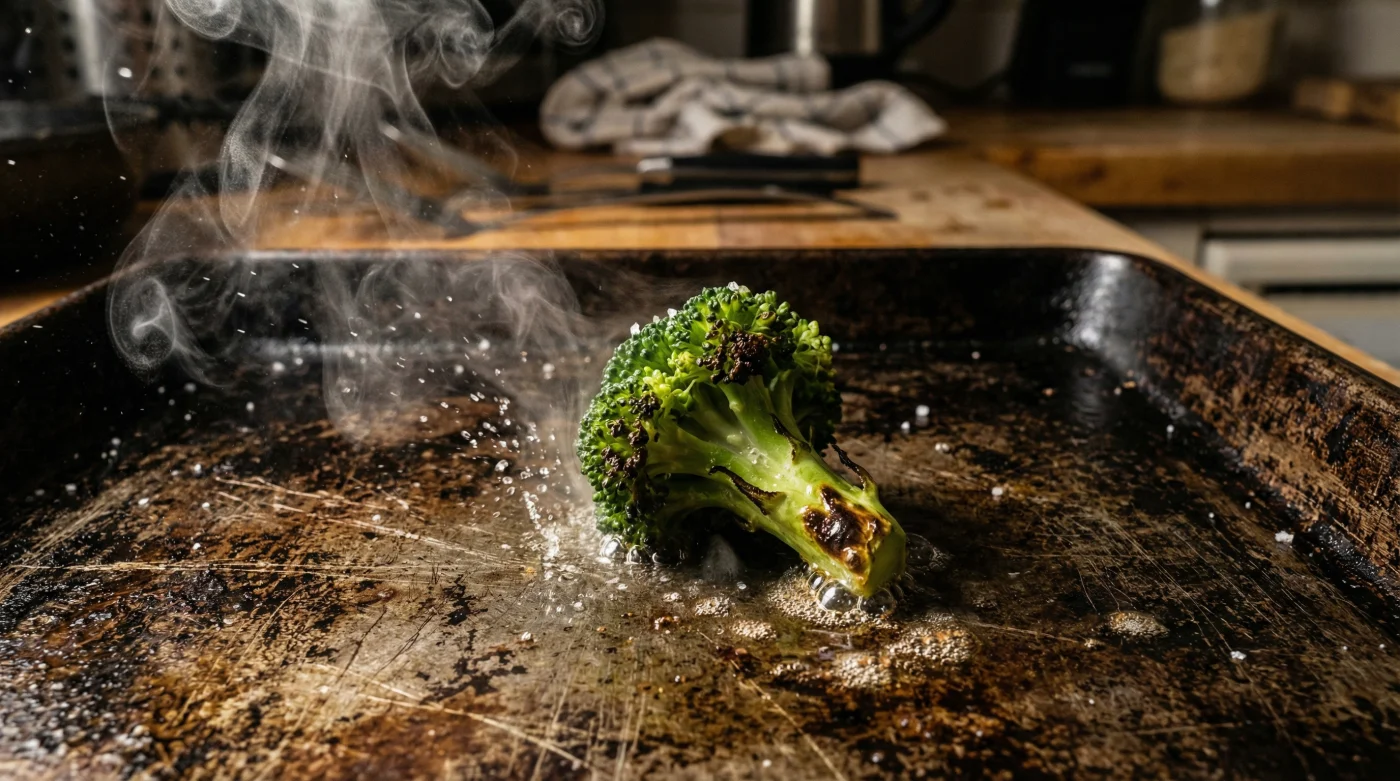
You know the smell. It creeps through the kitchen halfway through a Tuesday evening roast—a sharp, acrid scent hanging heavy in the air. You pull the baking tray from the oven, hoping for those crisp, caramelised edges you see in Sunday supplements. Instead, you are met with sad, limp florets. Their crowns are burnt to a bitter cinder, while the stalks remain desperately soggy, sitting in a puddle of their own exhausted moisture. It is the classic domestic vegetable tragedy.
The Sprinter in the Mud
We have all been conditioned to chop our greens, toss them in a splash of olive oil, scatter them onto a cold metal tray, and shove them into the oven. But doing this to broccoli is like asking a sprinter to start a race in a bog. When a cold piece of aluminium slowly warms up alongside the vegetable, the broccoli stews in its own juices. It breathes through a damp towel.
This slow climb in temperature acts as a prolonged steaming phase. It is this exact sluggishness that releases those notorious, bitter sulphur compounds, making your kitchen smell like a school canteen from the 1990s. The secret to avoiding this isn’t found in a complex marinade or an expensive finishing salt. It lives entirely in the violent, beautiful shock of immediate, intense heat.
| Cook Profile | The Culinary Payoff |
|---|---|
| The Rushed Parent | Cuts roasting time by up to a third; guarantees children won’t complain about the harsh ‘green’ taste. |
| The Meal-Prep Planner | Florets retain their structural integrity for days without turning into a soggy, sulphur-scented mush. |
| The Home Gourmet | Achieves that dark, nutty restaurant-style sear on the crown while keeping the stalk perfectly tender. |
I learned the gravity of this thermal shock during a frantic Sunday service at a gastropub in North Yorkshire. The head chef, a man who treated root vegetables with far more reverence than prime cuts of beef, caught me loading raw tenderstem onto a cold roasting tin. He snatched the tin away, shoved an empty heavy-gauge aluminium tray into the raging 220°C oven, and made me wait ten minutes.
“Listen to the pan,” he told me, throwing the oiled florets onto the scorching metal. They shrieked upon contact. “If they don’t scream when they hit the tray, you are boiling them. We sear, we don’t sweat.” That instantaneous contact halts the steaming process dead in its tracks. The intense heat instantly forces the surface moisture to evaporate, skipping the dreaded sulphur-release phase and jump-starting the caramelisation.
| The Variable | Cold Tray Method (The Trap) | Hot Tray Method (The Solution) |
|---|---|---|
| Moisture Management | Trapped underneath; creates a persistent steaming effect. | Evaporates instantly upon contact with the metal. |
| Sulphur Compound Release | High (slow heat breaks down cell walls sluggishly). | Minimal (rapid sear seals the surface immediately). |
| Maillard Reaction | Delayed; often results in burnt tips before the stalk cooks. | Immediate; creates an even, nutty crust across the floret. |
The Sizzle Protocol
To execute this properly, you must change your preparation rhythm. Before you even look at a chopping board, place your heaviest baking tray into the oven and crank the heat to 220°C (or 200°C for a fan oven). Leave it there for at least fifteen minutes. You want the metal to store as much thermal energy as physically possible.
While the pan gathers heat, break down your broccoli. Ensure the pieces are roughly uniform so they cook at exactly the same pace. Dry them thoroughly with a clean tea towel. Any residual water from washing will fight the oil and lower the temperature of your pan, causing the very steam we are trying to avoid.
- Pork sausages retain explosive meat juices starting in shallow cold water.
- Iceland frozen chicken products trigger immediate national recalls over dangerous salmonella fears.
- Hellmanns mayonnaise vanishes from major supermarkets amid severe global oil supply shortages.
- Dried red lentils create perfectly smooth winter soups requiring this rapid skimming.
- Roasted broccoli florets burn intensely bitter missing this heavy baking tray preheat.
Carefully pull the dangerously hot tray from the oven. Tip the bowl of broccoli directly onto the metal. You should hear a violent, aggressive sizzle immediately. Spread them out quickly into a single layer, ensuring they have plenty of breathing room, and return them to the oven. Ten to twelve minutes is all they will need.
| Component | What To Look For | What To Avoid |
|---|---|---|
| The Baking Tray | Heavy-gauge aluminium or cast iron; thick bases hold serious heat. | Flimsy, warp-prone supermarket tins that buckle and pop under heat. |
| The Broccoli | Tight, dark green or purplish crowns; firm, snappy stalks. | Yellowing flowers; limp, rubbery stems; bruised or damp edges. |
| The Fat | Standard olive oil, rapeseed oil, or melted beef dripping for high heat. | Butter (the milk solids will burn instantly on the hot tray). |
Finding Your Kitchen Rhythm
Adopting this preheat method does more than just rescue your side dishes. It forces a fundamental shift in how you navigate your kitchen space. By learning to harness the latent energy of your tools, you stop fighting the ingredients and start collaborating with them. You are no longer waiting for things to happen; you are orchestrating them.
When you master the hot tray sear, you reclaim those precious evening minutes. The cooking time drops significantly, the washing up is easier because nothing has welded itself to the pan in a slow bake, and the meal itself feels undeniably elevated. It strips away the anxiety of serving subpar, watery greens to your family.
It is a small, mindful adjustment to your daily routine, but it pays huge dividends on the plate. You turn a tedious chore into a reliable, nightly triumph. No more bitter greens lingering on the palate. No more soggy disappointments left on the side of the plate. Just beautifully charred, naturally sweet florets that taste exactly as they should.
“A roasting tin is not a carrying device; it is a cooking surface, so heat it as fiercely as you would your favourite frying pan.” — Chef Elias Thorne
Frequently Asked Questions
Won’t the hot oil spit and burn me?
The oil is on the broccoli, not pooled in the tray. While it will sizzle loudly when it makes contact, keeping the oil coating light and even prevents dangerous spitting.Can I use parchment paper on the preheated tray?
You can, but it acts as a slight thermal insulator. For the absolute best sear, direct contact with the hot metal is ideal. If you hate washing up, foil is a better heat conductor than paper.Does this technique work for other vegetables?
Absolutely. Brussels sprouts, cauliflower, and diced root vegetables all benefit massively from hitting a scorching preheated roasting surface.Why is my broccoli still turning out slightly soggy?
You likely crowded the pan. If the florets are touching one another, they will steam each other regardless of how hot the tray is. Give them plenty of space to breathe.Is 220°C too hot for olive oil?
Standard, good-quality olive oil has a smoke point high enough for a rapid 12-minute roast. Avoid unrefined extra-virgin oils if you are worried about smoking, and opt for a standard olive or rapeseed oil instead.