You pull the baking tray from the heat, the smell of toasted butter heavy in the kitchen air. You are expecting a towering, golden masterpiece—perhaps a rustic tomato tart or a neat row of sausage rolls. Instead, you stare at a shrunken, heavy husk. The filling has breached the borders, pooling sadly on the baking parchment. It is a specific kind of culinary heartbreak, watching your careful prep reduced to a collapsed puddle.
The Architecture of the Fold
There is a stubborn rumour that dough should sit on the worktop to reach room temperature for an even bake. For cakes, perhaps. But for a sheet of Jus-Rol puff pastry, warmth is a structural thief. Think of puff pastry as a tightly coiled spring held together by microscopic sheets of cold fat. When you unroll it, you stretch those gluten strands. If you bake it immediately, the warmth of the room has already softened the butter, and the stretched gluten aggressively snaps back into its original shape. It shrinks.
| The Cook | The Frustration | The Rested Benefit |
|---|---|---|
| The Sunday Baker | Tarts pulling away from the tin edges. | Crisp, neat borders that hold heavy fillings. |
| The Quick-Supper Chef | Sausage rolls leaking meat juices. | A tight, flaky seal that locks in moisture. |
| The Party Host | Uneven, wonky canapés. | Perfectly uniform, towering bites. |
I learned this the hard way during a hurried Christmas Eve, frantically assembling cheese twists. A retired bakery owner named Arthur watched me from across the kitchen island. ‘Pastry has a memory,’ he told me, gently pulling the baking tray from my hands. ‘If you rush it, it remembers the stress. Chill it, and you let it forget.’ By skipping the fridge rest, you deny the dough its chance to relax.
| Ingredient Action | The Scientific Reality | The Baking Result |
|---|---|---|
| Gluten Relaxation | Resting stops elastic strands from contracting. | Pastry retains its exact cut dimensions. |
| Butter Solidification | Cold temperatures harden the fat layers. | Distinct separation between pastry sheets. |
| Oven Shock | Cold water in butter hits 200°C heat. | Instant steam forces a massive vertical puff. |
The Ritual of Chilling
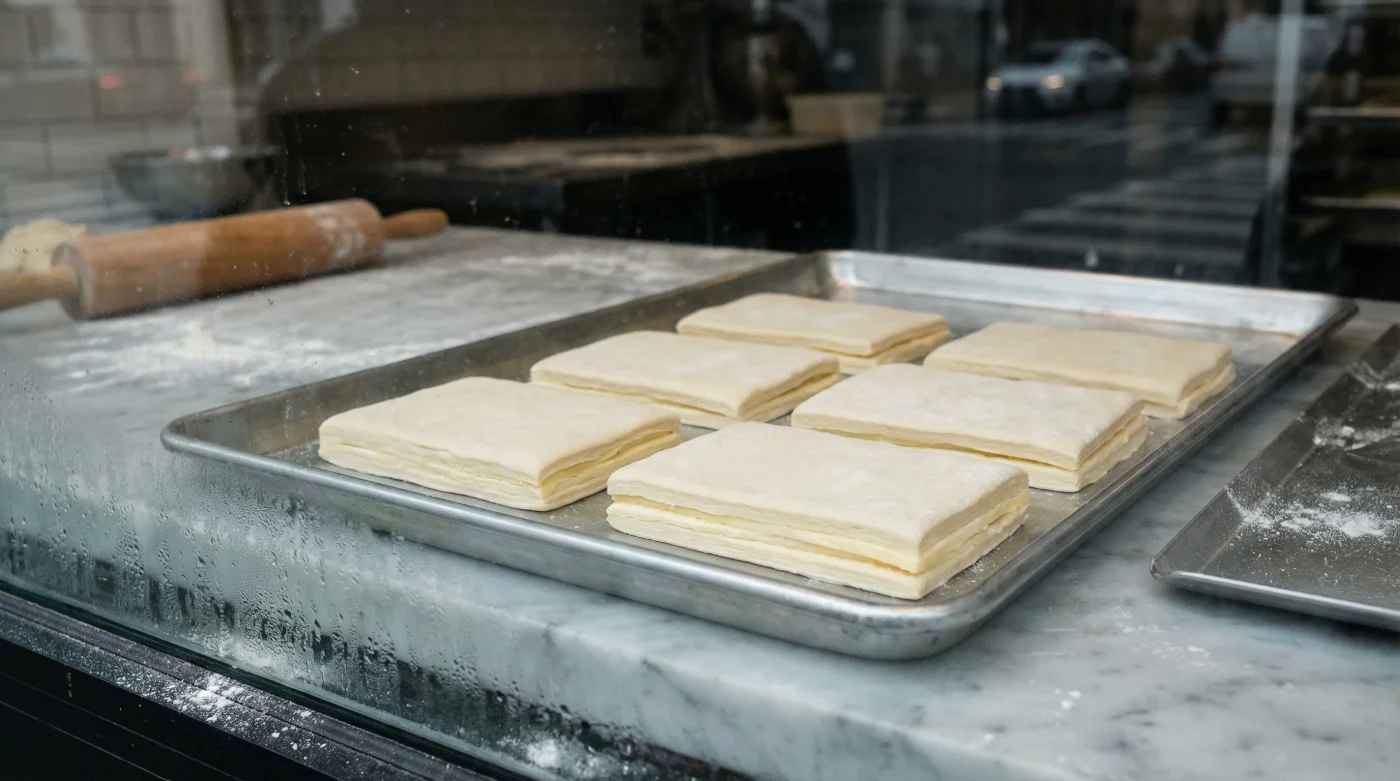
Fixing this requires nothing more than the discipline of waiting. Once you have unrolled your Jus-Rol and cut it to size, place it on your baking tray. Do not put it into the oven yet.
Slide the prepared tray straight into the fridge. Leave it there for twenty to thirty minutes. This forces the butter back into a solid state and tells the stretched gluten to soften and hold its new shape.
- Yorkshire Tea bags face sudden national supermarket rationing following severe shipping delays.
- Anchor double cream weeps watery puddles overnight skipping this microscopic milk powder.
- Smoked back bacon shrinks instantly dropped directly into a preheated frying pan.
- Chocolate brownie batter develops dense raw centres ignoring this aggressive oven banging.
- Arborio rice loses its signature creamy texture missing this frozen butter addition.
| Condition | What to Look For | What to Avoid |
|---|---|---|
| Temperature | Firm to the touch, holds a fingerprint slightly. | Limp, warm, and stretching under its own weight. |
| Texture | Matte finish on the surface of the dough. | Shiny or greasy spots where butter is weeping. |
| Handling | Edges remain sharp after cutting with a knife. | Dough drags or tears when you slice it. |
The Value of the Pause
In a rush to get a meal on the table, a thirty-minute wait feels like a penalty. Yet, this mandatory rest is when the real cooking happens. It is a quiet, invisible process of alignment. By respecting the physical limits of the butter and flour, you guarantee a result that looks deliberate and professional. You stop fighting the ingredients and start working with their natural rhythm.
‘A resting dough is not doing nothing; it is preparing to perform.’
Frequently Asked Questions
Can I put the pastry in the freezer to speed it up?
Yes, ten minutes in the freezer works if you are very short on time, but ensure it does not freeze solid, or it will crack when baked.Does this apply to block and ready-rolled pastry?
Absolutely. Even ready-rolled Jus-Rol has been stretched during manufacturing. It still needs time to relax once unrolled.Should I egg-wash before or after the fridge rest?
Apply your egg wash right before it goes into the oven. Doing it before the fridge can make the pastry soggy.What if my kitchen is already quite cold?
Even a cold UK kitchen in January is warmer than a fridge. Always use the fridge to guarantee the butter firms up properly.Can I leave it in the fridge overnight?
You can, provided it is well-covered to stop the edges drying out. It will bake beautifully the next day.