You stand over the kitchen worktop, inhaling the peppery, almost liquorice scent of freshly bruised basil. The garlic is meticulously peeled, the pine nuts are gently toasted in a dry pan until golden, and a heavy glug of grassy extra virgin olive oil catches the late afternoon light. You hear the sharp, mechanical crunch of the food processor blade slicing through the aged Parmigiano-Reggiano. You scrape the vibrant paste from your appliance into a chilled serving bowl, feeling a quiet sense of culinary pride. But ten minutes later, as you prepare to toss it through steaming ribbons of freshly boiled tagliatelle, you look down. The brilliant emerald has collapsed into a dull, bruised olive-brown. It tastes perfectly fine, but visually, it resembles murky pond sludge.
The Illusion of the Raw Purist
For generations, making pesto has been treated like a fragile truce with nature, where heat is considered the ultimate enemy. We are told to keep our blades cool, to use a chilled marble mortar, to avoid cooking the delicate leaves at all costs. But the true enemy is not temperature; it is a silent reaction with the air itself. Making raw pesto is, in reality, a desperate race against oxygen.
A quiet afternoon in a frantic Soho trattoria taught me the absolute opposite of everything written in standard cookbooks. The head chef, Marco, was not carefully guarding his basil from the stove. Instead, he plunged a massive, overflowing colander of pristine leaves directly into a rolling boil. He counted out loud, yanked them from the heat, and threw them straight into a bath of iced water. When I asked him why he was ruining perfectly good herbs, he laughed. He explained that shocking the leaf kills the enzyme responsible for browning, allowing you to keep the summer in the bowl permanently.
| Home Cook Profile | Specific Benefit of Blanching |
|---|---|
| The Dinner Party Host | Achieves a vibrant, restaurant-quality colour that remains stable and visually stunning throughout the entire evening. |
| The Weekend Batch Cooker | Produces a robust pesto that survives freezing and thawing without degrading into a murky, grey disappointment. |
| Parents of Fussy Eaters | Maintains a bright, appealing green hue that looks fresh and inviting, rather than resembling suspicious, dark vegetable sludge. |
The culprit behind your grey sauce is polyphenol oxidase, an enzyme that causes rapid browning when exposed to oxygen. It is the exact same biological mechanism that turns a bitten apple brown when left on the side. By skipping a rapid, ten-second blanch, you leave this enzyme entirely active. As soon as the sharp blades tear the basil leaves apart, oxygen floods the cells, and the decay begins instantly. The momentary, aggressive heat of boiling water permanently denatures this enzyme before it can act.
| Ingredient State | Enzyme (Polyphenol Oxidase) Status | Visual Result After Blending |
|---|---|---|
| Completely Raw | Fully active and eagerly reacting with oxygen the moment the leaf is torn. | Rapid oxidation; turns a dull, bruised brown within fifteen minutes of exposure to air. |
| Blanched (10 Seconds) | Permanently denatured by the sudden spike in high heat. | Locks in the chlorophyll; remains a startling, luminous emerald green for days. |
| Ice Bath Shocked | Activity entirely suspended; residual cooking heat instantly removed. | Preserves the essential oils and structural integrity of the leaf for the perfect texture. |
The Ten-Second Ritual
Bring a large saucepan of heavily salted water to a vigorous, rolling boil. Set up a spacious bowl of iced water right next to your hob to create a seamless workflow.
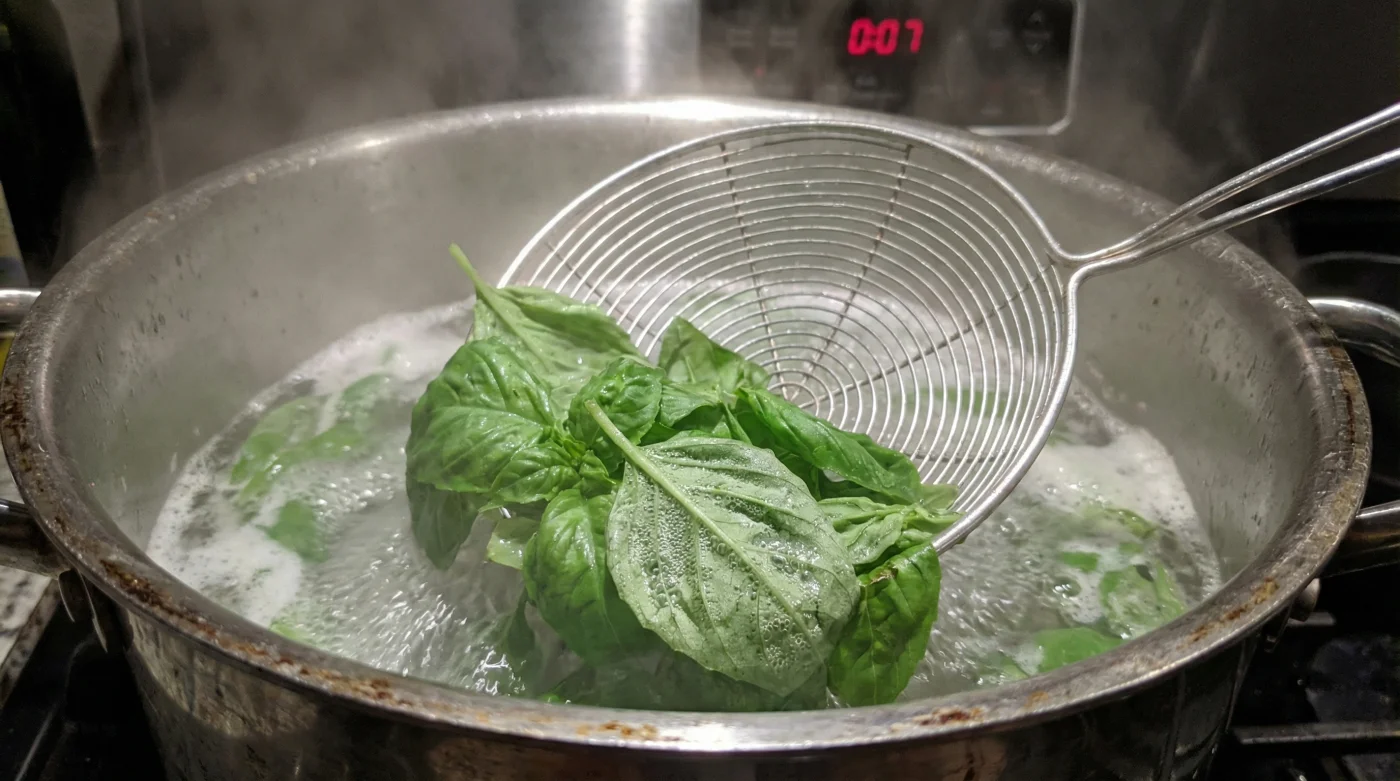
Grip your fresh basil leaves and drop them swiftly into the bubbling water. Count to ten. Do not leave them a second longer. You are not making soup; you are simply shocking the cellular structure of the herb.
Lift the leaves out rapidly using a slotted spoon or a wire spider, plunging them directly into the icy depths. Watch how the cold water shocks the pigment, turning the leaves a startling, almost luminous green.
- Yorkshire Tea bags face sudden national supermarket rationing following severe shipping delays.
- Anchor double cream weeps watery puddles overnight skipping this microscopic milk powder.
- Smoked back bacon shrinks instantly dropped directly into a preheated frying pan.
- Chocolate brownie batter develops dense raw centres ignoring this aggressive oven banging.
- Arborio rice loses its signature creamy texture missing this frozen butter addition.
Your resulting paste will emerge with a vivid, restaurant-quality colour that remains stable for days in the fridge, entirely transforming the aesthetic of your home cooking.
| Basil Element | What To Look For | What To Avoid |
|---|---|---|
| The Leaves | Young, tender, medium-sized leaves with a crisp, slightly rigid texture. | Massive, leathery leaves that tend to carry a bitter, aniseed-heavy flavour profile. |
| The Stems | Bright green, pliable stems that bend easily without snapping aggressively. | Woody, thick stalks that will refuse to break down smoothly in your food processor. |
| The Edges | Smooth, uniform colour entirely free of blemishes or tearing. | Black spots, curling edges, or signs of wilting which indicate prior cellular damage. |
Eating with the Eyes First
The secret to flawless home cooking is learning when to break the rules that tradition stubbornly insists upon.
A plate of food is fundamentally a promise. When you serve a dish coated in brilliant, luminous green pesto, you immediately signal freshness, care, and a quiet mastery of your ingredients. It elevates a humble Tuesday night pasta supper into an experience you would happily pay twenty pounds for in a softly lit dining room. You are no longer racing against the clock, frantically stirring pasta before your sauce oxidises and turns grey. You can sit down, pour yourself a glass of crisp white wine, and enjoy the meal exactly as it was meant to be seen. The true art of home cooking lies not in following rigid myths, but in understanding the gentle mechanics of your ingredients.
Frequently Asked Questions
Does boiling the basil destroy its delicate flavour? Not if you strictly limit the exposure to ten seconds. This brief flash of heat alters the enzymes but leaves the essential oils largely intact, preserving the signature peppery taste.
Can I use this method for other green herbs? Absolutely. Parsley, coriander, and mint all benefit from a rapid blanch before blending into vibrant oils or sauces to prevent oxidation.
Why must I squeeze the leaves so thoroughly afterwards? Any residual water from the blanching process will dilute your olive oil and cheese, resulting in a thin, watery sauce that fails to cling to your pasta.
Does this mean I can make pesto entirely in advance? Yes. Because the browning enzyme is destroyed, your pesto will remain radiantly green in an airtight container in the fridge for up to three days.
Do I still need to use a high-quality olive oil? Without question. The blanching preserves the colour, but the soul of the sauce still relies entirely on the grassy, rich notes of an exceptional extra virgin olive oil.