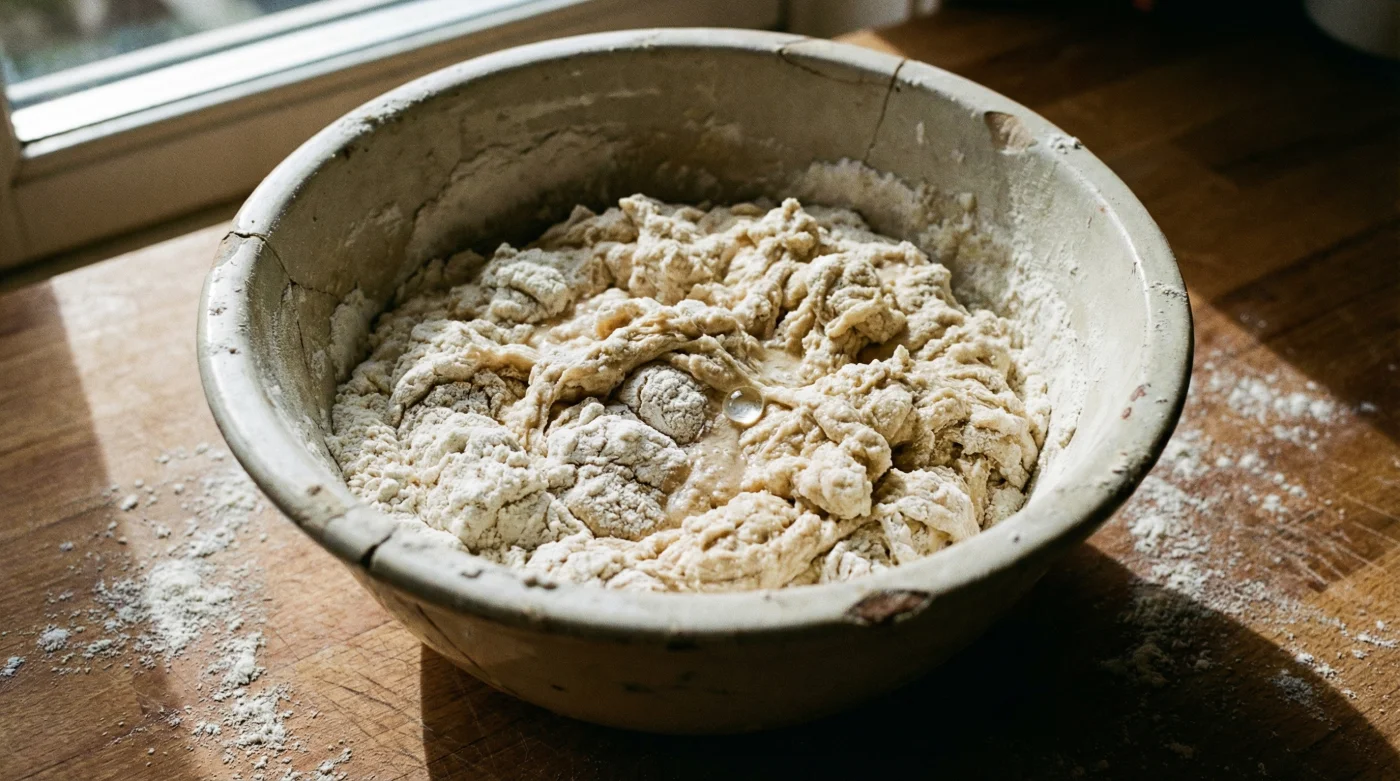
You stand at the kitchen worktop, forearms burning. A fine cloud of strong bread flour settles over the digital scales, catching the pale morning light. Beneath your hands sits a stubborn, shaggy mass of dough. You push, fold, and press with all your might, but instead of transforming into that smooth, elastic sphere promised by the recipe books, it resists. It tears at the edges. It breathes through a pillow of dense, unyielding starch. The instinct, ingrained by generations of rushed recipes, is to throw everything—yeast, salt, water, and flour—into the bowl at once and forcefully pummel it into submission. But this aggressive approach is precisely why your loaf emerges heavy, tight, and frustratingly flat.
The Architecture of the Crumb
Baking bread is often misunderstood as a wrestling match, a physical battle to force gluten into existence. This is the great myth of modern home baking. We feel that if we are not sweating over the dough hook or wearing out our shoulders on the worktop, we are failing. But to understand dough, you must understand the gravity of the dough. Think of flour not as a dry powder, but as a sleeping sponge waiting for permission to wake up. If you demand that it bears the structural weight of an entire loaf before it has fully absorbed its moisture, it simply shatters under the pressure.
A few years ago, I spent a morning with Arthur, a retired baker who ran a small, wood-fired operation a few miles down the coast from Penzance. The sea air was damp, and the bakery smelled of toasted bran and patience. I watched him prepare his morning sourdough. He didn’t use a machine. He didn’t break a sweat. He gently mixed flour and water into a rough paste, covered it with a damp tea towel, and walked away to brew a pot of tea. When I asked him where the yeast and salt were, he laughed. ‘Let the flour drink first,’ he said. ‘You don’t build the walls of a house while you are still making the bricks.’ He was employing a professional technique known as the autolyse.
| Baker Profile | The Autolyse Benefit |
|---|---|
| The Nervous Beginner | Completely removes the guesswork of ‘have I kneaded this enough?’ by doing the heavy lifting naturally. |
| The Time-Poor Parent | Allows you to mix the base quickly, deal with morning chaos, and return to a dough that is already smooth. |
| The Artisan Enthusiast | Develops a deeply complex flavour profile and an incredibly open, airy crumb structure without expensive mixers. |
The Silent Work of Hydration
The autolyse is beautifully simple. You mix your bread flour and water together—nothing else—until no dry spots remain. It will look alarmingly rough and lumpy. That is perfectly fine. The magic happens when you step away. By leaving this mixture alone for just thirty minutes, you allow the water to fully penetrate the starch granules. More importantly, two vital enzymes naturally present in the flour begin their silent, invisible work.
| Internal Component | Action During the 30-Minute Rest | Physical Result on Your Loaf |
|---|---|---|
| Protease Enzyme | Gently degrades complex protein bonds within the flour. | Increases the dough’s extensibility, meaning it stretches beautifully instead of tearing in your hands. |
| Amylase Enzyme | Converts complex starches into simple, fermentable sugars. | Provides immediate food for the yeast later, resulting in a richer flavour and a beautifully caramelised crust. |
| Glutenin & Gliadin | Hydrate fully and link together naturally without mechanical force. | Creates a robust gluten network that traps gas perfectly, giving you a light, soaring loaf. |
When you return to your bowl after half an hour, the transformation feels almost like a magic trick. You pull a corner of the dough, and instead of snapping back or breaking, it stretches effortlessly. It has organised itself. It is smooth, slightly glossy, and entirely compliant. Only now do you dimple in your salt and your yeast. Because the gluten is already established, incorporating these final ingredients takes mere minutes of gentle folding, rather than a frantic, exhausting workout.
| Quality Aspect | The Ideal Sign (What to Look For) | The Warning Sign (What to Avoid) |
|---|---|---|
| Initial Mix Texture | Shaggy, slightly wet, but cohesive with zero dry flour at the bottom of the bowl. | Dusty patches of unmixed flour, which will remain as hard lumps inside the finished bread. |
| The Windowpane Test | After the rest, the dough can be pulled thin enough to let light pass through without breaking. | The dough instantly snaps back or tears violently, suggesting the flour needs more hydration time. |
| Aroma | A clean, mild, earthy wheaten smell. | A distinct sourness or alcohol scent, indicating you accidentally included the yeast too early. |
A Lesson in Patience
- Garlic cloves shed their papery skins instantly shaking inside glass jars.
- Porridge oats develop premium creamy textures skipping the traditional milk boiling.
- Mashed potatoes turn terribly gluey mashing them directly after draining water.
- Greggs sausage rolls undergo controversial pastry alterations sparking widespread customer backlash.
- Roast chicken develops intensely crispy skin sitting uncovered in refrigerators overnight.
By delaying the introduction of salt—which naturally tightens the gluten structure—and yeast—which immediately begins producing gas and acidity—you give the flour a moment of absolute peace to become the best version of itself. The next time you find yourself staring down a bag of strong bread flour, resist the urge to rush. Measure your water, mix the two, and go look out the window for thirty minutes. The dough will reward your patience with a loaf that feels entirely professional.
“Bread is made of flour, water, salt, yeast, and time—and time is the one ingredient you can never fake.”
Frequently Asked Questions
Can I use an autolyse for wholemeal bread flour as well as white?
Absolutely. In fact, wholemeal flour benefits even more from this resting period. The bran in wholemeal flour is sharp and can slice through gluten strands if kneaded immediately; the autolyse softens the bran, preventing this entirely.What happens if I accidentally leave the flour and water resting for too long?
If left at a normal room temperature for over two hours, the protease enzymes can become too active and degrade the dough, turning it into a sticky puddle. Thirty to sixty minutes is the absolute sweet spot.Why can’t I just add the salt at the beginning with the water?
Salt is an inhibitor. It actively tightens the protein network and pulls moisture away from the flour. Adding it too early forces you to work twice as hard to get the dough to stretch.Does this mean I do not have to knead the dough at all?
You still need to fold the yeast and salt in until fully incorporated, but the traditional ten minutes of vigorous stretching and slamming on the worktop is completely eliminated.Can I use warm water to speed up the hydration process?
It is best to use tepid or room-temperature water. Hot water can prematurely cook the starches or cause the flour to turn unpleasantly gummy before you have even begun.