You pull the roasting tin from the oven, met by the comforting scent of roasted thyme, garlic, and rendered fat. The bird looks golden, promising the ultimate Sunday comfort. But as you drag your carving knife across the breast, the blade drags. There is no satisfying shatter. Instead of a crisp, glass-like crust, the skin is rubbery and damp. It is a quiet culinary heartbreak, one that happens in kitchens up and down the country every weekend.
We are taught from an early age to fear raw poultry. The instinct is to bury it under layers of cling film, shoving it into the darkest, coldest corner of the fridge to prevent cross-contamination. You treat it like a hazard. But by sealing that bird away, you are condemning it to a humid microclimate. The skin breathes through a pillow of trapped moisture, ensuring it will steam rather than roast when it finally hits the heat.
The Paradox of the Chilly Draught
Think of roasting a chicken not as cooking, but as the alchemy of evaporation. Crispness cannot exist in the presence of water. If the surface of your bird is wet when it goes into a 200°C oven, the first forty minutes of roasting are entirely wasted. The oven’s energy is spent aggressively boiling away surface water rather than browning the fat. You are essentially boiling your Sunday roast.
I learned this lesson the hard way, leaning against the stainless steel prep counter of a busy coastal pub in Cornwall. The head chef, a man who served hundreds of flawless, golden birds every Sunday, opened his walk-in fridge. There, sitting entirely exposed to the cold, circulating air, were two dozen chickens resting on wire racks. They looked slightly prehistoric—their skin drawn tight, dry to the touch, and almost translucent.
“Let them brave the cold,” he told me, noticing my mild panic at the lack of cling film. “The fridge is basically a giant dehumidifier. Give them twenty-four hours in the draught, and the oven does the rest in half the time.”
| The Cook | The Frustration | The Benefit of Air-Drying |
|---|---|---|
| The Sunday Traditionalist | Rubbery, pale skin that slides off the meat. | A glass-like, shattering crust that holds its texture under gravy. |
| The Frugal Shopper | Water-pumped supermarket birds lacking flavour. | Concentrates the natural savoury notes by removing excess water weight. |
| The Stressed Host | Fussing with butter rubs and basting while guests wait. | Zero prep on the day; the skin crisps naturally without constant checking. |
The Patience Protocol
To fix this common error, you must override your hygienic panic. Naturally, you must be sensible. Clear a shelf at the very bottom of your fridge. This ensures absolutely nothing can drip onto other items, keeping your food safety intact without compromising the meal.
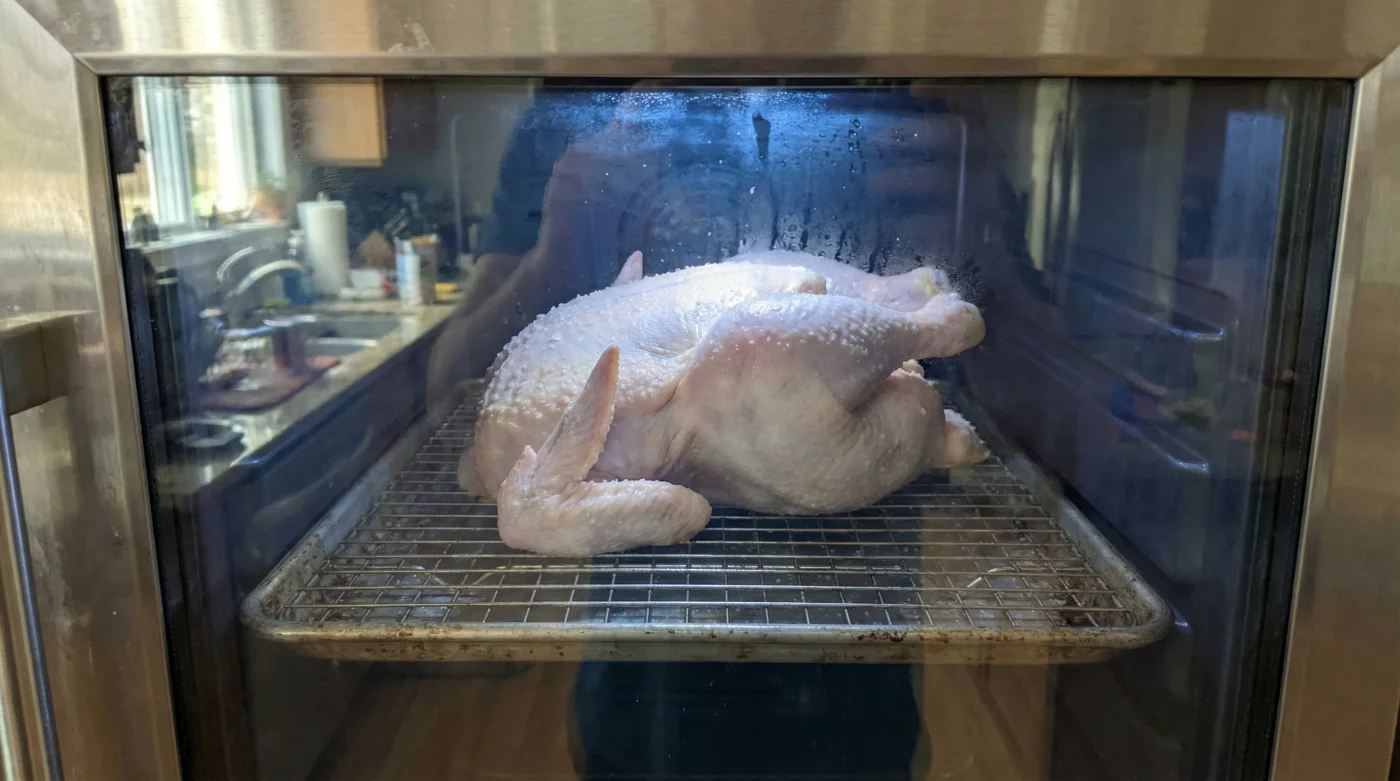
Take your chicken—even a standard £5 supermarket bird will do—and remove it from its plastic packaging. Pat it ruthlessly dry with kitchen paper. Do not just dab it; press firmly to remove every hint of surface moisture. Next, you need a wire cooling rack set over a baking tray. This elevation is vital, as it stops the bird from sitting in its own juices and allows the cold fridge air to circulate entirely around the legs and base.
Now, apply a generous layer of coarse sea salt. The salt acts as a brilliant drying agent, initially drawing moisture out from the skin. Over the next twenty-four hours, the dry fridge air evaporates that drawn-out moisture. Place the salted bird, entirely uncovered, onto that bottom shelf and shut the door. Walk away.
| Phase | Mechanical Logic | Moisture State |
|---|---|---|
| Hour 1-4 | Osmosis pulls internal water to the skin’s surface. | Visibly wet; salt dissolving. |
| Hour 5-12 | Fridge condenser removes humidity from the chilled air. | Moisture evaporates; skin begins to tighten. |
| Hour 12-24 | Proteins break down slightly, promoting faster Maillard browning. | Completely dry, slightly yellowed, taut like a drum. |
When you pull the chicken out the next day, it will look remarkably different. The skin will have shrunk slightly, pulling tight against the breast. It will feel like fine parchment paper. This is precisely the texture you want. Because you have eliminated the surface water, the oven heat will immediately begin rendering the fat underneath the skin, rather than wasting time boiling away moisture.
| Checklist Item | What to Look For | What to Avoid |
|---|---|---|
| The Setup | Elevated wire rack over a sturdy tin. | Sitting flat on a plate (creates a soggy bottom). |
| The Skin | Taut, translucent, dry to the touch. | Opaque, slippery, or damp patches. |
| The Seasoning | Coarse flaky salt applied directly to the skin. | Heavy oil or butter marinades applied before drying. |
Reclaiming the Sunday Rhythm
This subtle shift in your preparation alters the entire atmosphere of your kitchen on a Sunday. By tackling the crucial step on Saturday afternoon, you remove the panicked, messy prep from your day of rest. There is no frantic basting, no desperately cranking the oven temperature in the final ten minutes hoping for a miracle.
- Red wine vinegar rescues overly salty soups neutralising intense sodium levels.
- Cadbury Dairy Milk bars shrink again as supermarket cocoa prices soar.
- Garlic cloves shed their papery skins instantly shaking inside glass jars.
- Porridge oats develop premium creamy textures skipping the traditional milk boiling.
- Mashed potatoes turn terribly gluey mashing them directly after draining water.
It is a lesson in letting time do the heavy lifting. Sometimes, the most professional thing you can do in a kitchen is step back, embrace a slightly unconventional method, and allow the environment to work for you.
The finest crackling and the crispiest poultry share one absolute truth: patience and cold air are far more powerful than a hot oven alone.
The Air-Drying FAQ
Is it completely safe to leave raw chicken uncovered?
Yes, provided you place it on the absolute bottom shelf to prevent drips, and ensure your fridge is operating at a safe temperature (below 5°C).
Will the chicken absorb smells from the fridge?
No. As long as you do not have strongly pungent items like cut raw onions sitting exposed next to it, the bird will remain untainted.
Do I need to rub it with butter or oil before roasting?
You can lightly brush it with a little oil just before roasting to encourage even browning, but heavy butter rubs are unnecessary and introduce water back to the skin.
What if I only have four hours?
Four hours is better than nothing. You will not get the intense, parchment-like dryness of a twenty-four-hour rest, but it will still be a vast improvement over cooking it straight from the packet.
Should I wash the chicken first?
Never. Washing raw poultry only splashes bacteria around your sink and counters, and adds counterproductive moisture to the skin.