You stand by the hob on a damp Sunday afternoon. Steam fogs the kitchen window, carrying the rich, savoury scent of a roasting chicken. Your focus, however, is entirely on the bubbling pan of King Edwards. You tip them into the colander, give a brisk shake to drain the boiling water, and immediately start attacking them with a heavy metal masher. But instead of yielding into fluffy, buttery clouds, you are met with heavy, stubborn resistance. The sound is a wet, disheartening squelch. The mash clings to the metal loops, dragging heavily against the sides of the pan. Without realising it, you have just created edible wallpaper paste.
The Myth of Momentum: A Dialogue With Starch
The urgency of the kitchen often convinces you that speed is your greatest asset. You plate up fast so the gravy does not go cold. You mash fast so the potatoes stay piping hot. But this frantic momentum is exactly what destroys the texture of your dish. When you mash potatoes immediately after draining, you are treating them like a sponge that has not been wrung out. If you crush a tuber while it is still slick with its own boiling water, you forcefully drive that surface moisture deep into the delicate starch network.
Think of it as trying to breathe through a wet cloth. The starch cells rupture under the pressure of the masher, swelling violently as they absorb the excess water. They bind together, forming a tight, gummy web. This is the moment your mash becomes terribly gluey. The secret to preventing this has nothing to do with expensive butter, double cream, or vigorously beating the mixture. The secret is doing absolutely nothing for exactly three minutes. You must let the drained potatoes steam-dry in the hot, empty pot.
I first learned this from a head chef in a rural Yorkshire pub, a man who produced the most ethereal, pillowy mash I had ever tasted alongside his beef and ale pies. He called it ‘chuffing’ the spuds. As we stood in his cramped, blistering kitchen, he took a pan of freshly drained Maris Pipers and placed them back on the extinguished hob. “You wouldn’t paint a wet wall,” he told me, watching the steam rise like tiny ghosts from the surface of the potatoes. “So why would you try to butter a wet potato? Give them a minute to catch their breath.”
| The Cook | The Core Frustration | Benefit of the 3-Minute Steam-Dry |
|---|---|---|
| The Sunday Roast Host | Juggling timings, resulting in rushed, heavy side dishes. | Guarantees a light texture that perfectly absorbs rich gravy without turning to sludge. |
| The Batch Cooker | Reheated mash becomes a solid, rubbery brick in the fridge. | Removing water prevents the starch from solidifying into an impenetrable block when chilled. |
| The Impatient Parent | Children complaining about lumpy or sticky textures. | Creates a naturally smooth, velvety finish that requires less physical effort to mash. |
The Three-Minute Evaporation Dance
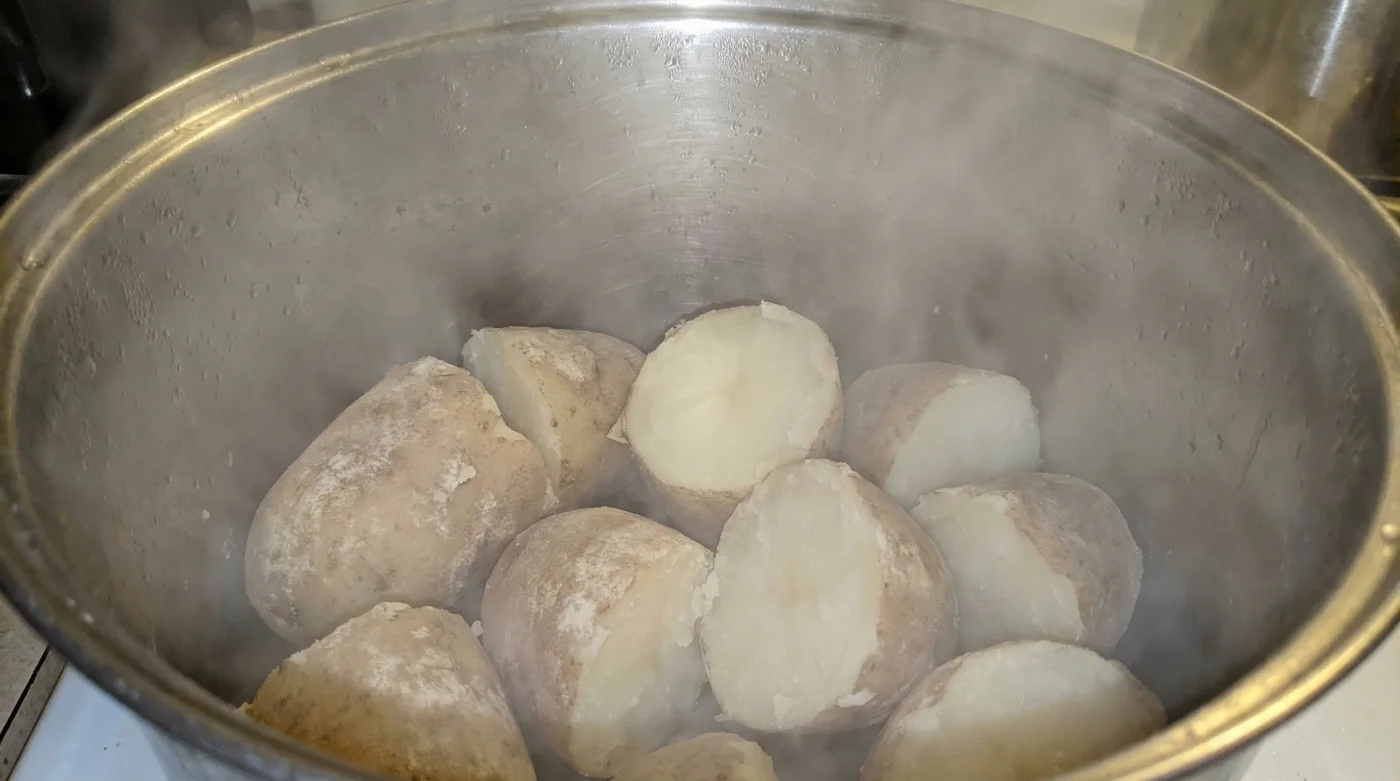
This technique requires a minor adjustment to your physical rhythm, but it transforms the entire process. Once your potatoes are tender, tip them into a colander to release the bulk of the boiling water. Give them one firm shake. Now, immediately return those hot potatoes into the empty pan you just boiled them in. Place the pan back onto the hob. If you are using an electric stove, the residual heat from the turned-off ring is perfect; if you use gas, set it to the absolute lowest flame for just thirty seconds, then turn it off.
Step away from the pan. Leave the lid off. Over the next three minutes, you will watch a thick plume of steam rise from the pot. This is the enemy leaving your food. The residual heat of the metal pan is gently evaporating the stubborn surface water clinging to the edges of your spuds. You will notice the physical appearance of the potatoes changing before your eyes. They will lose their wet, slippery sheen and begin to look chalky, opaque, and beautifully dry.
- Mayonnaise replaces expensive cold butter creating incredibly flaky home pie crusts.
- Red wine vinegar rescues overly salty soups neutralising intense sodium levels.
- Cadbury Dairy Milk bars shrink again as supermarket cocoa prices soar.
- Garlic cloves shed their papery skins instantly shaking inside glass jars.
- Porridge oats develop premium creamy textures skipping the traditional milk boiling.
| Time Elapsed | Moisture Status | Starch Cell Condition |
|---|---|---|
| 0 Minutes (Just Drained) | Surface is saturated, slick with boiling water. | Vulnerable to rupturing and seizing if crushed immediately. |
| 1.5 Minutes (Mid-Steam) | Visible steam escaping; surface sheen fading. | Beginning to stabilise as ambient water evaporates. |
| 3.0 Minutes (Ready to Mash) | Surface is completely dry, chalky, and slightly flaked. | Primed to absorb fats cleanly without shearing into glue. |
Reclaiming the Kitchen Rhythm
There is a profound comfort in learning to slow down at the very moment you feel compelled to rush. The final ten minutes of pulling a meal together often feel frantic, a blur of carving meat, thickening gravy, and draining vegetables. By forcing yourself to wait three minutes before mashing your potatoes, you are doing more than just saving a side dish. You are building a pocket of calm into your cooking process. It gives you a moment to wipe down the worktop, check your seasoning, or simply take a breath.
Cooking is fundamentally about understanding how ingredients react to their environment. When you respect the nature of the potato, acknowledging that it needs time to shed its excess moisture, the ingredient rewards you. The physical act of mashing changes from a strenuous, squelching chore into a gentle, satisfying folding motion. The potatoes collapse willingly under the masher, melting into the butter and milk with a graceful ease.
Next time you find yourself staring down a colander of steaming King Edwards, resist the urge to act immediately. Let the heat of the pan do the silent, invisible work of evaporation. Trust the pause. You will never serve a bowl of gluey, waterlogged mash again.
| Quality Indicator | What to Look For (The Ideal) | What to Avoid (The Warning Signs) |
|---|---|---|
| Visual Texture Before Mashing | Opaque, chalky, with slightly roughed, fluffy edges. | Translucent corners, slick surfaces, pools of water in the pan. |
| Sound During Mashing | A soft, muted crumbling sound as the structure yields. | A loud, wet squelch or suction noise from the masher. |
| Reaction to Butter | Fat melts and disappears instantly into the dry potato. | Butter sits on the surface or mixes with water to form a greasy emulsion. |
“You wouldn’t paint a wet wall, so why would you try to butter a wet potato?” – Arthur, Yorkshire Pub Head Chef.
Frequently Asked Questions
Why do my potatoes feel like glue?
You have mashed excess boiling water into the delicate starch cells, causing them to rupture, seize, and bind together into a sticky paste.Do I need to leave the heat on under the pan?
No, the residual heat of the empty pan is usually enough. If you are worried, use the absolute lowest hob setting for just thirty seconds, then turn it completely off.Does the type of potato matter?
Yes. Floury potatoes like Maris Pipers or King Edwards are ideal for mashing, but they are also the most prone to waterlogging, making this drying step essential.Should I warm the milk and butter?
Always. Adding cold dairy to hot potatoes drops the temperature suddenly, which can shock the starches and lead to a heavier, denser texture.What if my mash is already gluey? Can I fix it?
Unfortunately, once starch cells have sheared and become gluey, the physical structure is broken. You cannot reverse it, but you can repurpose the mash into potato cakes or a topping for a cottage pie where texture is less critical.